Thank you for purchasing POWERSTAR TRUCKS products. For better using your ISUZU GIGA fire truck, get the best operating performance, we strongly suggest that before the operation process you could read this isuzu fire truck manual instructions carefully, and to manipulate the program handily
The manual detailed describes the performance of isuzu firefighting truck, structure, usage, precautions and maintenance of such knowledge. While showing details of the truck, both pictures and description will together help you get better understanding of how to use truck. Before the operation, the skilled operator should carefully read the contents of the manual.
After master the isuzu fire truck performance characteristics, methods of operation and precautions, then could start to operate this fire truck. In order to ensure the staff turnover after the operation, and properly use of isuzu fire fighting truck. This manual book must be properly kept, shall not be lost and damage.
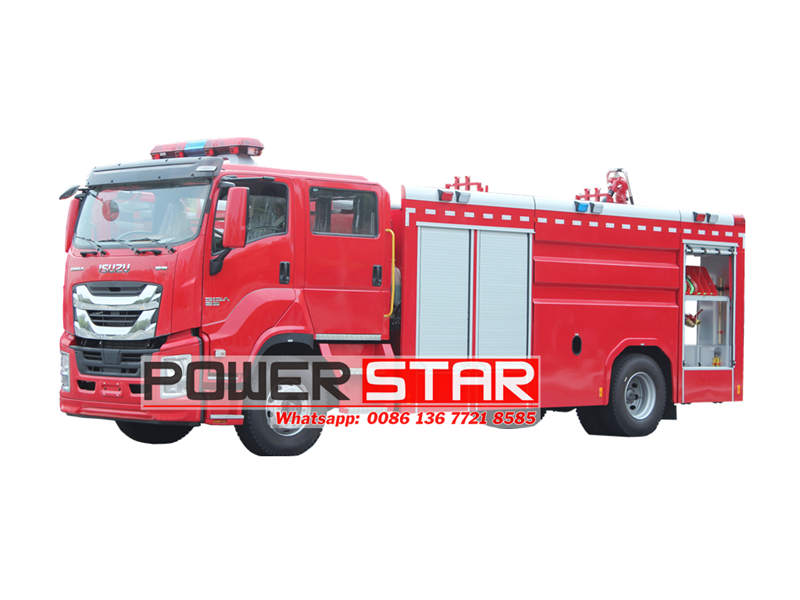
POWERSTAR TRUCKS Fire Truck based on type II ISUZU GIGA 4*2 Left Hand Drive chassis, water tanker body capacity could up to 8,000Liters, all based on stainless material tank, truck equipped with RONGSHEN CB10/60 fire pump and PS40 fire monitor, very convenient for daily use. Mainly used for firefighting project in any areas of need.
The vehicle designed to fully rely on the advantages of the original of ISUZU brand chassis, fully consider the product's convenience and reliability, also the chassis ISUZU GIGA technology features. The body material is international standard stainless steel, which can effective to avoid rusting and service for long life.
The ISUZU GIGA 4x2 Fire Truck equipped with Sandwich PTO, fire pump, fire monitor, crew room, hose box, pump room, English version control box, inlet and outlet pipeline, rear climbing ladder, top pillow lamp, and all necessary firefighting equipment. Customized Double-row cabin with 2+4 seats nice driving feeling. Therefore, the vehicle is an ideal Fire Truck mainly for firefighting project.
Basic parameter:
|
Items |
8000liters Water ISUZU GIGA Fire Truck |
||
|
S I Z E |
Outer Dimension(L×W×H)(mm) |
9300*2500*3500 |
|
|
Wheelbase (mm) |
5600 |
||
|
W E I G H T |
Front Axle Capacity(kg) |
6500 |
|
|
Rear Axle Capacity(kg) |
11500 |
||
|
Water Tank Capacity |
8000 L |
|
|
|
Cab capacity(includes driver) |
Double Row 2+4 |
||
|
Tire |
315/80R22.5 16PR 6+1 |
||
|
E N G I N |
Model |
6UZ1-TCG50 |
|
|
Type |
Six cylinder inline, water-cool, turbocharged Inter-cooling, diesel |
||
|
Rating Power(kW/HP) |
279/380 |
||
Note: 1.The vehicle height includes fire monitor.
2. We keep the right to revise the parameters on the list above.
Firefighting basic parameter list (1)
|
Model Items |
RONGSHEN CB10/60 fire pump |
|
|
Fire Pump |
Model |
CB10/60 |
|
Diameter |
100-65 mm |
|
|
Flow (Low Pressure) |
60 L/s at 1.0 Mpa |
|
|
Max suction depth(m) |
7 |
|
|
Fire Monitor |
Model |
PS40 |
|
Location |
Top |
|
|
Angle of rotation |
360° |
|
|
Angle of elevation |
≥80° |
|
|
Angle of depression |
≤-10° |
|
|
Throw |
Water: ≥60 m; Foam: ≥55 m |
|
|
Rotation |
360° |
|
How Fire Trucks Function
A standard fire truck is a vehicle that integrates a pump, water tank, and sufficient space for personnel along with the necessary tools to carry out their duties effectively - each component is vital in the battle against fires. These rigs are equipped with emergency lights and sirens to alert people, along with tools like computers and radios for seamless communication between the team and the fire station, as well as other personnel heading to the scene.
Fire trucks serve various purposes, with specific types tailored for firefighting and rescue operations such as aerial, airport, conventional, hazardous materials, logistical support, technical rescue, water-carrying, and wildland fire trucks. These vehicles come in different formats to meet the requirements of diverse fire departments and situations.

Key Components of a Fire Truck
Fire engines are not only vehicles for transporting firefighters but also store pu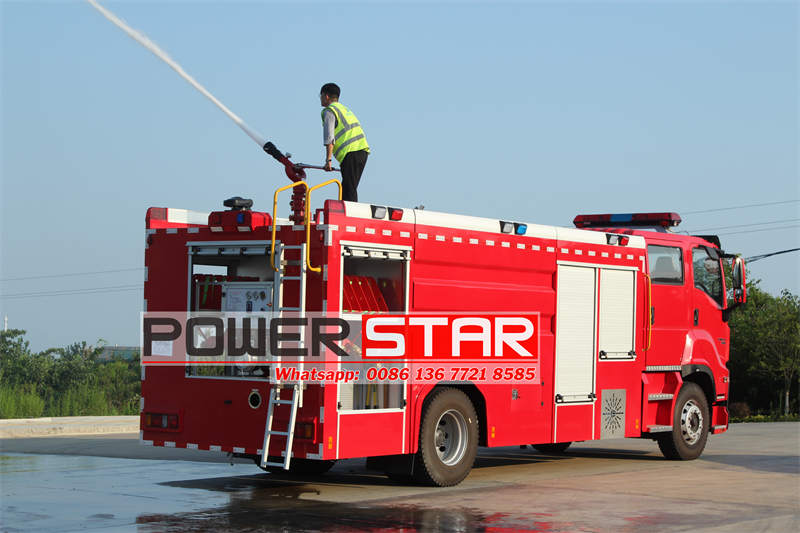 mps, water tanks, hoses, ladders, and a wide array of tools. Manufacturers like Pierce, E-One, and others produce engines and pumper tankers equipped with tanks for water storage to combat fires. These units are usually capable of extracting water from various sources such as fire hydrants, lakes, or pools.
The pump, often situated behind the cab, uses a large impeller to draw water from the tank positioned behind it. This pump, typically manufactured by companies like Hale or Waterous, can move water at rates of 1500 gallons per minute or more. Firefighters manage the pumps through a pump panel, adjusting the flow of water through each fire line. Operating a water tank involves three main steps: engaging the pump, directing water to the right output valves for different hose lines, and monitoring pressure and water levels to ensure a steady water supply to each line.
Incorporating foam systems into their trucks, manufacturers like E-One and Pierce offer trucks with CAFS or Compressed Air Foam Systems that can use different types of foam, such as Class A or Class B, for specific situations. Fire truck tanks can have capacities ranging from 500 to 3,000 gallons, depending on the type of truck.
Hoses, Nozzles, Ladders & Tools
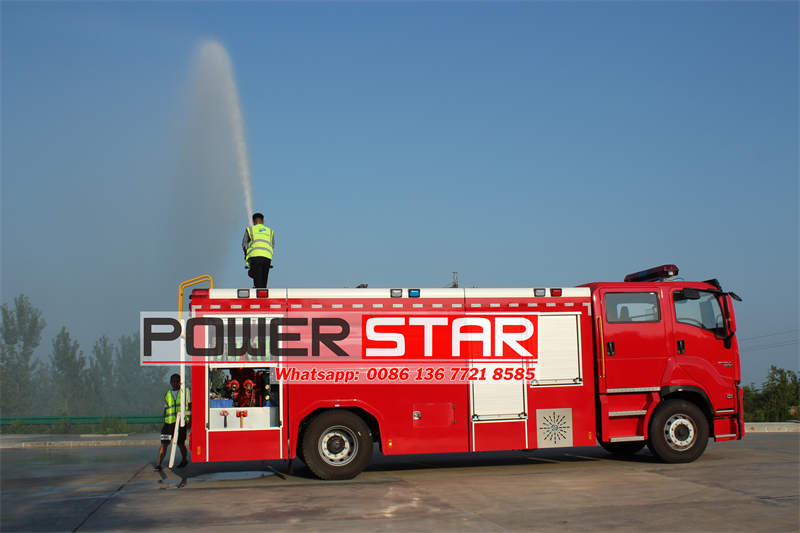
Hoses are crucial components of fire trucks, connecting to various points on the vehicle and expelling water at varying rates and pressures based on factors like nozzle type, hose diameter, and length. Fire engines are equipped with different types of lines, including booster lines, cross-lay hoses, deluge guns, hose packs, and pre-connects, each serving a specific purpose in firefighting operations.
Ladder trucks are essential for battling fires in tall structures, with hydraulic systems that allow the extension and movement of the ladder. These trucks can have ladders extending over 110 feet, and they also require outriggers for stabilization during operations.
Firefighters utilize a wide range of tools stored in compartments throughout the truck, including axes, barrel strainers, bolt cutters, fire extinguishers, foam inductors, and more. These tools are essential for tasks beyond firefighting, such as rescue operations and handling hazardous situations.
Firefighter Transportation
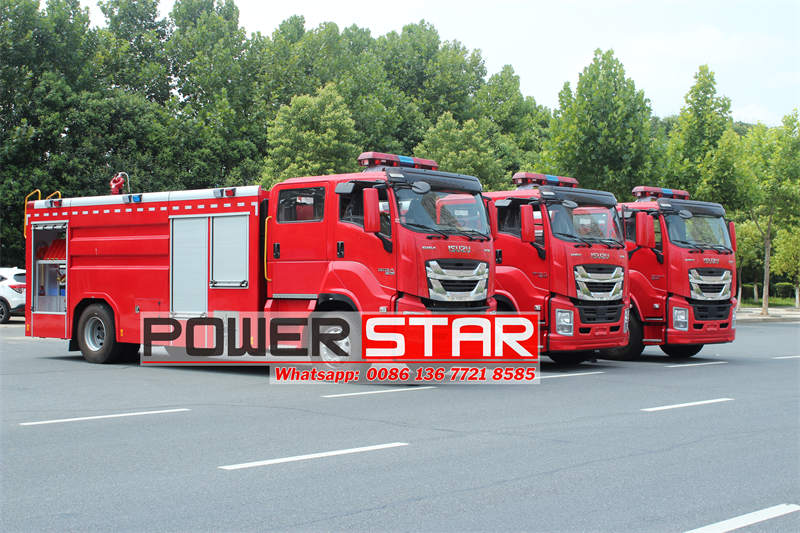
Fire trucks serve as a means of transportation for most of the firefighting crew to reach the scene of an emergency. The cab of the truck accommodates the captain and driver upfront, while the rest of the crew sits in the rear section. Special seats equipped with SCBA allow crew members to gear up with their air packs en route to the intervention. Many fire trucks are also equipped with built-in headsets to facilitate clear communication among crew members and updates from dispatch.