Choosing between new and used commercial trucks is an important investment decision for any transportation, logistics, construction or service business. A used truck usually costs less upfront, making it attractive to companies with limited budgets. A new commercial truck, on the other hand, offers a known vehicle history, modern specifications, more configuration options and potentially lower maintenance uncertainty during its early years of operation.
So, which is the better investment: a new or used commercial truck?
The answer depends on how the truck will be used, how many hours it will operate, how much downtime your business can tolerate and how long you plan to keep it. For businesses looking at Isuzu commercial vehicles, it is also important to compare the chassis, engine, payload, body configuration and after-sales support rather than focusing only on the purchase price.
This guide compares new and used commercial trucks from a business perspective and explains when investing in a new Isuzu truck may deliver better long-term value.
The biggest difference between a new and used commercial truck is not simply its age. It is the balance between initial investment, vehicle condition, remaining service life, maintenance risk and operating costs.
A new commercial truck is supplied in new condition and can often be configured according to the buyer's requirements. Depending on the supplier and vehicle specification, buyers may be able to select the chassis, wheelbase, engine, cargo body, axle configuration and specialized equipment before production.
A used commercial truck has already been operated by a previous owner. Its purchase price may be lower, but its actual value depends heavily on mileage, engine hours, maintenance records, accident history, component condition and remaining service life.
For a business that needs a truck to work every day, the most economical option is not always the one with the lowest purchase price. The better investment is the vehicle that delivers the required work at a predictable total cost.
In most cases, a used commercial truck has a lower initial purchase price than a comparable new model. This can reduce the amount of capital required at the beginning and may allow a small business to put a vehicle into operation sooner.
However, the purchase price only represents the first part of the investment.
A used truck may require immediate spending on tires, brakes, batteries, suspension components, engine servicing or transmission repairs. If the vehicle has an incomplete maintenance history, buyers may also face unexpected repair costs after delivery.
A new truck generally requires a larger initial investment, but the buyer starts with a known vehicle condition and a specification that can be matched to the intended application. This can be particularly valuable for businesses that need specialized vehicles or plan to operate the truck for several years.
When comparing quotations, buyers should calculate the full acquisition cost, including:
• Vehicle purchase price.
• Shipping, freight and import duties where applicable.
• Registration, inspection and insurance costs.
• Financing charges and payment terms.
• Body equipment, accessories and optional configurations.
• Initial maintenance or repairs required before operation.
A lower used-truck price can be attractive, but it should be evaluated against the money needed to make the vehicle reliable and ready for work.
Maintenance is one of the most important factors when comparing new and used commercial trucks.
A new truck begins its working life without the accumulated wear of a previous owner. The business can establish its own preventive maintenance schedule, monitor component condition from the beginning and keep a complete service record.
Used trucks require more attention to their previous operating history. A vehicle with high mileage is not necessarily a poor investment, but buyers need to understand how it was maintained and what components may soon need replacement.
Before purchasing a used commercial truck, arrange an independent inspection and pay particular attention to:
• Engine performance, oil leaks, turbocharger and cooling system.
• Transmission operation, clutch condition and differential noise.
• Brake system, steering and suspension components.
• Chassis frame, crossmembers and signs of structural repair.
• Tire condition and uneven tire wear.
• Electrical system, warning lights and diagnostic fault codes.
• Service records, mileage consistency and engine hours.
• Condition of the cargo body or specialized equipment.
For specialized vehicles, the inspection should also cover the working equipment. For example, a used refrigerated truck needs a separate inspection of its refrigeration unit and insulated cargo box, while a used crane truck requires checks of the hydraulic system, boom, outriggers and lifting safety devices.
Businesses planning to operate for the long term may prefer a new vehicle because its maintenance history starts with their own fleet. This can make budgeting and maintenance planning easier.
Warranty coverage can make a significant difference to the financial risk of owning a commercial truck.
New trucks are commonly supplied with warranty arrangements defined by the manufacturer, exporter or dealer. However, the coverage period, mileage limits, covered components and claim procedures vary. Buyers should always request written warranty terms before placing an order.
A used truck may have no remaining manufacturer warranty. In some cases, transferable coverage or a separate seller warranty may be available, but this needs to be verified rather than assumed.
Vehicle history is equally important. When buying used, ask for maintenance invoices, inspection reports, registration documents, ownership records and details of any major repairs or accidents. A documented service history provides more useful evidence than a seller's verbal description.
For new vehicle buyers, the vehicle specification and production documentation should also be checked carefully. Confirm the chassis model, engine, transmission, emission standard, axle configuration and body equipment before shipment.
Fuel consumption has a direct effect on commercial truck profitability, especially for vehicles that cover long distances or operate for many hours each day.
Newer trucks may offer updated engine technology, transmission options and emissions systems. These features can support efficient operation when the vehicle is correctly matched to its workload. However, a new truck is not automatically more fuel-efficient than every used truck. Actual fuel consumption depends on engine condition, vehicle weight, gearing, driving habits, road conditions, traffic and maintenance.
When comparing two trucks, look at the expected cost per kilometer or mile rather than relying only on published fuel-consumption claims.
A practical operating-cost calculation should include:
• Fuel consumption under the expected working conditions.
• Routine servicing and replacement parts.
• Tire replacement and brake maintenance.
• Insurance and vehicle licensing.
• Driver costs and training.
• Unexpected repairs and vehicle downtime.
• Financing costs and depreciation.
• Expected resale value at the end of the ownership period.
A used truck with a lower purchase price may still be economical if it is in excellent condition and has a reliable maintenance history. A new truck may be the better choice if predictable operation and reduced repair uncertainty are more important to the business.
For a commercial fleet, downtime can cost more than the repair itself. When a truck is unavailable, deliveries may be delayed, construction schedules may be interrupted and customers may need to be served by another vehicle.
A used truck with hidden mechanical problems can create unexpected downtime, particularly if replacement parts are difficult to source or the vehicle has been modified without proper documentation.
A new truck can reduce uncertainty about its initial condition, but it still needs proper servicing, qualified drivers and access to technical support. No vehicle is completely free from breakdown risk.
Before purchasing, businesses should ask how quickly spare parts can be supplied, where maintenance can be performed and whether technical assistance is available in the operating country.
For companies that rely on specialized vehicles, these questions are especially important. A garbage compactor, vacuum truck, refrigerated truck or truck-mounted crane may need equipment-specific maintenance in addition to normal chassis servicing.
For businesses that need a reliable vehicle configured for a specific job, a new Isuzu commercial truck can offer several practical advantages.
POWERSTAR's Isuzu truck range includes light-duty, medium-duty and heavy-duty chassis, as well as cargo trucks and specialized commercial vehicles. Buyers can review different platforms and select a configuration based on payload requirements, operating conditions and intended body application.
For example, the Isuzu KV800 is a medium-duty chassis option listed on the website with a 4JZ1-TCG62 180HP engine, MYY six-speed manual transmission, 4x2 drive and a gross vehicle weight of 10,550 kg. Its chassis platform can be adapted for different commercial applications.
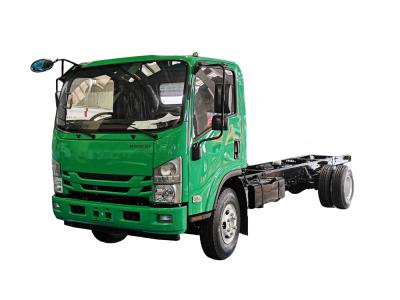
New Isuzu KV800 chassis for commercial truck applications.
Businesses looking for a chassis platform for cargo transportation or specialized body installation can explore the Isuzu N Series Truck range. Different configurations can be considered according to the required body size, payload, wheelbase and operating environment.
For companies that need a ready-to-use cargo vehicle, the New Isuzu ELF 100P Dropside Cargo Truck is one example of a new light-duty cargo truck listed by POWERSTAR. Its dropside body design allows convenient loading and unloading for general goods transportation.
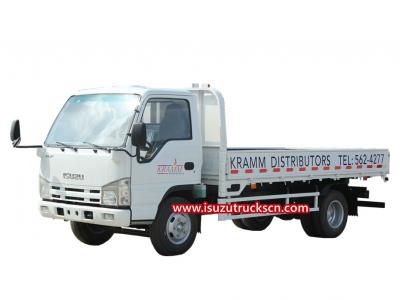
Isuzu ELF 100P dropside cargo truck for commercial transportation.
For heavier transportation requirements, the Isuzu GIGA heavy-duty truck chassis range offers different engine and axle configurations. The website lists GIGA options with 6UZ1 and 6WG1 engines, various power ratings and different front and rear axle capacities.
These examples show why buying new can be useful when the business needs a particular chassis, body configuration or equipment combination that may be difficult to find in the used market.
A used commercial truck can still be a good investment under the right conditions. The key is to buy based on verified condition and business requirements rather than choosing a vehicle simply because it is inexpensive.
Buying used may make sense when:
• The business has a limited initial budget.
• The truck is needed for a short-term project or seasonal workload.
• A suitable late-model vehicle is available with relatively low mileage.
• The maintenance history is complete and can be verified.
• An independent inspection confirms that the engine, transmission, chassis and body are in acceptable condition.
• The expected repair and maintenance costs are included in the purchase calculation.
• Replacement parts and qualified repair services are available locally.
Used trucks can be particularly attractive when the vehicle has been maintained by a professional fleet with documented service intervals. However, a low-mileage truck with poor maintenance records may be a greater risk than a higher-mileage vehicle that has been carefully serviced.
For specialized commercial trucks, buyers should also confirm that the installed equipment is suitable for the intended work and that any required inspection or certification remains valid.
| Buying factor | New commercial truck | Used commercial truck |
|---|---|---|
| Initial purchase price | Usually higher | Usually lower |
| Vehicle history | Known from delivery onward | Depends on available records |
| Warranty | Subject to supplier or manufacturer terms | May be limited, transferable or unavailable |
| Maintenance risk | Generally more predictable initially | Depends on age, use and maintenance |
| Customization | More options before production | Limited by existing configuration |
| Depreciation | Usually higher early depreciation | Some depreciation has already occurred |
| Best suited for | Long-term use, specific configurations and predictable fleet planning | Lower budgets, short-term needs and verified good-condition vehicles |
Neither option is automatically the better investment. The right decision depends on the truck's total ownership cost and how well it supports the company's daily operations.
Total cost of ownership, often called TCO, is a more useful way to compare new and used commercial trucks than purchase price alone.
A simple TCO calculation can be expressed as:
Total Cost of Ownership = Purchase Cost + Financing + Fuel + Maintenance + Repairs + Insurance + Operating Costs + Downtime Costs − Resale Value
For a fair comparison, calculate the expected costs over the same ownership period and expected annual distance or working hours.
For example, a company comparing a new Isuzu truck with a used vehicle should estimate how much each truck will cost over five years of operation. The calculation should include expected servicing, fuel, tires, repairs, downtime and the likely resale value at the end of the period.
The result may show that the used truck is more economical, or it may reveal that the new truck's predictable maintenance and longer expected service life justify the higher initial investment.
Businesses should use their own operating data wherever possible. Generic fuel or maintenance estimates may not reflect local fuel prices, road conditions, labor costs or parts availability.
The right Isuzu commercial truck depends on the type of work your business performs.
Urban delivery and light cargo transportation: A light-duty Isuzu ELF or N Series truck may be suitable for businesses that need a compact vehicle for city routes, retail distribution and general cargo delivery.
Medium-duty logistics and regional transportation: An Isuzu KV800 or other medium-duty platform can be considered when the business needs a larger cargo body, higher payload capacity or a chassis for specialized conversion.
Heavy-duty freight and industrial transportation: Isuzu GIGA configurations are worth considering for businesses with heavier loads, longer routes and more demanding operating requirements.
Specialized operations: Businesses that need waste collection, refrigerated transport, fuel delivery, water distribution, crane lifting or other dedicated functions should select a complete vehicle configuration designed for that application.
Before choosing a model, confirm the legal payload, gross vehicle weight, axle ratings, body dimensions, engine and transmission specification, emission requirements and local registration rules.
A used commercial truck may be the better choice when the budget is limited, the vehicle has a verified maintenance history and the expected repair costs are acceptable. It can help a business reduce its initial investment and start operating with less capital.
A new commercial truck is often the stronger long-term choice when reliability, predictable maintenance, specific vehicle configurations and long service life are important. It also gives the buyer a clearer starting point for fleet maintenance and vehicle history.
For businesses considering Isuzu trucks, POWERSTAR offers a range of new Isuzu chassis, cargo trucks and specialized commercial vehicles. The best starting point is to define the intended application, required payload, annual operating distance and ownership period before comparing models and quotations.
In the end, the best commercial truck investment is not necessarily the newest or the cheapest. It is the vehicle that performs the required work safely, reliably and profitably throughout its service life.
Are new commercial trucks worth the higher purchase price?
New commercial trucks can be worth the higher purchase price when a business needs a specific configuration, predictable initial condition, documented vehicle history and a longer planned ownership period. The value depends on total operating costs rather than purchase price alone.
Are used commercial trucks a good investment?
Used commercial trucks can be a good investment if they have a verified maintenance history, acceptable mileage and engine hours, a sound chassis and a satisfactory independent inspection. Buyers should also budget for repairs and possible downtime.
Which is cheaper to maintain, a new or used commercial truck?
A new truck generally has more predictable maintenance needs during its early operating life. A used truck may cost less to purchase but can require more repairs depending on its age, mileage, operating history and previous maintenance.
Do new Isuzu trucks come with a warranty?
Warranty terms depend on the vehicle, supplier and sales agreement. Buyers should confirm the coverage period, mileage limits, covered components, exclusions and claim process in writing before ordering.
What should I inspect before buying a used commercial truck?
Check the engine, transmission, brakes, tires, suspension, chassis frame, electrical system, diagnostic codes and service records. Specialized trucks also require inspection of their working equipment, such as refrigeration systems, hydraulic bodies or mounted cranes.
Is a low-mileage used truck always better than a high-mileage one?
No. Mileage alone does not show the full condition of a commercial truck. Maintenance records, engine hours, operating environment, load history and inspection results are also important when evaluating a used vehicle.
Can I customize a new Isuzu commercial truck?
Many Isuzu truck configurations can be specified for different applications, including cargo transportation and specialized vehicle conversions. Available options depend on the chassis model, technical compatibility, production requirements and destination-market regulations.
How do I compare the real cost of a new and used truck?
Compare the total cost of ownership over the same period. Include purchase price, financing, fuel, maintenance, repairs, insurance, downtime and expected resale value. This gives a more realistic comparison than the initial purchase price alone.
Which Isuzu truck is suitable for a small business?
A light-duty Isuzu ELF or N Series truck may suit small businesses involved in urban delivery, retail distribution and general cargo transportation. The right model depends on payload, cargo dimensions, road conditions and local vehicle regulations.
Does POWERSTAR sell used Isuzu commercial trucks?
The Isuzu product pages featured on isuzutruckscn.com primarily present new Isuzu chassis, cargo trucks and specialized vehicle configurations. Buyers interested in a particular vehicle should contact POWERSTAR to confirm the current vehicle condition, availability, specification and quotation.