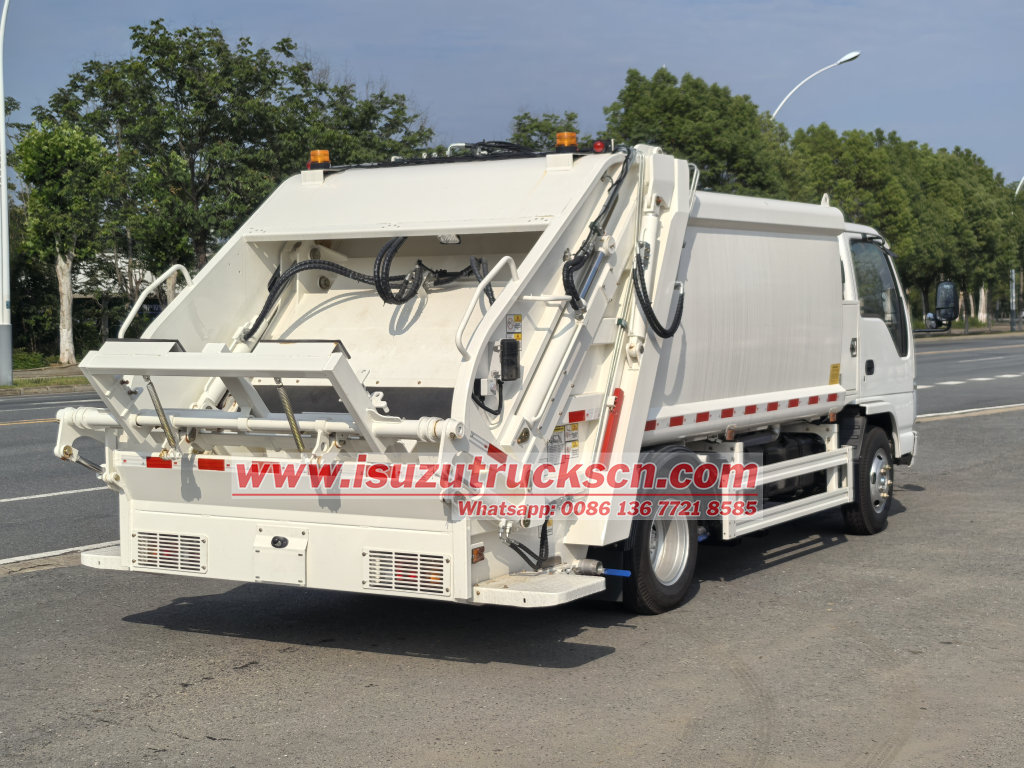
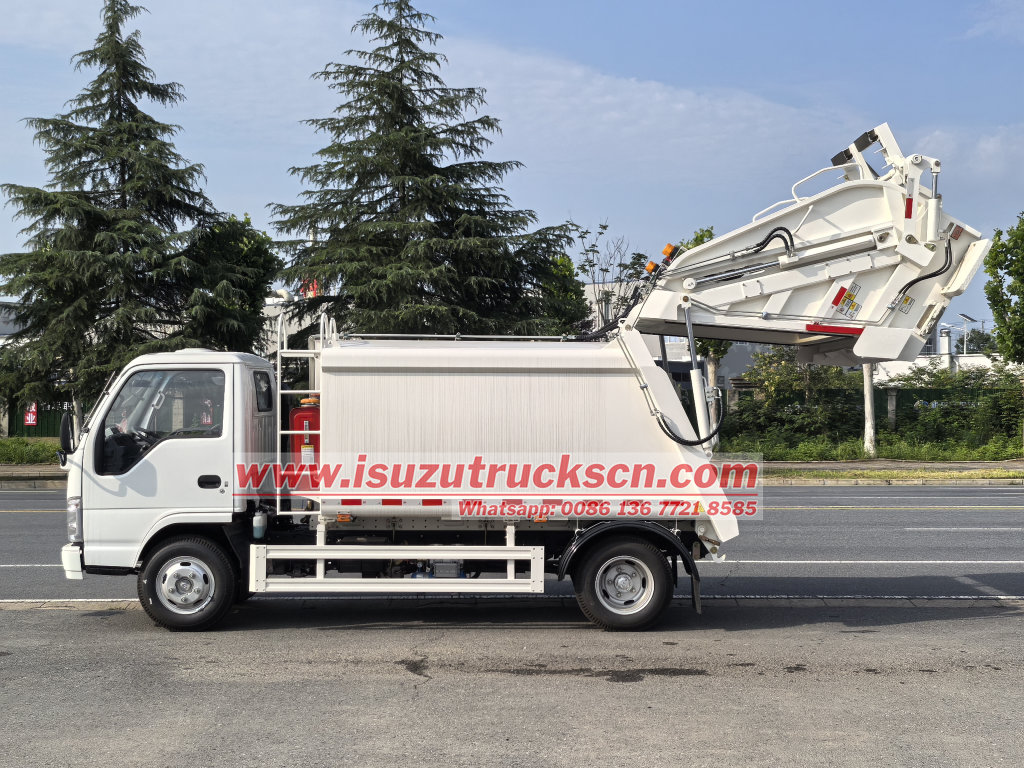
Philippines New 240L bin Powerstar Refuse Garbage Truck Isuzu, also named Isuzu chassis refuse compactor vehicle or Isuzu rear loaders. The Philippine government mass-customizes Powerstar Isuzu compression garbage trucks: helping Manila upgrade sanitation
Project background and procurement motivation
Manila, the capital of the Philippines, is facing increasingly severe garbage disposal challenges. As a megacity with a population of over 16 million, Manila generates a huge amount of garbage every day, and traditional garbage collection methods can no longer meet the demand. The Philippine government recently reached a strategic cooperation with POWERSTAR TRUCKS, a well-known Chinese commercial vehicle manufacturer, to mass-customize the "Philippines New 240L bin Powerstar Refuse Garbage Truck Isuzu" compression garbage truck designed specifically for the Manila area. This move marks an important step in the modernization of Philippine sanitation equipment.
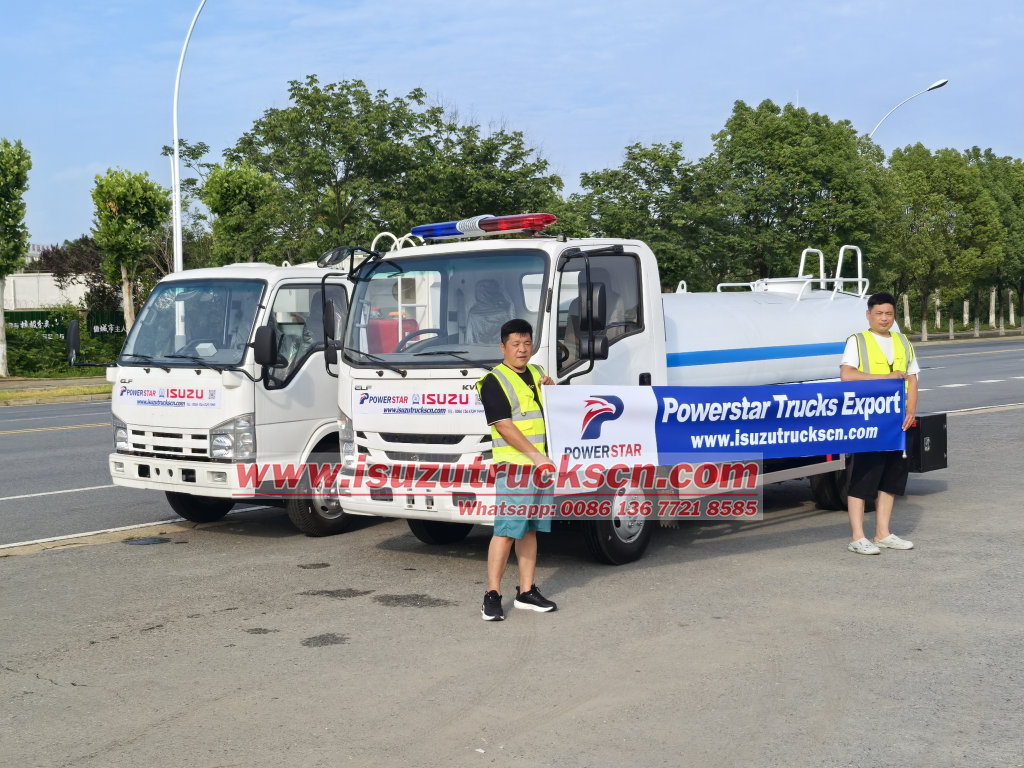
The Philippine government chose to cooperate with Chinese companies mainly based on three considerations: First, Chinese-made sanitation vehicles have significant advantages in terms of cost performance, and the price is 30-40% lower than that of European and American products with the same configuration; second, POWERSTAR TRUCKS, as a professional Isuzu chassis modification factory, has mature experience in manufacturing compressed garbage trucks, and its products have been exported to many countries in Southeast Asia; finally, China-Philippines economic and trade cooperation is becoming increasingly close, and China's "Belt and Road" initiative has provided financial and technical support for the construction of infrastructure in the Philippines.
Vehicle technical features and localized design
This batch of customized garbage trucks adopts a number of designs optimized for the urban environment of Manila:
Power system: Equipped with the Isuzu 4JB1 98 horsepower engine that meets the National IV emission standard, combined with the ISUZU MSB 5-speed gearbox, to ensure reliability and fuel economy in tropical climates. The engine has been specially tuned to adapt to the high temperature and humidity environment of Manila and meet local emission regulations.
Chassis and load capacity: Developed based on the special chassis of the National IV Isuzu NPR garbage truck for the Manila area, the wheelbase and suspension system are optimized for the complex road conditions in Manila, with a maximum load of 3-4 tons, perfectly matching the needs of urban garbage transportation.
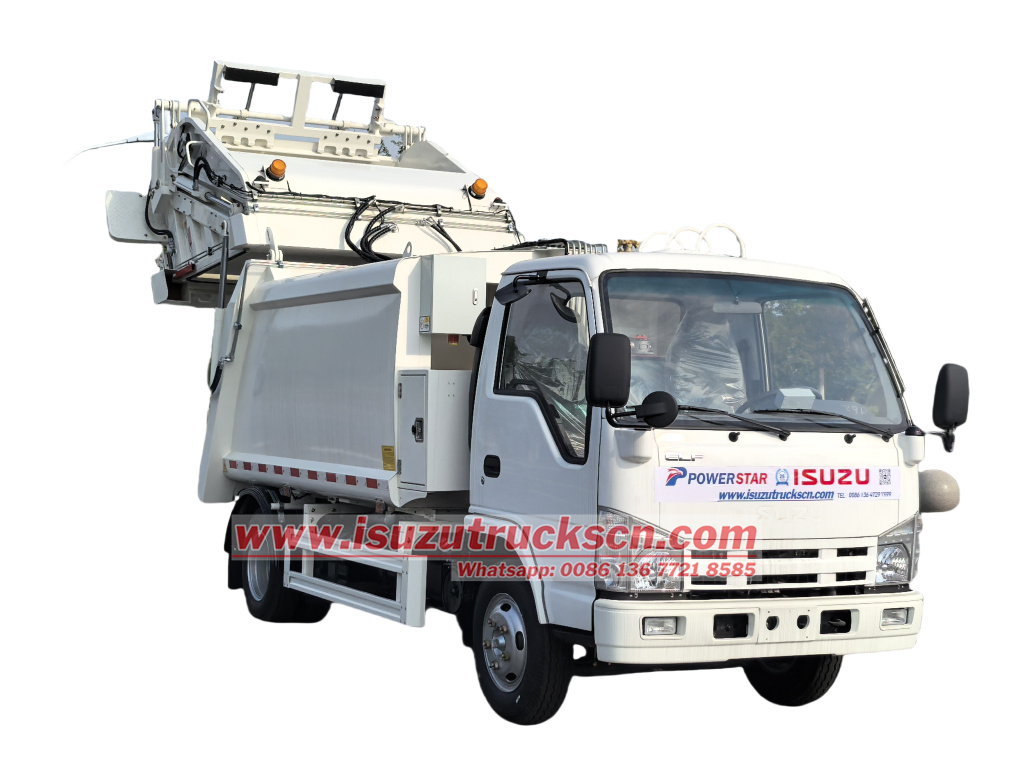
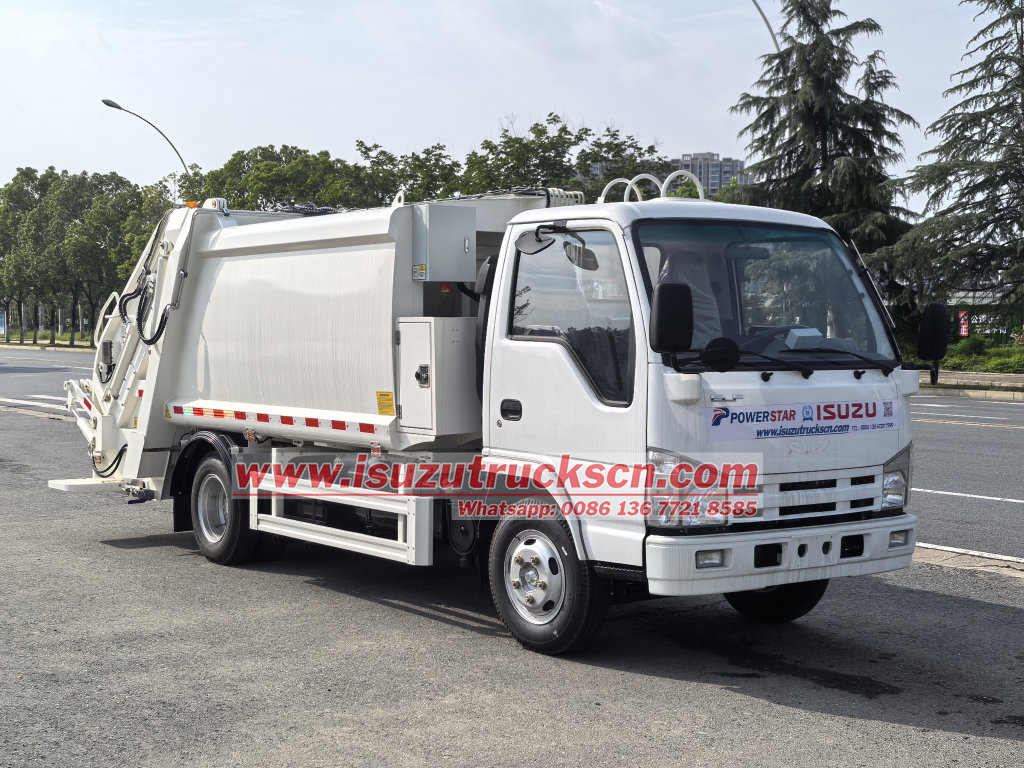
Garbage bin design: The 6-cubic-meter compression garbage bin adopts a fully sealed welding process and is equipped with an efficient compression device, which can compress the garbage volume to 1/3 of the original volume, significantly improving the efficiency of single transportation. The interior of the box is coated with an anti-corrosion coating to extend the service life.
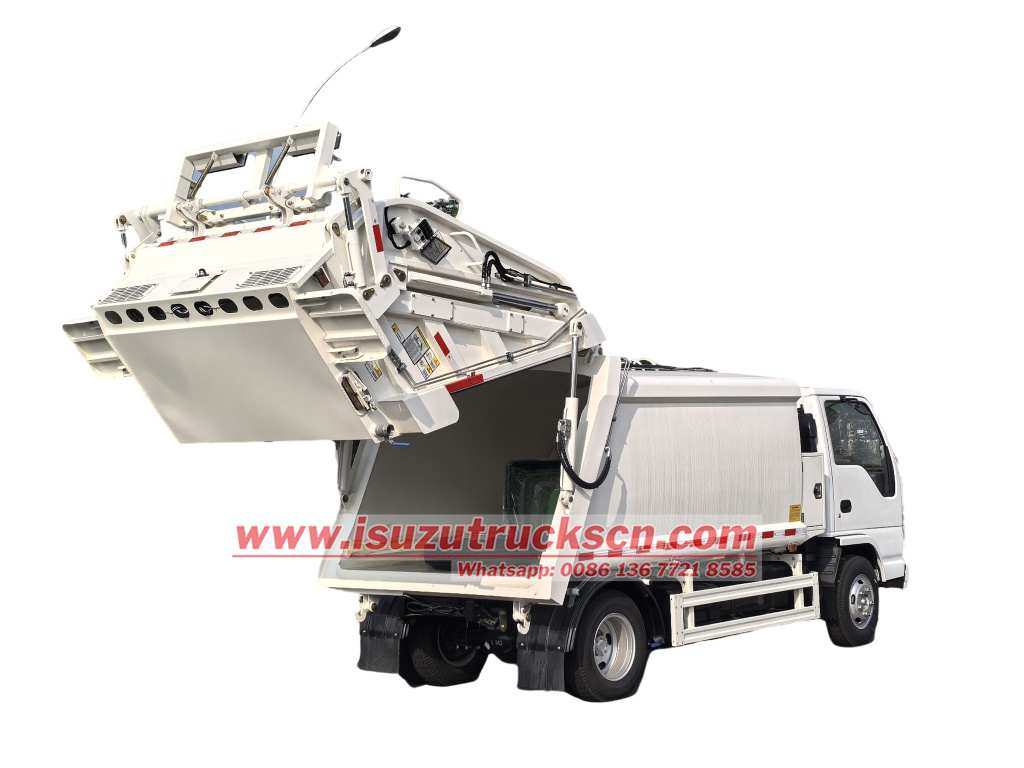
240L garbage bin adaptation: The rear-mounted lifting mechanism is specially designed for the 240L standard garbage bin commonly used in Manila, which can realize automatic loading and unloading, reduce manual intervention, and improve operating efficiency by more than 30%.
Urban adaptability: The height of the whole vehicle is controlled within 3.2 meters, which is suitable for the narrow streets and low overhead lines in Manila; the turning radius is optimized to 6.5 meters, which is convenient for flexible operation in densely populated residential areas.
Manila's sanitation status and equipment needs
Manila's garbage disposal system faces multiple challenges. The city's population density is as high as 93 people per hectare, and some slum areas even reach 400 people per hectare, generating a huge amount of domestic garbage. Traditional garbage collection methods mainly rely on human-powered tricycles and small tractors, which are inefficient and prone to secondary pollution. The pollution problem in Manila Bay is becoming increasingly serious, prompting the government to increase investment in sanitation.
Manila's special urban environment places strict requirements on the design of garbage trucks:
Road conditions: Urban roads are narrow and traffic congestion is serious, requiring garbage trucks to have good maneuverability and passability
Climate factors: High temperature and high humidity require vehicles to have excellent heat dissipation and anti-corrosion performance
Operation mode: It is necessary to adapt to garbage collection scenarios in different areas from high-end communities to slums
Environmental protection standards: Increasingly stringent emission regulations promote the purchase of vehicles with National IV and above standards
Market prospects and development trends
The Philippine compression garbage truck market will show the following development trends in the next few years:
Continued growth in demand: With the acceleration of urbanization and the improvement of environmental awareness, the annual growth rate of the Philippine sanitation equipment market is expected to remain at 8-10%. The demand for compression garbage trucks in Metro Manila is expected to exceed 500 in the next three years.
Technology upgrade: Intelligent and new energy sanitation vehicles will become the development direction. Although electric compression garbage trucks currently account for less than 5% in the Philippines, the government plans to increase the electrification rate to 50% by 2030.
Localized production: In order to reduce costs and create jobs, the Philippine government encourages foreign-funded enterprises to set up assembly plants locally. POWERSTAR TRUCKS is considering establishing a KD assembly base in the Philippines to better serve the local market.
Service model innovation: From simply selling equipment to providing an integrated solution of "equipment + operation + maintenance", helping local governments in the Philippines improve the overall efficiency of the sanitation system.
Significance of cooperation and future prospects
The cooperation between the Philippine government and POWERSTAR TRUCKS not only solves the current shortage of sanitation equipment, but also sets an example for China-Philippines economic and trade cooperation. With its excellent cost-effectiveness and localized design, sanitation vehicles made in China are gaining favor in more and more Southeast Asian countries.
In the future, as the Philippines' "Clean City" plan is further promoted, more Chinese sanitation equipment companies are expected to enter the market. POWERSTAR TRUCKS said it will continue to invest in research and development, develop more products that meet local needs for the Southeast Asian market, and explore the local application of new energy sanitation vehicles to contribute to improving regional environmental sanitation.
The "Philippines New 240L bin Powerstar Refuse Garbage Truck Isuzu" delivered in batches this time will first be deployed in the core urban area of Manila, gradually replacing old equipment, and is expected to increase garbage collection efficiency by more than 40%, significantly improve urban environmental sanitation conditions, and improve the quality of life of residents. This project also marks that China's high-end sanitation equipment manufacturing capabilities have been fully recognized by the international market.