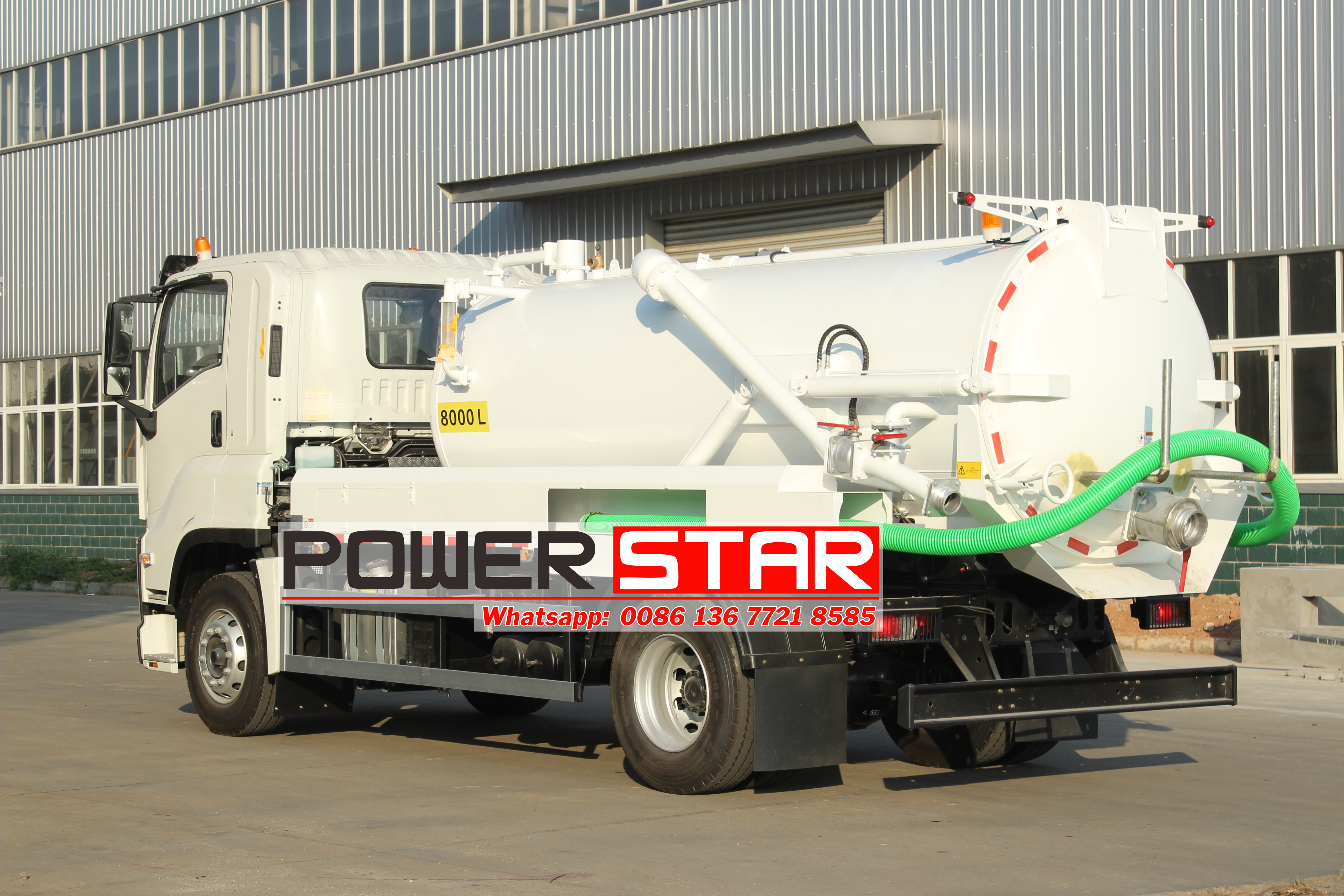
Common Isuzu sewage suction truck vacuum pump types
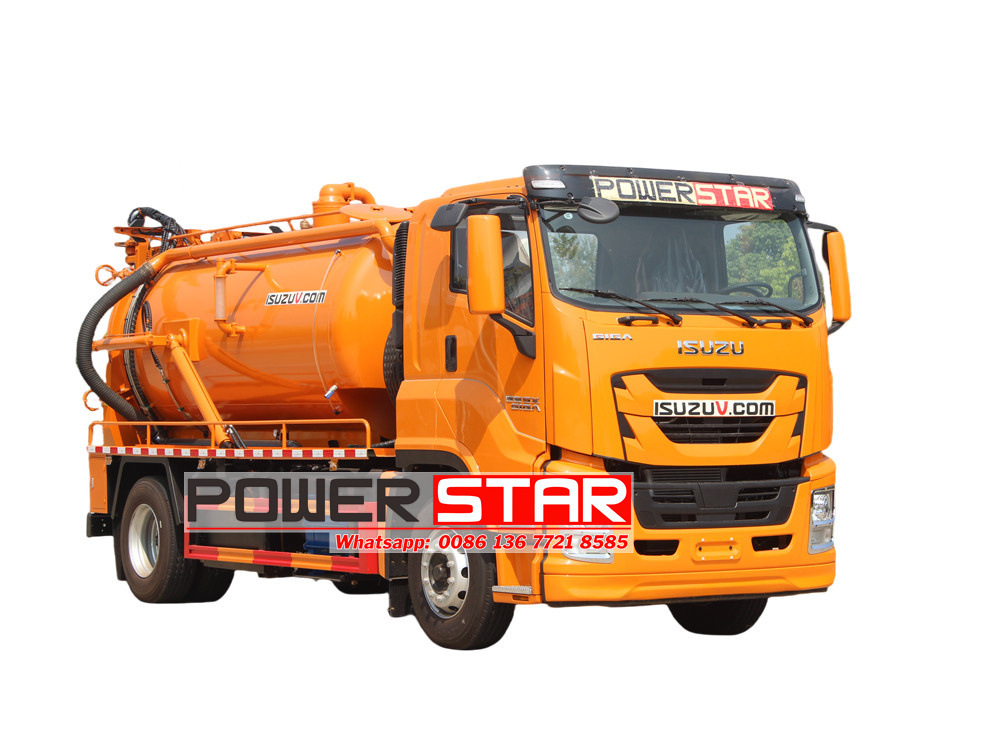
Isuzu sewage suction trucks, also known as vacuum sewage suction trucks, are sanitation vehicles that use the principle of vacuum negative pressure to suck sewage. Its core component is the vacuum pump. There are generally two types of vacuum pumps used in Isuzu sewage suction trucks:
 ★ Water circulation vacuum pumps
The water circulation vacuum pump (we call it a water pump for short) is divided into an air inlet and an exhaust port, a stator and a rotor (impeller), and the air inlet is connected to the inside of the sewage suction tank. The impeller is eccentrically installed on the stator or casing, and the pump body is filled with an appropriate amount of water (antifreeze can be installed in winter) as the working medium liquid. When the impeller rotates, the water is thrown to the inner wall of the pump body under the action of centrifugal force, forming a closed rotating water ring with a shape similar to the pump body and a thickness close to the same. At this time, a crescent-shaped space is formed between the impeller and the water ring to form a vacuum.
This space is divided into several small chambers by the impeller with the same number of blades. In one working cycle of the impeller, the volume of the small chamber in the first half of the cycle changes from small to large, and is connected to the suction port on the end face, and the gas (in the suction tank) is sucked in; in the second half of the cycle, the small chamber changes from large to small, and the gas is compressed. When the small chamber is connected to the exhaust port, the gas is discharged out of the pump. As the impeller rotates, the suction and exhaust process is carried out continuously and stably, so the gas can be continuously sucked, so that a negative pressure state is formed in the suction tank, so that the sewage is sucked into the suction tank through the suction port at the end of the suction tank, so as to achieve the purpose of suction.
The water circulation vacuum pump has a large exhaust volume and can operate for a long time. It is often used in large and medium-sized suction trucks with a capacity of more than 10 cubic meters.
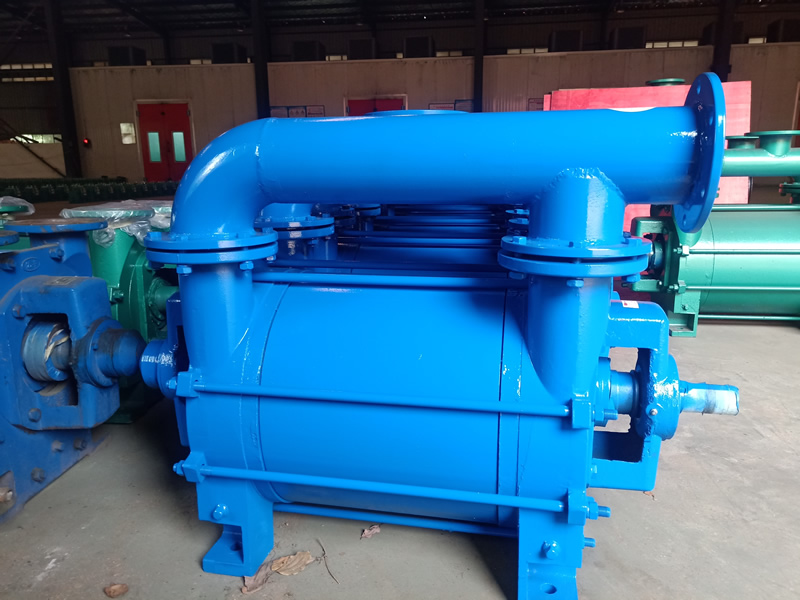
Advantages of water circulation vacuum pump:
1. Simple structure, low precision requirements, long service life and easy maintenance.
2. Large exhaust volume, strong suction force, and rapid suction operation.
3. Since there is no metal friction surface in the pump cavity, there is no need to lubricate the pump, and the wear is very small.
4. Low cost of use. The seal between the rotating parts and the fixed parts is completed by the water seal, and no oil is consumed.
5. No additional oil-water separator and water-vapor separator are required. Only a water tank needs to be added.
6. Since there is no metal friction in the pump cavity, the pump temperature is low and it can work continuously for a long time.
 ★ Rotary vane vacuum pump
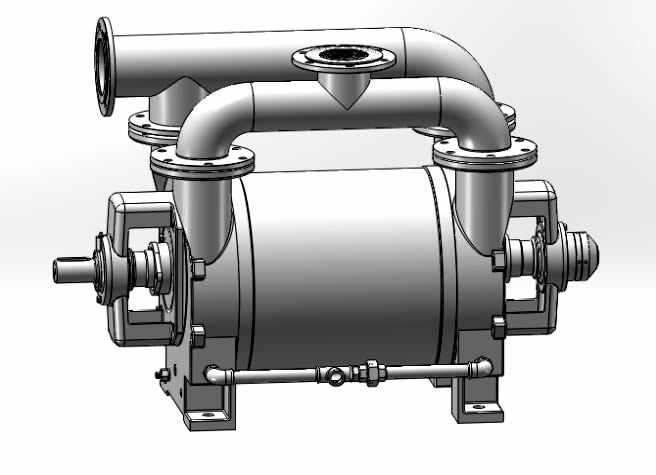
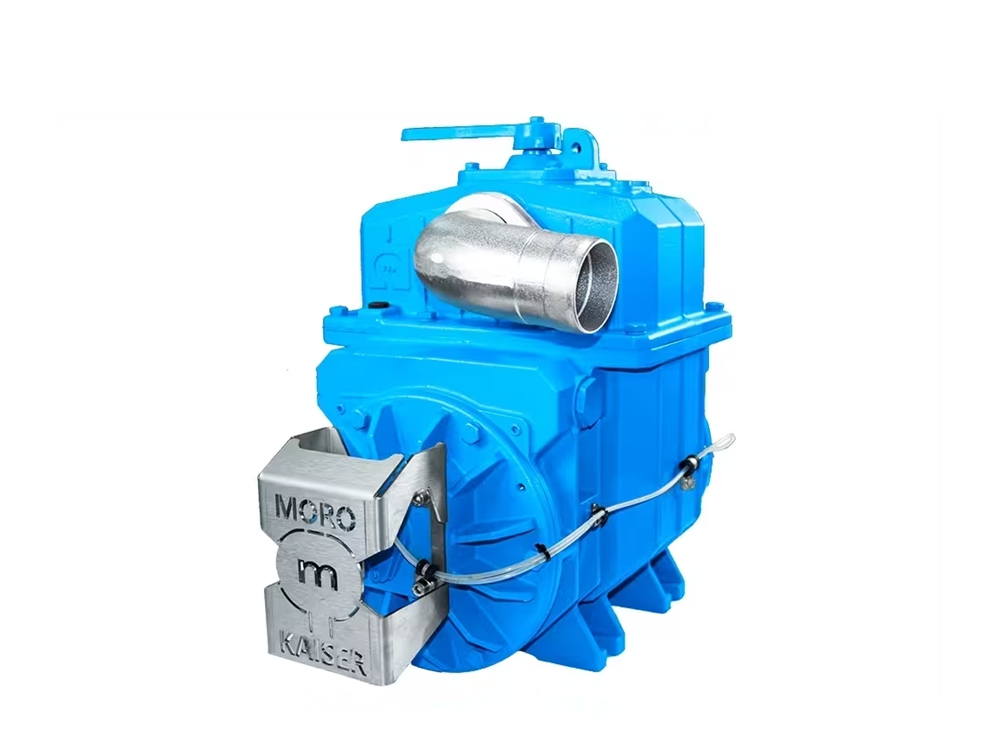
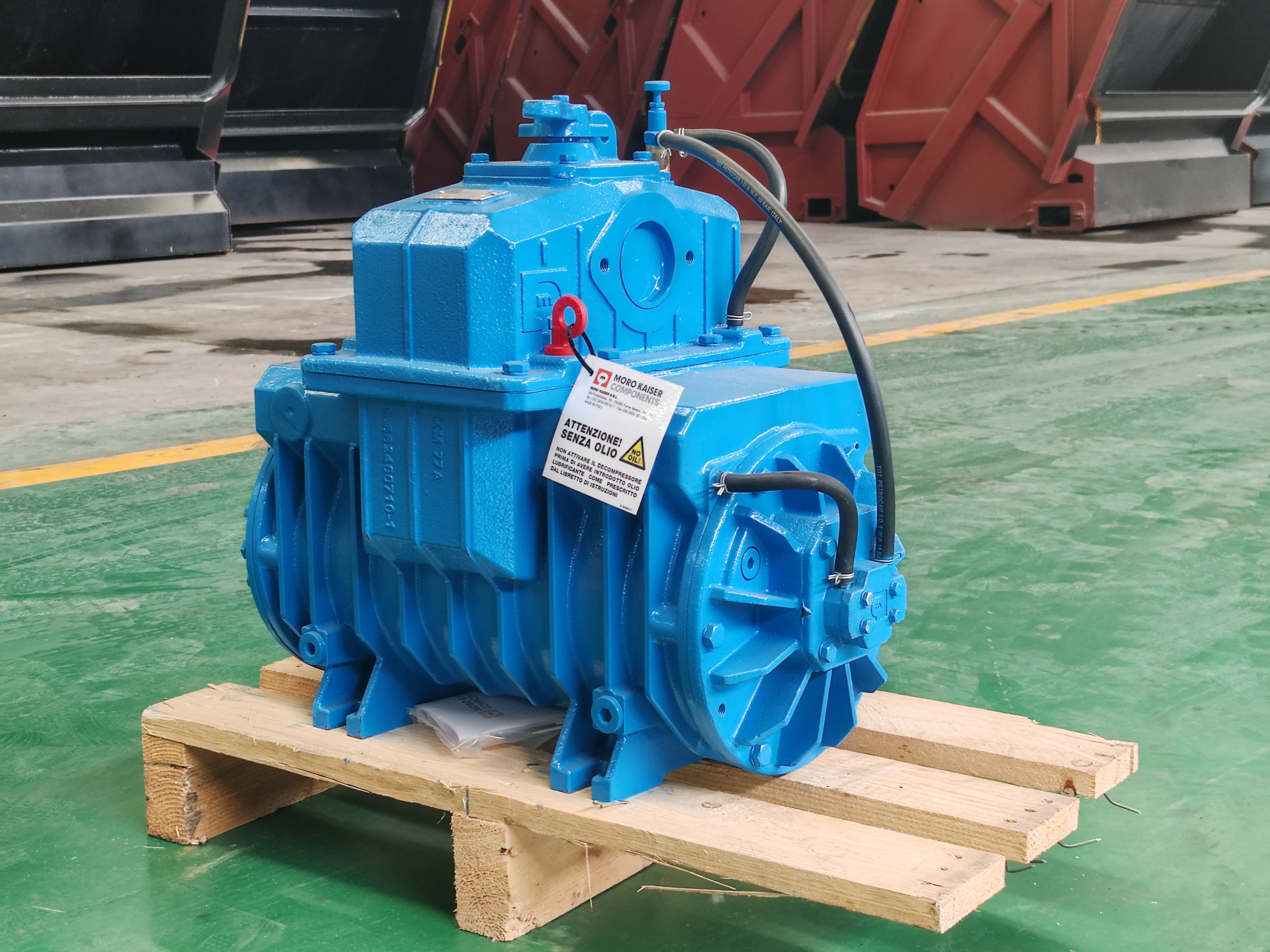
The rotary vane vacuum pump is also called an oil pump. The principle of this pump is similar to that of a water ring vacuum pump. Both are vacuums formed by compressed air, but the working environment is completely different. The water ring vacuum pump is cooled by liquid, while the rotary vane vacuum pump is cooled by air.
The rotary vane vacuum pump consists of an air inlet, an exhaust port, a stator, a rotor, and a rotary vane. The rotor is eccentrically fixed to the stator. There are grooves on the rotor for installing the rotary vane. The rotary vane can be radially expanded and contracted according to the wall of the pump body cavity, so that it fits tightly with the pump cavity. When a force is applied, the eccentric rotor drives the rotary vane to slide against the inner wall of the pump body under the action of centrifugal force. The volume of the suction studio in the first half of the cycle gradually increases, and the pumped gas is sucked into it until the rotary vane turns to the end of the suction. As the space is continuously reduced, the inhaled gas is isolated: the rotor continues to rotate, the isolated gas is gradually compressed, and the pressure increases. When the pressure exceeds the pressure of the exhaust port, the gas is discharged out of the pump. This cycle is repeated to remove the air in the container to form a vacuum.
The rotary vane vacuum pump is small in size, light in weight, low in noise, and requires low horsepower. It is often used in small and medium-sized sewage suction trucks of 3-10 cubic meters.
 Advantages of rotary vane vacuum pump:
1. The pump body is small and light, and does not take up space.
2. The speed is low, and it can also be used in vacuum suction trucks with low horsepower.
3. The ultimate vacuum degree is high, and there is a higher suction drop distance.
4. Compared with the water ring pump, the oil pump does not rust or scale.
5. Install an additional water vapor separator, which reduces the overflow phenomenon relative to the water pump.
6. Mature structure and low failure rate
7. Fast air extraction rate, suitable for occasions where fast air extraction is required
8. The low-temperature engine oil can be replaced at low temperatures and can be used normally.
What to do if the vacuum pump of the vacuum suction truck has insufficient suction?
When the vacuum suction truck is sucking and pumping sewage, it mainly relies on the suction of the vacuum pump. If the vacuum pump has insufficient suction, the suction operation cannot be completed. What is the reason for the insufficient suction of the sewage suction truck? How should it be solved?
1. Leakage
The sewage suction truck uses a vacuum pump to discharge the air in the tank, form a vacuum, form a negative pressure, and use the pressure of the air to generate suction. If there is a leak in the suction tank, suction pipeline, and vacuum exhaust pipe of the sewage suction truck, it cannot reach a vacuum state, then it cannot generate enough suction, and there will be insufficient suction. In this case, stop the operation first, then check whether there is a leak in the sewage suction truck, and deal with it in time.
2. Vacuum pump wear
There are generally two aspects of vacuum pump wear, one is the wear of the pump casing, and the other is the wear of the scraper. The vacuum pump will slowly wear out after a long time of use. If the casing is severely worn, the inner wall of the casing is not smooth, and grooves appear, then maintenance will not work, and it can only be replaced. The wear of scraper blades is common. When the pipe blades are worn, they cannot be close to the inner wall of the sewage suction pump to form a vacuum. At this time, the scraper blades need to be replaced in time.
3. The valve of the sewage suction pipeline is closed or not opened enough
When this happens, even if the vacuum pump generates enough suction, the suction is blocked in the valve or pipeline, and the sewage cannot enter the sewage suction tank smoothly. There will be a false illusion of insufficient suction. This problem can be solved very simply by opening the valve.
4. The exhaust pipe is not smooth
The exhaust route of the sewage suction truck is like this. Starting from the tank, the exhausted gas goes from the overflow valve along the exhaust pipe to the water vapor separator, and then from the water vapor separator along the pipeline into the vacuum pump. The gas to be exhausted is forcibly squeezed out in the vacuum pump, passes through the oil-gas separator, and is discharged outside the car. To put it bluntly, if the overflow valve, air pipe, and water vapor separator are blocked, it will cause poor exhaust and insufficient suction. This situation requires timely inspection of the exhaust route.
5. Inappropriate vacuum pump model
The suction power of the sewage suction truck is closely related to the vacuum pump. If the vacuum pump model is inappropriate and the performance parameters cannot meet the requirements, the suction power will be insufficient. Generally, it is better to choose a vacuum pump with low speed and large exhaust volume.