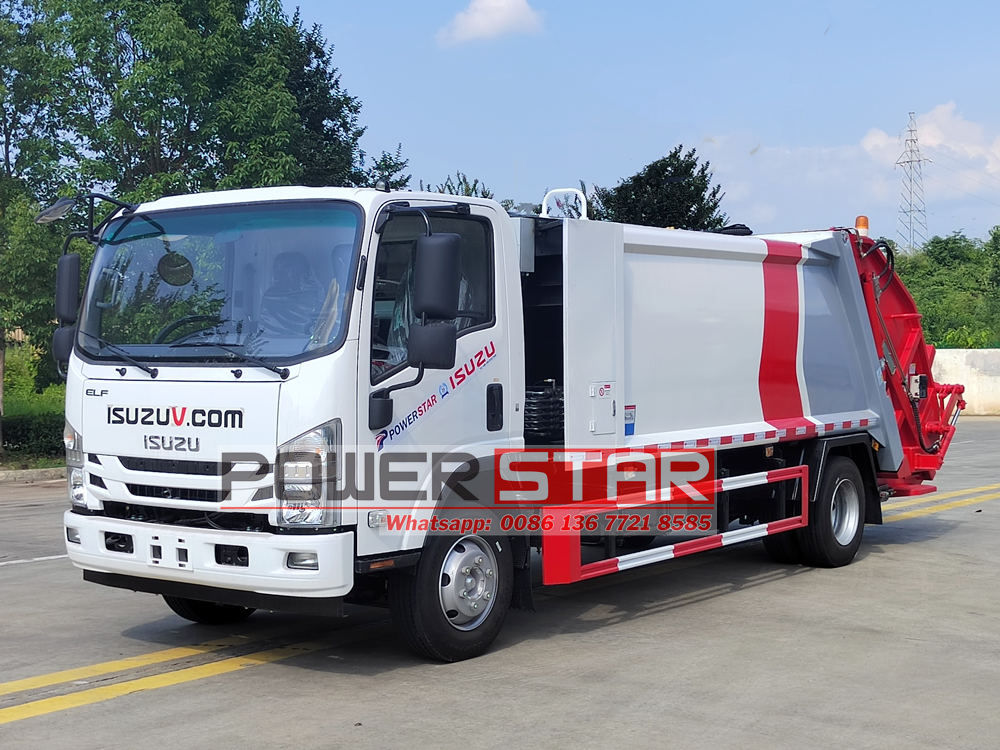
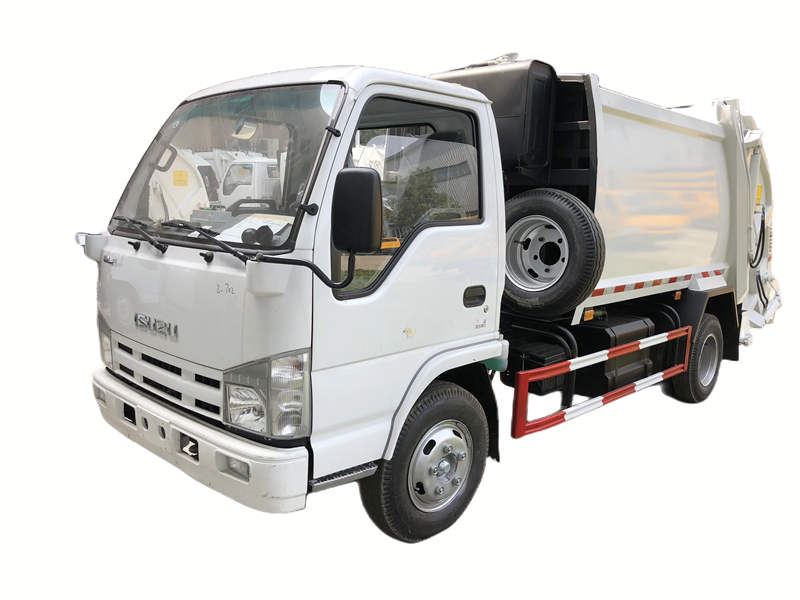
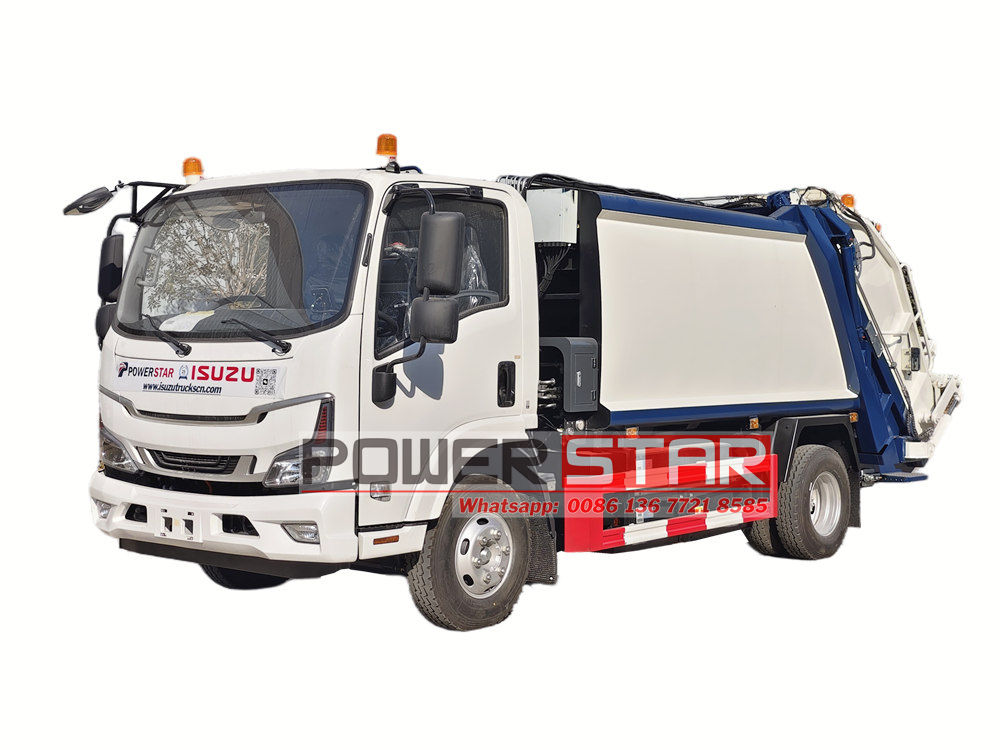
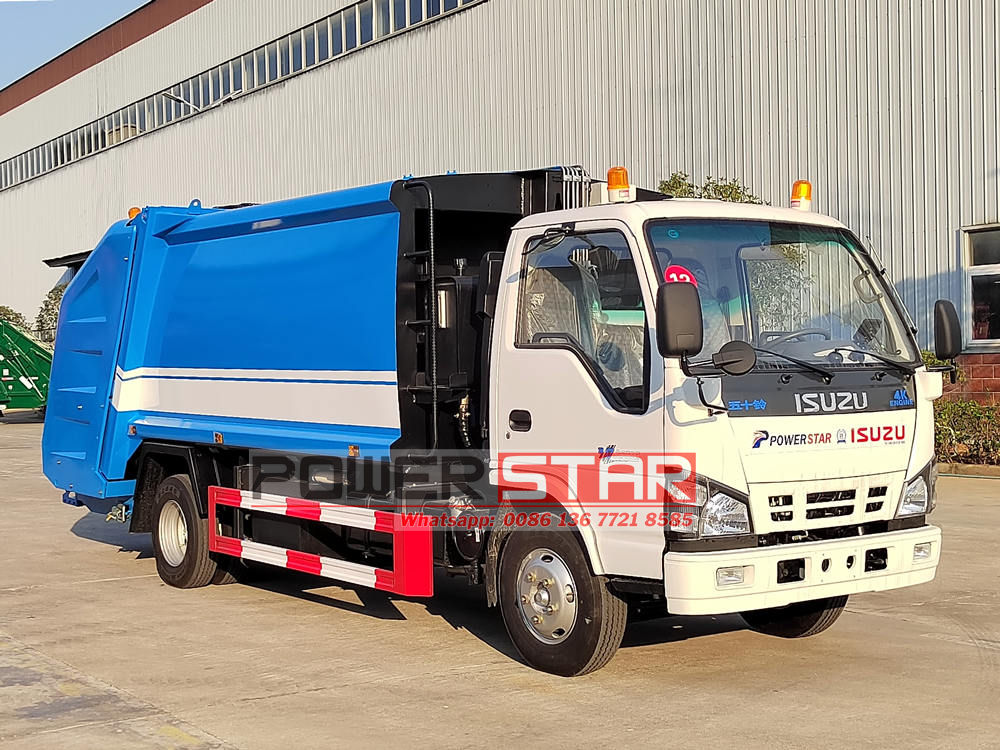
With the strict control of carbon emissions around the world, electrification has become an important direction for commercial vehicles. The birth of Isuzu electric trash compactor truck has undoubtedly injected new vitality into the field of sanitation. From precise drawing design to fine component assembly, to strict quality inspection, every link embodies the pursuit of high quality and respect for the environment. With the advantages of zero emissions and low noise, Isuzu EVM600 trash compactor truck meets the green environmental protection needs of the city. This article will introduce the EVM600 trash compactor truck production process to the departure in detail. The entire production process of Isuzu electric trash compactor truck is a highly sophisticated and technology-intensive manufacturing process, covering multiple key links from the chassis entering the factory to the final shipment. ➤ 1. Isuzu EMV600 electric chassis arrives at the factory for acceptance. The first step of production is the arrival of Isuzu electric chassis. As the core foundation of the vehicle, the electric chassis is equipped with an advanced electric drive system, including a high-efficiency motor, a large-capacity battery pack and an intelligent electronic control unit. After the chassis arrives at the factory, a comprehensive quality inspection is first carried out to ensure that the core components such as the motor, battery, and electronic control system are intact and meet the design standards. After the inspection is completed, it is ready to enter the next stage of assembly. The key to this link is to ensure the stable performance of the chassis' electric system, laying a solid foundation for the subsequent vehicle assembly. ★Isuzu EVM600 electric trash compactor truck uses Ningde CATL L173TB2 battery, which is a high-performance lithium-ion battery. The battery uses advanced lithium iron phosphate (LFP) cathode material, which has high safety, long cycle life and excellent thermal stability. L173TB2 battery supports high-rate charge and discharge, adapts to fast charging needs, and has excellent low-temperature performance to ensure stable operation in extreme environments. ➤2. Technical drawings confirmed When the chassis enters the factory, the technical team determines the detailed design drawings according to customer needs and actual operation scenarios. This process includes body structure design, compression device layout, electrical system connection scheme, etc. The design team will comprehensively consider the lightweight, intelligent and operating efficiency of the vehicle to ensure that the vehicle design meets both environmental protection requirements and the needs of high-intensity sanitation operations. After the drawings are determined, they will be reviewed and optimized many times to ensure the feasibility and economy of the design. This stage is the "blueprint" of production, which directly determines the ...
View More