Choosing the right truck configuration is an important decision for any transportation, construction, logistics, or industrial business. When comparing commercial trucks, buyers often encounter three common drivetrain layouts: 4x2, 4x4, and 6x4. Although these configurations may look similar in a specification sheet, they are designed for different operating conditions.
The short answer: A 4x2 truck is generally suitable for regular road transportation and daily commercial deliveries. A 4x4 truck is designed for better traction on muddy, sandy, uneven, or off-road terrain. A 6x4 truck uses two driven rear axles and is commonly selected for heavy-duty transportation, construction, mining, and tractor-trailer applications.
There is no single configuration that is best for every business. The right choice depends on road conditions, cargo weight, traction requirements, operating distance, maintenance costs, and the type of truck body required.
In this guide, we compare 4x2, 4x4, and 6x4 truck configurations, explain their practical differences, and show how to select a suitable Isuzu commercial truck from Powerstar Trucks for your business.
The numbers in a truck's drivetrain configuration describe the number of wheel positions or wheel ends and how many of them are driven. They do not directly indicate the truck's payload, engine power, or gross vehicle weight.
• 4x2: Four wheel positions, with two driven wheel positions. On a conventional truck, the front axle steers and the rear axle provides drive.
• 4x4: Four wheel positions, with all four driven. Both axles receive engine power through the drivetrain.
• 6x4: Six wheel positions, with four driven. The truck normally has one front steering axle and a rear tandem axle with both rear axles driven.
For trucks equipped with dual rear tires, each wheel position may carry more than one physical tire. This is why a 6x4 truck is often described as a ten-wheeler even though its configuration is written as 6x4.
One important distinction: a 6x4 is not the same as a 6x2. Both have three axles, but a typical 6x2 has only one driven rear axle, while a 6x4 has two driven rear axles.
Understanding this basic difference helps buyers compare vehicle specifications more accurately before selecting a chassis.
A 4x2 truck has one steering axle and one driven axle. In most conventional commercial truck designs, the rear axle provides propulsion while the front axle handles steering.
Because it has a simpler drivetrain than a comparable 4x4 model, a 4x2 truck is often a practical option for businesses operating mainly on paved roads, highways, and well-maintained urban or industrial routes.

Main advantages of a 4x2 truck
• Lower drivetrain complexity: A conventional 4x2 layout generally has fewer driven components than a comparable 4x4 truck.
• Suitable for paved roads: It works well for urban delivery, regional distribution, and highway transportation.
• Practical operating costs: Depending on the model and operating conditions, fewer drivetrain components may reduce maintenance requirements.
• Good maneuverability: Many medium-duty 4x2 trucks are well suited to city streets, warehouses, and distribution centers.
• Flexible body applications: A 4x2 chassis can support cargo boxes, refrigerated bodies, tankers, sanitation equipment, and other commercial superstructures when properly specified.
Typical applications of 4x2 trucks
• Urban and regional cargo transportation
• Supermarket and retail distribution
• Refrigerated food delivery
• Water and fuel transportation on suitable roads
• Municipal service vehicles
• General logistics and warehouse distribution
For example, the Isuzu KV800 chassis listed on the Powerstar Trucks website uses a 4x2 drive configuration, with 4x4 available as an option. Its published specifications include a 4JZ1-TCG62 engine rated at 180 hp and an Isuzu MYY six-speed manual transmission.
This type of chassis can be considered for medium-duty transportation and specialized body applications where regular road operation is the main requirement.
Explore the Isuzu KV800 10,550 kg GVW chassis cab for more configuration details.
When is 4x2 not the best choice? If your truck regularly operates on deep mud, loose sand, steep unpaved roads, or slippery construction access routes, a conventional 4x2 drivetrain may not provide enough traction. In those situations, a 4x4 or an appropriately specified heavy-duty truck may be more suitable.
A 4x4 truck is equipped with a drivetrain that can deliver power to both the front and rear axles. Compared with a conventional 4x2 truck, this arrangement can improve traction when road surfaces are loose, slippery, or uneven.

When one axle has limited grip, the additional driven axle can help the vehicle maintain forward movement. This is particularly useful in applications where trucks must leave paved roads or travel through changing terrain.
Main advantages of a 4x4 truck
• Improved traction: Power can be delivered to both axles, helping the truck move across loose or slippery surfaces.
• Better off-road capability: A suitable 4x4 chassis can be configured for construction sites, rural roads, mining access routes, and remote work areas.
• More operating flexibility: The vehicle can handle a wider range of road conditions than a conventional 4x2 configuration.
• Useful for specialized applications: Four-wheel-drive chassis can support selected rescue, utility, fuel delivery, crane, and engineering truck applications.
Typical applications of 4x4 trucks
• Remote construction and infrastructure projects
• Mining and industrial site support
• Rural and agricultural transportation
• Emergency response and rescue operations
• Off-road fuel and water delivery
• Specialized crane and service vehicles
Powerstar Trucks offers an Isuzu 4x4 truck range for customers who need vehicles for challenging road conditions. Available applications include 4x4 cargo trucks, dump trucks, crane trucks, and fuel trucks.
However, four-wheel drive does not make a truck suitable for every off-road environment. Ground clearance, approach and departure angles, tire selection, axle protection, suspension, engine torque, and the driver's operating technique are also important.
For example, a truck working on soft sand may need suitable tires and controlled tire pressure, while a vehicle operating on rocky construction roads may require additional underbody protection. The complete vehicle specification matters as much as the drivetrain.
What should buyers consider? A 4x4 truck normally has additional drivetrain components compared with a similar 4x2 model. This can add weight, complexity, and maintenance requirements. If a truck spends nearly all its working hours on paved roads, the extra four-wheel-drive capability may not provide enough business value to justify the additional cost.
A 6x4 truck has three axles, with both rear axles driven. The front axle is normally responsible for steering, while the rear tandem axle provides propulsion and supports a substantial portion of the vehicle load.
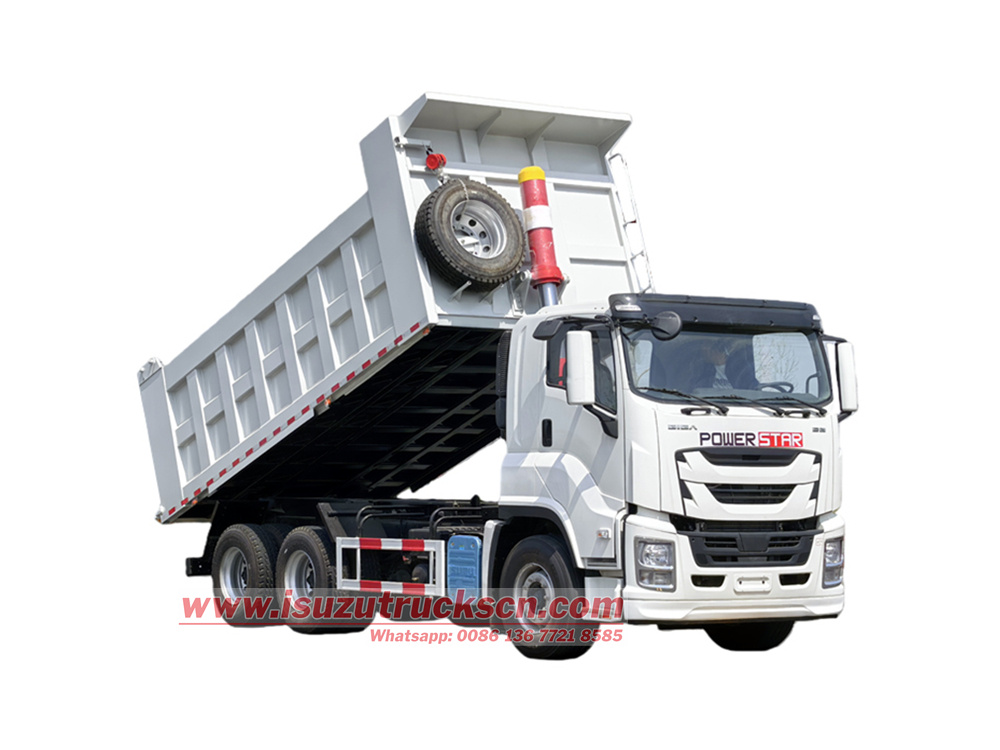
The 6x4 configuration is widely used in heavy-duty commercial transportation because the driven rear tandem can provide substantial traction and distribute loads across two rear axles, subject to the vehicle's rated limits.
Main advantages of a 6x4 truck
• Two driven rear axles: Both rear axles contribute to propulsion, making the configuration suitable for demanding heavy-duty operations.
• Load distribution: The rear tandem axle arrangement can distribute vehicle and cargo loads across two axles, within approved axle ratings.
• Heavy-duty applications: It is commonly selected for dump trucks, tractor trucks, construction vehicles, and other demanding commercial applications.
• Strong traction for heavy loads: The driven tandem is useful when moving heavy vehicles or loaded trailers on suitable roads and work sites.
• Flexible heavy truck platforms: A 6x4 chassis can be configured for a range of specialized bodies and transportation tasks.
Typical applications of 6x4 trucks
• Heavy-duty tractor-trailer transportation
• Mining and construction dump trucks
• Heavy equipment transportation
• Large water and fuel tankers
• Heavy-duty fire and engineering vehicles
• Industrial and infrastructure projects
A practical example is the Isuzu GIGA 6x4 mining dump truck listed on the Powerstar Trucks website. Its published configuration includes a 35,000 kg gross vehicle weight, a 6WG1-TCG60 engine rated at 420 hp, and a 12-speed FAST transmission. The listed vehicle is designed for demanding material transportation applications.
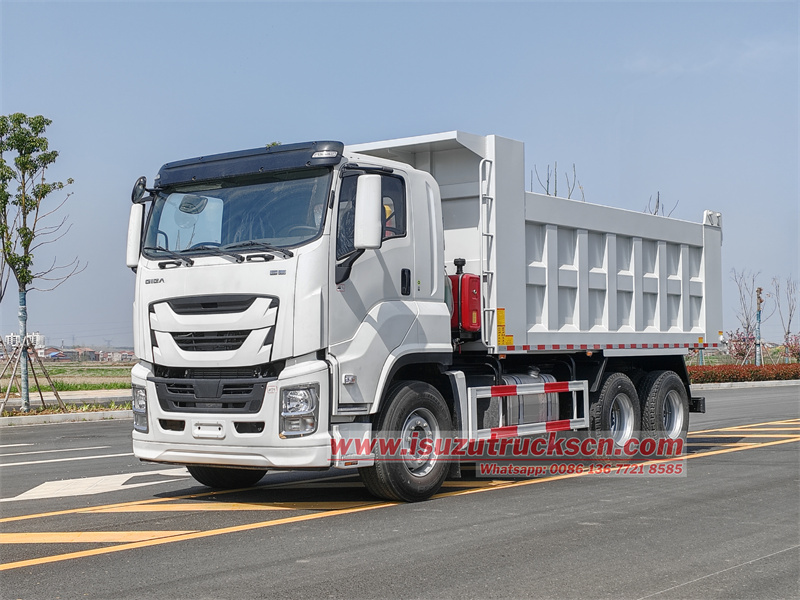
For businesses transporting sand, gravel, construction materials, or mining products, a 6x4 configuration may provide a more appropriate platform than a medium-duty 4x2 truck.
View the Isuzu GIGA VC66 6x4 heavy-duty dump truck to review a specific heavy-duty configuration.
It is important to remember that a 6x4 truck is not automatically more capable than every 4x4 truck in every terrain condition. A 4x4 vehicle may be better suited to certain low-speed off-road situations, while a 6x4 is generally designed around heavy-duty load carrying and traction through its rear tandem. The intended application should determine the choice.
The following table summarizes the practical differences between the three configurations. It is a general comparison; actual performance depends on the specific chassis, axle ratings, tires, drivetrain, and vehicle body.
| Comparison | 4x2 | 4x4 | 6x4 |
|---|---|---|---|
| Axle arrangement | Two axles | Two axles | Three axles |
| Driven axles | One | Two | Two rear axles |
| Typical road use | Paved roads and highways | Mixed roads and off-road routes | Heavy-duty roads and work sites |
| Traction characteristics | Suitable for normal road conditions | Power available at both axles | Driven rear tandem |
| Typical applications | Delivery and distribution | Remote work and off-road services | Dump trucks and tractor trucks |
| Drivetrain complexity | Generally simpler | Generally higher than 4x2 | Heavy-duty tandem drive system |
| Best selection factor | Road efficiency and daily transport | Traction and terrain | Heavy load and traction requirements |
Which configuration is more economical? A 4x2 truck is often a cost-effective choice for regular road transportation because of its simpler drivetrain. A 4x4 may justify its additional cost when off-road access is essential. A 6x4 can be a practical investment when the business requires a heavy-duty platform, higher permitted axle capacity, or demanding trailer and construction applications.
Fuel consumption and maintenance costs are not determined by the drivetrain alone. Engine size, transmission, vehicle weight, tire type, road gradient, driving habits, and load all influence actual operating expenses.
Different businesses have different transportation requirements. Instead of selecting a configuration based only on its technical appearance, buyers should consider the conditions under which the truck will operate every day.
| Industry or Business | Configuration to Consider | Reason |
|---|---|---|
| Urban delivery and logistics | 4x2 | Regular paved roads and frequent city deliveries |
| Supermarket distribution | 4x2 | Efficient daily transportation and urban access |
| Rural construction support | 4x4 | Improved traction on uneven and unpaved access roads |
| Mining and quarry operations | 6x4 or suitable 4x4 | Depends on material weight, terrain, and duty cycle |
| Long-distance heavy freight | 4x2 or 6x4 tractor | Depends on trailer weight, route, and local regulations |
| Heavy construction material transport | 6x4 | Heavy-duty chassis and driven rear tandem |
| Remote fuel and water delivery | 4x4 or 6x4 | Depends on terrain, tanker volume, and vehicle weight |
For regular cargo transportation, businesses can compare the Isuzu N-Series truck range and choose a suitable chassis for their cargo body and route requirements.
For larger commercial vehicles, the Isuzu GIGA heavy-duty truck range provides configurations for more demanding transportation and specialized applications.
Before ordering a truck, evaluate the following practical factors. These questions help narrow down the right configuration and reduce the risk of buying a vehicle that does not match actual working conditions.
Road conditions
Start by identifying the roads the truck will use most frequently. If the majority of operations take place on highways and paved urban roads, 4x2 may be sufficient. If the vehicle regularly enters muddy, sandy, steep, or uneven locations, 4x4 deserves consideration. For heavy-duty construction and transportation work, evaluate whether a 6x4 is more appropriate.
Cargo weight and axle ratings
Do not assume that a 6x4 automatically has a higher legal payload than a 4x4 or 4x2. Actual carrying capacity depends on GVW or GVWR, curb weight, axle ratings, tire load capacity, body weight, and local road regulations. Confirm the completed vehicle's weight distribution before making a purchase.
Operating distance
Long-distance highway transportation often benefits from a configuration matched to the tractor and trailer combination. A 4x2 tractor may suit certain road and load conditions, while a 6x4 tractor can be more appropriate for heavier combinations or routes requiring additional driven-axle traction.
Maintenance and operating budget
Consider the full cost of ownership, including fuel, tires, scheduled maintenance, drivetrain components, downtime, and replacement parts. A more complex drivetrain may be worthwhile when its additional capability is needed, but it may not make financial sense for a truck that rarely leaves paved roads.
Destination-country regulations
Different countries have different rules for axle loads, vehicle dimensions, gross vehicle weight, emissions, and road access. Confirm that the selected configuration and completed truck can be registered and operated legally in the destination market.
The drivetrain configuration is only one part of a truck's technical specification. Buyers should also compare the following details before confirming an order:
• Engine power and torque: Check whether the engine can meet the required load, gradient, and operating cycle.
• Transmission: Confirm the number of gears, gear ratios, and suitability for the intended route.
• Front and rear axle ratings: Ensure the axles can support the planned vehicle and cargo weight.
• GVW and payload: Calculate usable payload after accounting for the body and equipment.
• Wheelbase: Match the chassis dimensions to the required cargo body or specialized equipment.
• Suspension: Select a suitable suspension specification for road quality and operating conditions.
• Tires: Choose tires with appropriate load ratings and tread patterns for the working environment.
• Drive system: Confirm whether the vehicle uses 4x2, 4x4, or 6x4, and check the available transfer case or differential equipment where applicable.
• Body configuration: Make sure the chassis is suitable for the planned cargo box, tanker, dump body, crane, or other superstructure.
• Local compliance: Verify emissions, safety, registration, and road-use requirements.
For example, businesses considering a specialized heavy-duty vehicle should compare the chassis with its intended body. An Isuzu dump truck, a tractor truck, and a tanker may require different wheelbases, axle configurations, power outputs, and body mounting arrangements even when they belong to the same broad truck family.
For heavy material transportation, you can also review the Isuzu dump truck product range to compare application-specific vehicle options.
Some buyers focus too heavily on the drivetrain label and overlook other factors that have a direct impact on truck performance. The following mistakes are worth avoiding:
• Choosing 4x4 without a real off-road requirement: Additional traction may be useful, but it can also bring extra purchase and maintenance costs.
• Assuming 6x4 always means higher payload: Payload is determined by the complete vehicle specification and legal axle limits, not by the drivetrain label alone.
• Confusing 6x4 with 6x2: Both have three axles, but their driven-axle arrangements are different.
• Ignoring the truck body weight: A crane, tanker, refrigerated box, or dump body changes the completed vehicle weight.
• Overlooking tire and axle specifications: A suitable drivetrain cannot compensate for incorrect tires or an unsuitable axle rating.
• Buying for occasional extreme conditions: Consider how often the truck will actually encounter difficult terrain rather than choosing a more complex configuration based on rare situations.
The best truck configuration is the one that meets the actual transportation requirement without unnecessary operating complexity.
The choice between 4x2, 4x4, and 6x4 becomes much clearer when you start with the truck's daily working environment.
• Choose 4x2 if your business mainly handles urban delivery, regional distribution, and highway transportation on suitable roads.
• Choose 4x4 if the truck regularly travels through muddy, sandy, steep, or uneven terrain and needs additional traction.
• Choose 6x4 if your operation involves heavy-duty transportation, construction materials, mining work, or demanding tractor-trailer applications that benefit from a driven rear tandem.
Powerstar Trucks provides a range of Isuzu commercial vehicle chassis and specialized truck solutions for different industries and operating conditions. The right configuration should be selected according to cargo requirements, road conditions, body design, axle ratings, and destination-country regulations.
When requesting a quotation, provide your required payload, truck body type, typical road conditions, destination country, and preferred engine or transmission specifications. This information helps the supplier recommend a configuration that fits your actual business rather than simply offering the largest or most powerful truck.
Explore the Isuzu 4x4 truck range, compare the Isuzu 6x4 tractor truck range, or contact the Powerstar Trucks team to discuss a suitable vehicle for your project.
What is the main difference between a 4x2, 4x4, and 6x4 truck?
A 4x2 truck has two axles and one driven axle. A 4x4 truck has two axles with both axles driven. A 6x4 truck has three axles, with both rear axles driven. Each configuration is designed for different traction, load, and operating requirements.
Is a 4x4 truck better than a 4x2 truck?
Not in every situation. A 4x4 truck generally provides better traction on loose or slippery terrain, while a 4x2 truck is often more practical for regular paved-road transportation because of its simpler drivetrain.
Is a 6x4 truck suitable for heavy loads?
Yes. A 6x4 truck is commonly used for heavy-duty transportation, construction, mining, and tractor-trailer applications. Its driven rear tandem can provide traction and distribute loads across two rear axles, subject to the vehicle's rated limits and local regulations.
Which truck configuration is best for off-road driving?
A properly specified 4x4 truck is generally suitable for off-road applications requiring traction on muddy, sandy, or uneven surfaces. Tire selection, ground clearance, axle protection, and vehicle design are also important.
Does a 6x4 truck have more payload capacity than a 4x4 truck?
Not automatically. Payload depends on GVW or GVWR, vehicle curb weight, axle ratings, tires, body weight, and local regulations. A 6x4 may support a heavier-duty application, but the actual legal payload must be confirmed from the complete vehicle specification.
Is a 4x2 tractor truck suitable for long-distance transportation?
Yes. A 4x2 tractor truck can be suitable for long-distance highway transportation when its engine, axle ratings, gross combination weight, trailer compatibility, and route conditions match the operating requirement.
What is the difference between a 6x4 and a 6x2 truck?
Both configurations normally have three axles. A 6x4 truck has two driven rear axles, while a typical 6x2 truck has only one driven rear axle and one non-driven rear axle.
Can an Isuzu KV800 be configured as 4x2 or 4x4?
The Isuzu KV800 product listing on Powerstar Trucks identifies 4x2 drive as the standard configuration and 4x4 as an available option. Buyers should confirm the exact chassis configuration, specifications, and availability when requesting a quotation.
What information should I provide when ordering an Isuzu truck?
Provide the required payload, truck body type, road conditions, destination country, engine requirements, transmission preference, and expected daily operating distance. These details help determine whether a 4x2, 4x4, or 6x4 configuration is appropriate.