This design drawing of garbage compactor truck provides a detailed design plan for a high-performance compression garbage truck, covering aspects such as vehicle structure, power system, compression mechanism and auxiliary system. Through reasonable manufacturing processes and strict inspection standards, the efficiency, durability and environmental protection of the vehicle are ensured. This design aims to provide high-quality garbage collection and transfer equipment for urban environmental sanitation.
As an important equipment for urban environmental sanitation, the design of Isuzu compression garbage trucks must take into account efficiency, durability and environmental protection. This design drawing aims to provide a detailed design plan for a high-performance compression garbage truck to meet the needs of urban garbage collection and transportation.
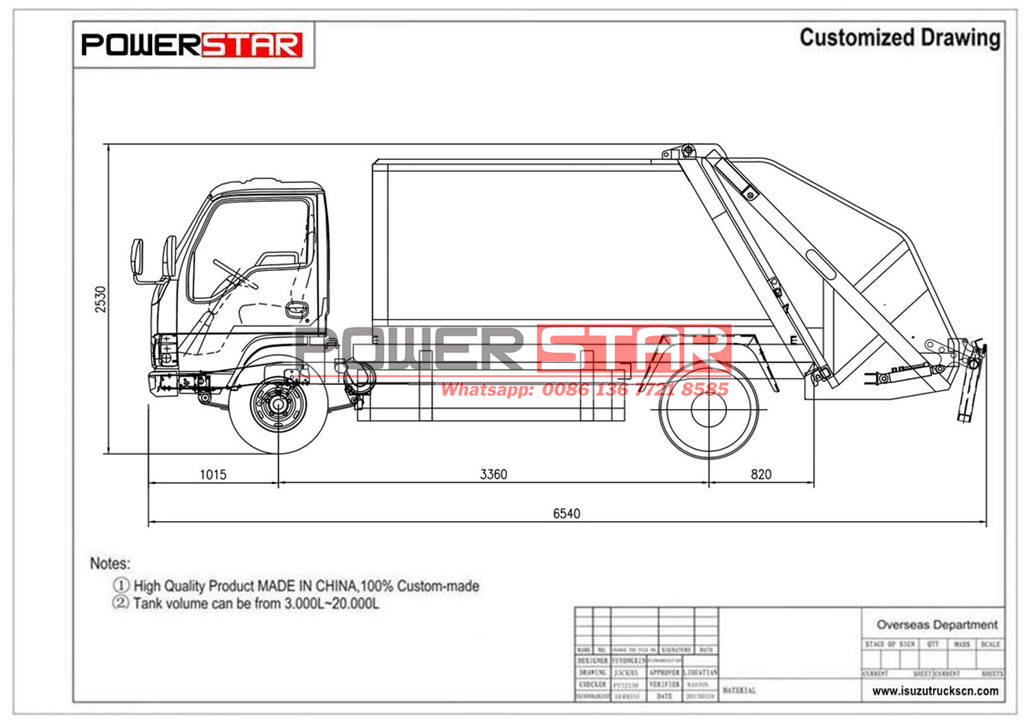
All series Technological diagram of garbage truck Compactor 3cbm 4cbm
II. Overall design
Vehicle structure:
Adopt high-strength steel frame to ensure the vehicle's carrying capacity and stability.
The cab is located at the front of the vehicle, providing a comfortable driving environment and good vision.
The garbage compartment is located in the middle and rear of the vehicle, made of corrosion-resistant materials, and equipped with a compression mechanism inside.
Power system:
Select environmentally friendly diesel engines that meet emission standards and provide sufficient power output.
Equipped with automatic transmission to improve driving convenience and fuel economy.
Compression mechanism:
Designed for horizontal or vertical compression, selected according to vehicle model and garbage type.
The compression push plate is made of high-strength alloy material, wear-resistant, to ensure long-term stable operation.
Equipped with pressure sensors and control systems to monitor the compression status in real time to prevent overload.
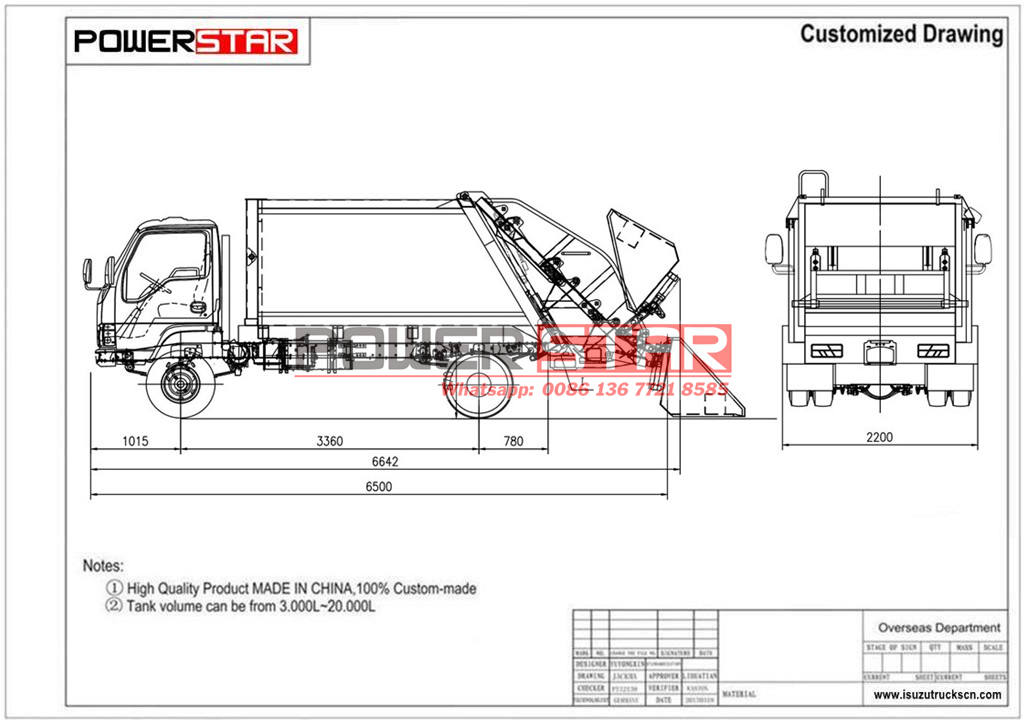
Refuse compactor truck technical drawing 5cbm 6cbm
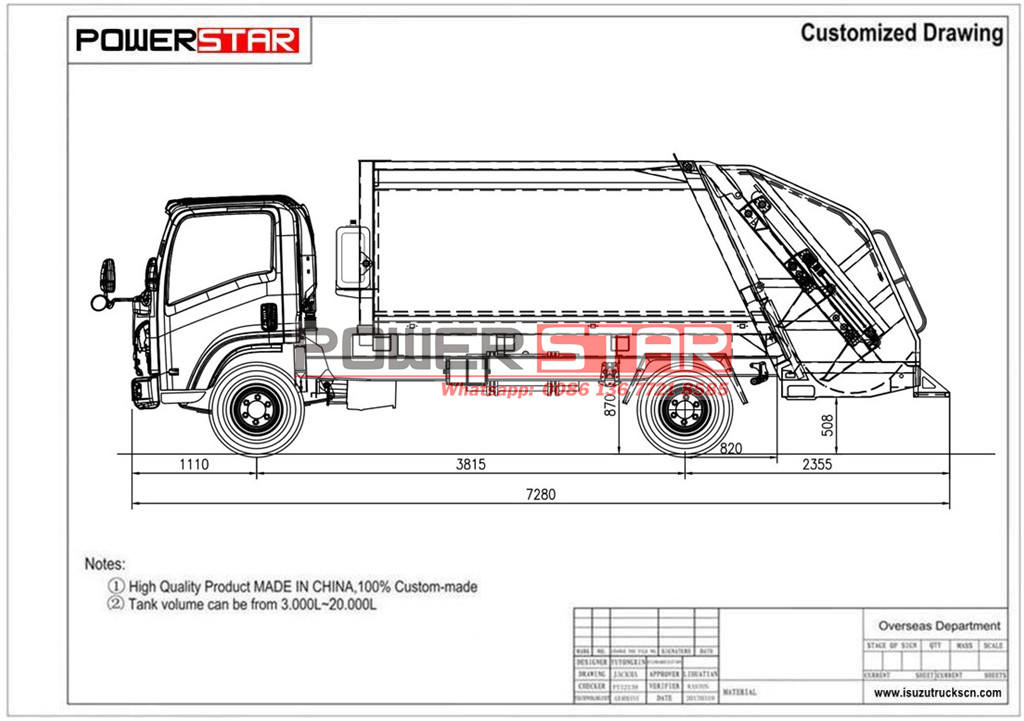
Refuse compactor truck technical drawing 7cbm 8cbm
3. Detailed design drawings
Frame design drawings:
Provide a 3D model of the frame, with key dimensions and material specifications marked.
Detailed description of the welding process and inspection standards of the frame.
Garbage compartment design drawings:
3D model of the garbage compartment, including internal structure, compression mechanism layout and sealing design.
Material selection instructions, as well as anti-corrosion treatment process.
Compression mechanism design drawings:
3D model of the compression push plate, with dimensions, materials and motion trajectory marked.
Design drawings of the compression cylinder, including cylinder diameter, stroke and installation method.
Control system design drawings, including sensor layout, control logic and circuit diagram.
Power system design drawings:
Instructions for engine and gearbox selection, as well as installation location diagrams.
Transmission system design drawings, including components such as drive shafts, differentials and half shafts.
Auxiliary system design drawings:
Hydraulic system design drawings, including components such as oil pumps, oil tanks, pipelines and valve groups.
Electrical system design drawings, including components such as batteries, generators, lighting and signal systems.
Design drawings of the braking system and steering system to ensure vehicle driving safety.

Japan Isuzu Refuse compactor truck technical drawing 10cbm 12cbm
4. Manufacturing process and inspection standards
Manufacturing process:
Provide a manufacturing process flow chart for the frame, garbage compartment and compression mechanism.
Detailed description of the operating specifications for key processes such as welding, cutting, surface treatment and assembly.
Inspection standards:
Provide standards and methods for various inspection items, including dimensional inspection, material inspection, performance inspection and safety inspection.
Emphasis on quality control points to ensure that the quality of key components and the entire vehicle meets the design requirements.
3. Analysis of design drawings
Chassis design
The chassis of the Isuzu compression garbage truck is built on the solid chassis of Qingling Isuzu, and the wheelbase is carefully set to ensure the stability and carrying capacity of the vehicle. The chassis is made of high-strength steel and has undergone rigorous durability tests to ensure stable operation under various harsh road conditions.
Power system
In terms of power system, the Isuzu compression garbage truck is equipped with a National VI standard engine, providing surging and clean power. The transmission system adopts an advanced gearbox, which has smooth shifting and quick response, improving driving comfort and fuel economy. In addition, the vehicle is also equipped with air conditioning system and power steering, which further enhances the driving experience.
Compression mechanism design
The compression mechanism is the core component of the Isuzu compression garbage truck. The design drawings show in detail the structure and layout of key components such as the compression push plate, compression cylinder, and control system. The compression push plate is made of high-strength alloy material, which is wear-resistant and ensures long-term stable operation. The compression cylinder is reasonably designed to provide sufficient thrust to achieve garbage compression. The control system monitors the compression status in real time to prevent overload and failure.
Auxiliary system design
Auxiliary systems include hydraulic system, electrical system, braking system and steering system. The hydraulic system is well designed and can provide stable pressure and flow to ensure the normal operation of the compression mechanism. The electrical system is responsible for the lighting, signal and power supply of the control system of the vehicle. The braking system and steering system have been strictly tested to ensure reliable safety under various road conditions.
Carriage and sealing design
The car compartment adopts a streamlined arc box design, which is not only beautiful but also large in volume. It is made of high-strength manganese steel plates, and the full welding process ensures impeccable. The interior of the car compartment is equipped with a sealing device to effectively prevent odor leakage and secondary pollution. The tail is equipped with a lighting lamp and a pneumatic sealing cover, which further improves the environmental protection performance and operating efficiency of the vehicle.

Japan Garbage Truck Compactor illustrations 14cbm 15cbm
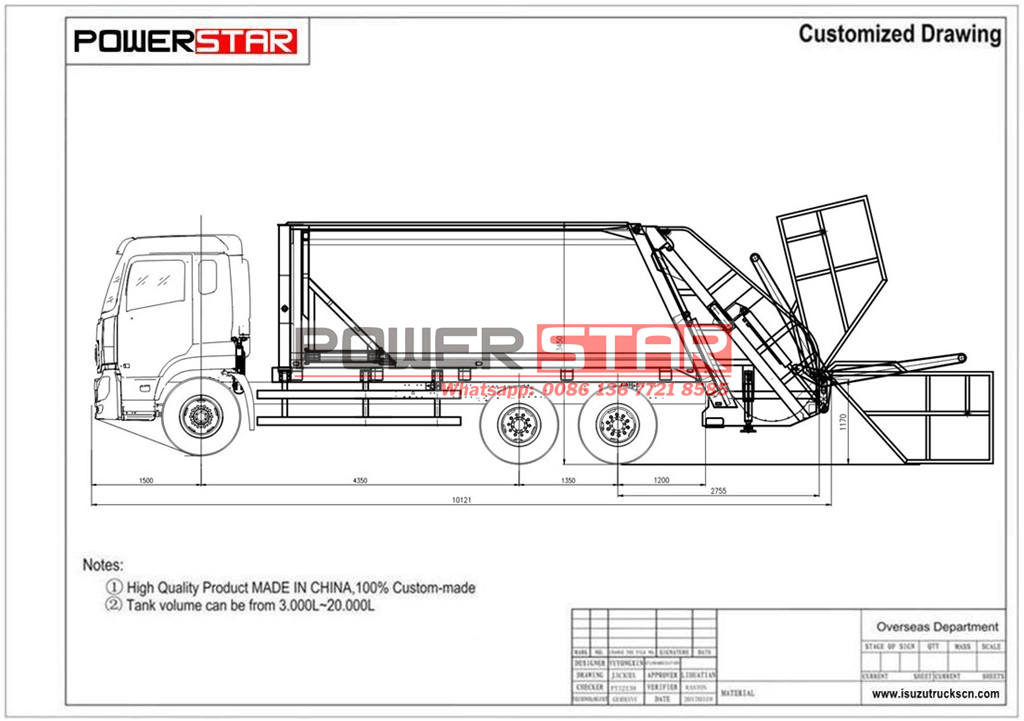
Japan Garbage Truck Compactor illustrations 16cbm 18cbm
IV. Innovations in the design drawings
Intelligent control
Isuzu compression garbage trucks incorporate intelligent control technology in the design drawings. Through the PLC single-sided electronic control operating system and wireless remote control, the driver can easily control the operating status of the vehicle and realize remote monitoring and fault diagnosis.
Environmental performance optimization
In the design drawings, Isuzu has comprehensively optimized the environmental performance of the vehicle. By adopting advanced engine emission control technology, efficient sewage collection and treatment system, and excellent sealing performance of the car body design, the environmental protection and efficiency of the vehicle in the garbage treatment process are ensured.
Humanized design
Isuzu compression garbage trucks focus on humanized design in the design drawings. The cab is spacious and comfortable, providing a good view and operating space. The tail of the car body is equipped with humanized configurations such as lighting and pneumatic sealing cover, which further improves the driver's work efficiency and comfort.
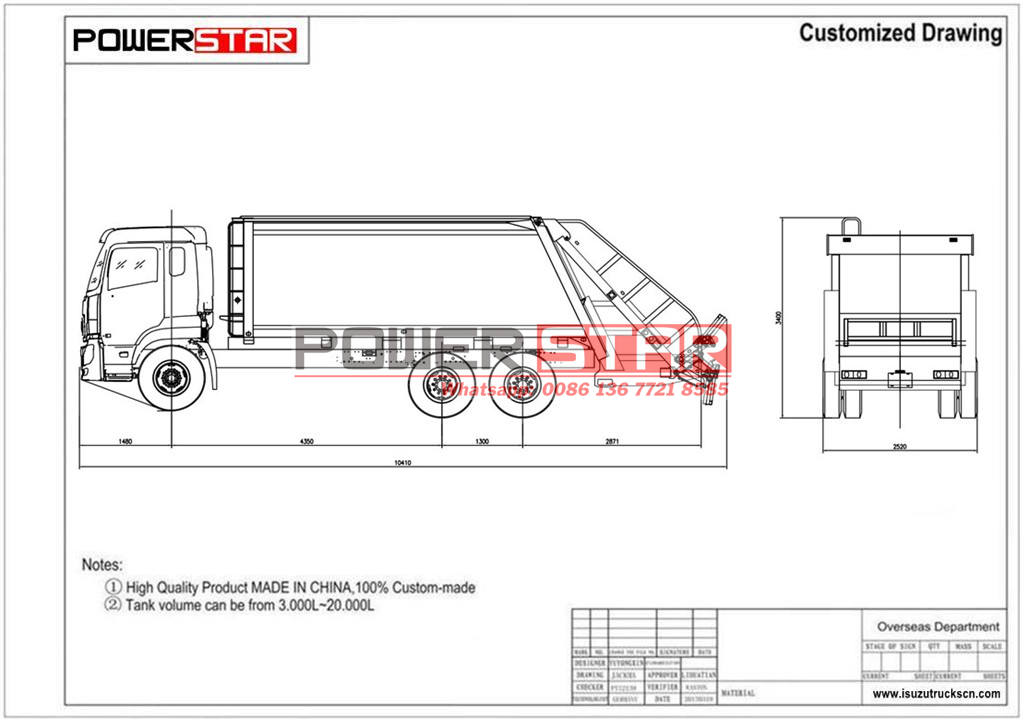
technical diagram for Isuzu rear loader garbage truck 20cbm 22cbm

technical diagram for Isuzu rear loader garbage truck 25cbm,28cbm
The design drawings of Isuzu's full range of compression garbage trucks show its excellent performance in technology, performance and environmental protection. The vehicle's efficiency, stability and environmental protection are ensured by the carefully designed chassis, power system, compression mechanism and auxiliary system. At the same time, the integration of innovative points such as intelligent control, environmental performance optimization and humanized design further enhances the competitiveness and market position of the vehicle. In the future, Isuzu will continue to be committed to technological innovation and product upgrades to make greater contributions to urban environmental sanitation.