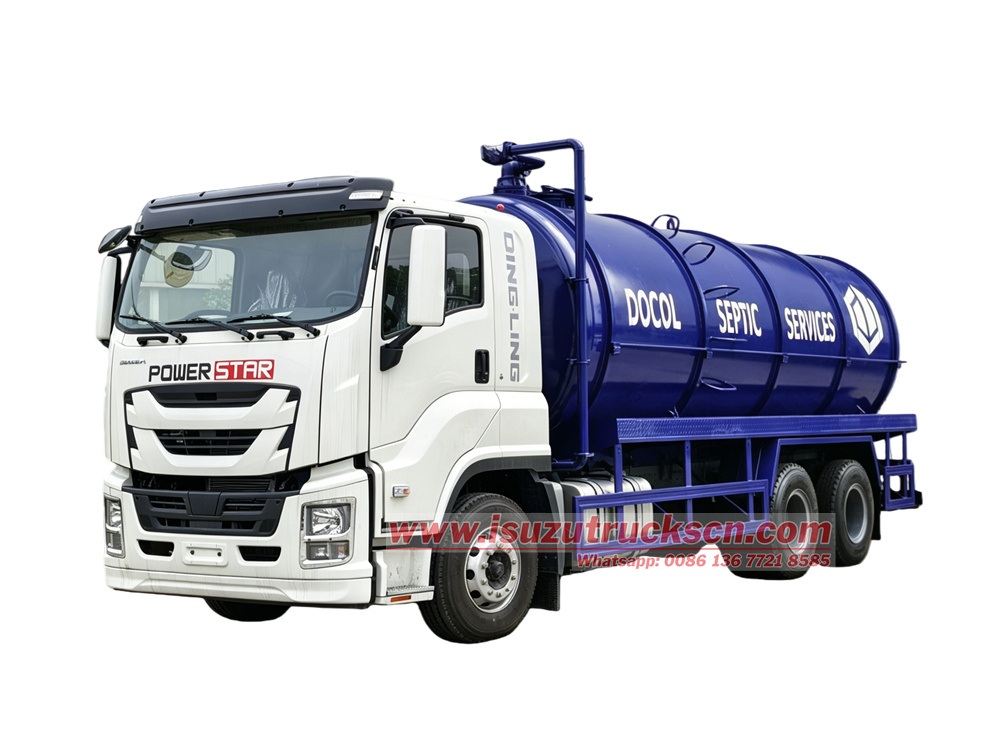
An Isuzu Vacuum Truck is an ISUZU chassis fitted with a vacuum tanker and pump for collecting, transporting, and discharging liquid and semi-solid waste. You will find these trucks in septic service, municipal sewer and storm drain cleaning, and industrial waste removal. PowerStar Trucks builds Isuzu vacuum trucks with tank sizes from 3 to 20 cbm (3,000 to 20,000 liters), mounted on NKR, NPR/700P, FTR, and FVR/FVZ GIGA chassis, with vacuum pumps from JUROP, Yifeng, SK, and BP MEC. Every unit is built to order, so the final price is quoted per configuration rather than listed at a fixed retail figure.
An Isuzu Vacuum Truck handles three broad job categories: municipal work, industrial work, and residential or commercial service. Each category places different demands on the tank, pump, and chassis.
Cities and towns rely on these trucks for core public works tasks. You will see them handling:
Demand for sewer cleaning and vacuum tanker equipment keeps growing as cities expand drainage networks and environmental discharge rules tighten, especially across Asia Pacific, Africa, and South America. PowerStar ships Isuzu vacuum trucks to markets such as Albania, Rwanda, and the Philippines, where 4×4 and 6×4 configurations handle both urban networks and rough site access.
Industrial plants use vacuum trucks for sewage treatment, sludge removal, and pipeline clearing. Construction sites also depend on them for pit cleaning and site drainage. Heavier units such as the ISUZU 300HP FVR 15 cbm industrial debris vacuum loader, with its 6HK1-TCG60 engine and JUROP PN155D pump, are built specifically for cleaning and transferring industrial wastewater.
Septic service companies use lighter Isuzu Vacuum Truck models for routine tank pumping at homes, restaurants, and small businesses. Commercial districts and schools also call on these trucks for scheduled sewage well cleaning. This segment rewards maneuverability and efficient pump cycles over raw tank size, which is why the 3–5 cbm NKR and KV100 units remain steady sellers.
Capacity on an Isuzu Vacuum Truck is not one number. You need to read tank volume, pump performance, and chassis payload together. A big tank on a light chassis gives you a truck that cannot legally carry a full load. A strong pump on a small tank gives you fast cycles but frequent dumping trips. This section breaks down each layer so you can match the truck to your actual work.
Tank sizes on PowerStar Isuzu vacuum bodies span roughly 3 to 20 cbm (3,000 to 20,000 liters). Small bodies in the 3–5 cbm range suit residential septic pumping and tight urban streets. Mid-range tanks around 6,000 to 10,000 liters cover most municipal sewer and drain cleaning routes. Large tanks of 12,000 to 20,000 liters fit industrial sludge hauling and long-haul municipal contracts where dump trips are costly.
Tank material matters as much as tank size. Carbon steel is the standard choice for sewage and sludge service — for example, the GIGA 6×4 20 cbm unit uses a 20 cubic meter tank built from 6 mm thick carbon steel, and the KV100 body carries anti-corrosion and rust-proof treatment. Stainless steel costs more upfront and resists corrosive industrial waste better. Baffles inside the tank control liquid surge during transport, and a well-designed baffle layout protects the chassis and improves driving stability on partial loads.
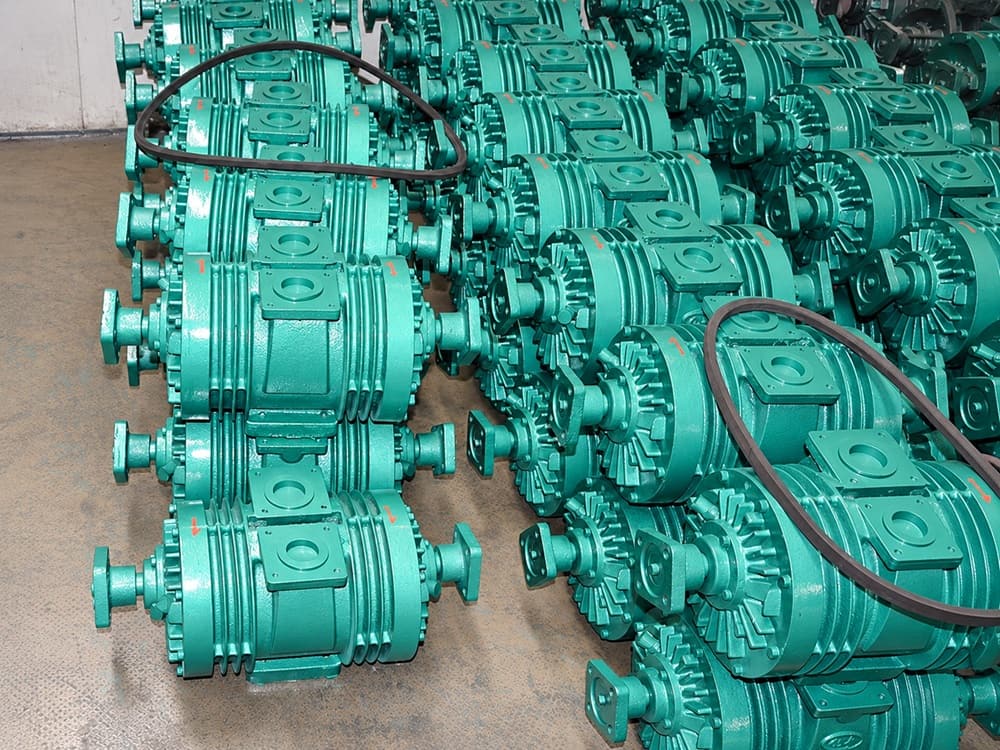
The vacuum pump defines how fast you fill the tank and how deep you can pull waste. Flow rate, vacuum level, and suction depth are the three figures to compare. The table below shows the actual pump configurations across the PowerStar ISUZU vacuum truck lineup.
|
Truck Model |
Tank |
Vacuum Pump |
Flow Rate / Vacuum |
Notes |
|
ISUZU KV100 5,000L Fecal Suction Truck |
5 cbm carbon steel |
Yifeng SK-6 water-ring pump |
Max suction speed 6 m³/min at 970 rpm |
6 m septic suction boom, view window, overflow valve, rear discharge valve |
|
ISUZU 700P 5,000L Fecal Suction Truck |
5 cbm |
BP MEC 6500/P |
— |
Secondary filter, sight glass, level gauge, handwashing device, tailgate with suction and discharge ports |
|
ISUZU 700P 4×4 Sewer Cleaner Vacuum Truck |
5 cbm (10,000L class) |
65QZXDH-110/7000 |
— |
All-wheel drive chassis for septic tanks and urban pipe networks |
|
ISUZU KV800 8cbm Septic Pump Truck |
8 cbm carbon steel |
SK-12 water-circulation pump |
Vacuum rate up to 93% |
Quick suction and discharge |
|
ISUZU FTR 10 cbm Combined Jetting Vacuum Truck |
8 cbm sewage + 2 cbm clean water |
SK-15 water-ring pump |
Paired with SYLT/SY90-56 high-pressure jetting pump |
Split-tank design, 60 m cleaning hose reel, Euro VI 4HK1-TCG60 engine |
|
ISUZU FVR 15 cbm Industrial Vacuum Loader |
15 cbm carbon steel |
JUROP PN155D |
— |
6HK1-TCG60 engine, Fast 9-speed gearbox, industrial wastewater transfer |
|
ISUZU FVR 12 cbm Combined Jetting Vacuum Truck |
10 cbm sewage + 2 cbm clean water |
SK-30 water-circulation pump |
Paired with PINFL XV36 high-pressure cleaning pump |
Tailgate control box for tank lifting and discharge cover |
|
ISUZU GIGA 6×4 15 cbm Combined Jetting Truck |
10 cbm vacuum tank + 5 cbm clean water |
JUROP PVT 400 Roots pump |
Paired with PINFL XO350 high-pressure cleaning pump |
100 m high-pressure cleaning reel, 10 nozzles, remote control operation |
|
ISUZU GIGA 6×4 20 cbm Septic Vacuum Truck |
20 cbm, 6 mm carbon steel |
Two Yifeng XD-360 pumps |
360 m³/h pumping speed each |
6UZ1-TCG61 engine, FAST 12-speed transmission |
Read the table with your job in mind. Residential septic work rewards a steady, continuous-duty pump in the 3–8 cbm tank range. Deep sewer and storm drain cleaning benefits from high vacuum rates around 93% and water-circulation pumps that tolerate harsh conditions. Combined jetting and suction trucks add a high-pressure water system, which lets you break up compacted debris before you vacuum it out.
Pump type also shapes your operating cost. Water-ring and water-circulation pumps such as the SK series handle continuous duty and harsh conditions with less maintenance attention. Imported JUROP pumps and Roots pumps deliver higher throughput on large-tank and long-haul work. Match the pump type to your daily duty cycle, not just to the peak flow number.
Payload is the limit that ties tank size to the chassis. A full tank of water weighs about 1 kg per liter, so a 10,000-liter tank adds roughly 10,000 kg of liquid before you count the body, pump, and crew. The chassis must carry that weight legally and safely, which is why the small-tank bodies sit on light ELF-family chassis and the 15–20 cbm bodies sit on the GIGA 6×4 platform.
|
Chassis |
Engine Model |
Rated Power |
Typical Tank |
Drive / Wheelbase |
|
ISUZU KV100 |
4KH1CN6LB |
120 HP |
5 cbm |
4×2, 3,360 mm |
|
ISUZU KV800 |
4JZ1-TCG62 |
180 HP |
8 cbm |
4×2, 4,125 mm |
|
ISUZU 700P |
4HK1-TCG60 |
205 HP |
5 cbm |
4×2, 3,815 mm |
|
ISUZU 700P 4×4 |
4HK1-TCG61 |
190 HP |
5 cbm |
4×4, 4,475 mm |
|
ISUZU FTR GIGA |
4HK1-TCG60 |
205 HP, 647 N·m |
8–10 cbm |
4×2, 4,500 mm |
|
ISUZU FVR GIGA |
6HK1-TCG60 |
300 HP |
15 cbm |
4×2, 4,500 mm |
|
ISUZU GIGA 6×4 |
6UZ1-TCG61 |
— |
20 cbm |
6×4, 4,600 + 1,370 mm |
Transmissions follow the chassis class: the Isuzu MSB 5-speed on the KV100, the MLD 6-speed on the 700P and FTR, the MYY-6 on the KV800, and the FAST 8- to 12-speed gearboxes on the FVR and GIGA. You can spec a tank larger than the payload allows, but you will run it partially full. Confirm the payload rating against the loaded weight of your target tank before you order.
Model selection follows your primary job. Small tanks pair with light, narrow chassis for residential streets and tight commercial lots. Large tanks pair with heavier chassis for municipal routes and industrial sites.
|
Tank Capacity |
Suitable ISUZU Chassis Models |
|
3–5 cbm (small capacity) |
ISUZU NKR, KV100, NPR, 700P |
|
6–10 cbm (mid capacity) |
ISUZU KV800, 700P, FTR GIGA |
|
12–20 cbm (heavy duty) |
ISUZU FVR, FVZ, GIGA 6×4 |
Combined jetting and suction units follow the same logic. The FTR 10 cbm and FVR 12 cbm combined trucks use split-tank designs — a sewage tank paired with a 2 cbm clean water tank — while the GIGA 6×4 combined unit pairs a 10 cbm vacuum tank with a 5 cbm clean water tank and a 100 meter jetting reel. Use this mapping as a starting point. Your route density, dump site distance, and waste type will shift the final choice. A residential septic route with short drives favors a light chassis and a mid-size tank. A municipal contract with long hauls favors a heavier chassis and a larger tank, even at a higher purchase price.
Price is where most buyers start, and it is also where the widest spread appears. Two trucks with the same cab and badge can differ by tens of thousands of dollars once you factor in tank size, pump spec, and body options. PowerStar Trucks builds every unit to order at the factory, so the price you pay is the quoted configuration price — not a fixed showroom sticker. You need a clear picture of the cost drivers behind each quote before you commit.
PowerStar supplies factory-new, customized units: the tank can be sized from 3 up to 20 cbm, the tank can be split into sewage plus clean water compartments for combined jetting work, and the vacuum pump can be specified from domestic Yifeng and SK series up to imported JUROP pumps. Because units ship worldwide as new builds, you also get current emissions compliance and a spec built exactly to your route.
Used pricing is a local-market matter rather than a factory one. A well-maintained used unit with a sound tank and a rebuildable pump can deliver strong value for a residential septic route. A used truck with a corroded tank or a worn pump can cost more in repairs than the purchase price saved. Whether new or used, you should always inspect the tank interior, test the pump under load, and verify the chassis service records before you buy.
Several cost factors combine to set the final price of an Isuzu Vacuum Truck. The table below shows how each factor moves the number.
|
Cost Factor |
How It Affects Price |
|
Tank capacity |
Larger tanks (3 cbm up to 20 cbm) increase steel cost — the 20 cbm tank alone uses 6 mm thick carbon steel — and require a heavier chassis, raising price. |
|
Pump configuration |
Imported JUROP pumps, Roots pumps, and twin-pump setups (two Yifeng XD-360 units) cost more than a single domestic SK-series pump. |
|
Vacuum performance |
Higher vacuum rates (up to 93% and beyond) and deeper suction require higher-spec components, adding cost. |
|
High-pressure jetting system |
Combined jetting units add a clean water tank, a high-pressure pump (PINFL or SYLT series), hose reels, and nozzles — a major line item. |
|
Chassis class |
Light ELF-family chassis cost less; 6×4 GIGA platforms with FAST 12-speed transmissions cost considerably more. |
|
Dumping mechanism |
Hydraulic tank lifting, hydraulically opened rear covers, and rear dump gates add mechanical complexity and cost. |
|
Accessories |
Secondary filters, sight glasses, level gauges, handwashing devices, safety railings, and remote controls each add to the build. |
Configuration drives price, and different configurations come with different prices. Customizable parts affecting cost include tank volume, pump brand, and whether the unit is a pure suction truck or a combined jetting vacuum truck. You should treat each of these as a lever you can adjust to fit your budget and your job.
Tank capacity sits at the center of the cost equation. A larger tank adds steel cost on its own, and it forces a heavier chassis underneath. That double effect explains why a 15,000-liter unit costs far more than a 5,000-liter unit on the same model line. Pump configuration follows the same logic: an imported JUROP pump or a twin-pump setup costs more than a single domestic unit, and it delivers faster cycles and higher throughput on tough jobs.
Because every PowerStar Isuzu vacuum truck is built to order, the reliable way to budget is to request a factory quotation with your target configuration. State the tank volume you need, the waste type you handle, whether you need a jetting system, and your destination port. The factory will match the chassis, pump, and tank material to that brief and quote accordingly, typically with options at different price points.
You should confirm tank size, pump type, and payload together before you sign a quote. A low price on a large tank often hides a chassis that cannot legally carry a full load. A higher price on a strong pump often pays back through faster cycles and fewer dump trips. Match the configuration to your primary job, and the quote becomes a tool for comparison rather than a source of confusion.
An Isuzu Vacuum Truck covers municipal, industrial, and residential work, with tanks from 3 to 20 cbm built on chassis from the NKR to the GIGA 6×4. Match lighter chassis to septic routes and heavier GIGA platforms to municipal or industrial duty. Confirm tank size, pump type, and payload together, then request a factory quotation before you buy.
PowerStar Isuzu vacuum trucks are built to order, so the price is a factory quotation based on your configuration. Tank volume (3–20 cbm), pump brand (Yifeng, SK, BP MEC, or imported JUROP), and whether you add a high-pressure jetting system drive the final figure. Contact the factory with your spec and destination port for an exact quote.
PowerStar builds Isuzu vacuum bodies from 3 to 20 cbm (3,000 to 20,000 liters). Light NKR and KV100 chassis suit small 3–5 cbm septic tanks, mid-size 700P, KV800, and FTR chassis carry 5–10 cbm, and FVR/FVZ GIGA 6×4 chassis take 12–20 cbm municipal and industrial tanks.
A vacuum truck suctions and hauls liquid waste. A jetting truck uses high-pressure water to clear debris. PowerStar's combined units pair both systems on one ISUZU chassis — for example, the FTR 10 cbm combined truck pairs an SK-15 vacuum pump with a SYLT/SY90-56 high-pressure jetting pump on a split 8 cbm sewage + 2 cbm clean water tank.