A vacuum truck removes material by suction. A jetting truck clears lines with high-pressure water. A combination truck does both. The vacuum truck vs jetting truck decision comes down to your job requirements. No single truck wins overall. You match the equipment to the task at hand.
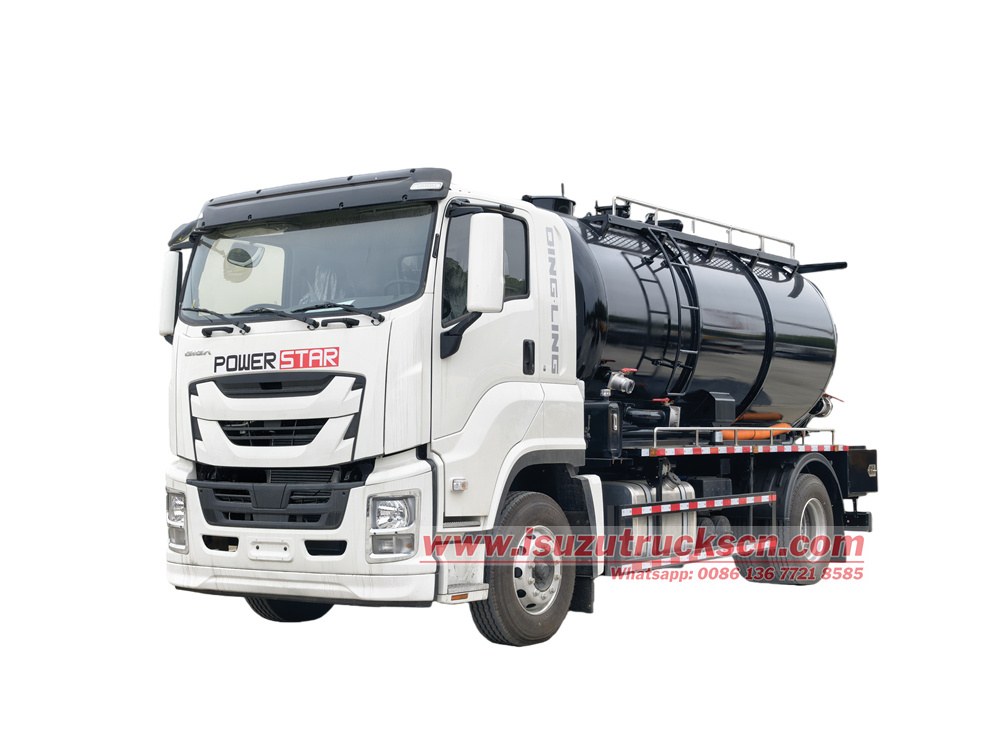
You can frame the vacuum truck vs jetting truck distinction in one sentence: one machine pulls material out, the other pushes water in. A vacuum truck lifts liquids, sludge, and debris into a tank using negative pressure. A jetting truck drives high-pressure water through a hose and nozzle to scour a line clean. A combination truck carries both systems on a single chassis. Each design solves a different physical problem, and that physical difference shapes every downstream decision about tanks, pumps, nozzles, and disposal.
A vacuum truck works like a giant straw. A powerful pump creates negative pressure inside a sealed tank, and atmospheric pressure pushes material up the hose and into the tank. You use this method when the goal is to remove something from where it sits: septic tanks, portable toilets, catch basins, lift stations, grit chambers, or spilled liquids.
The physics of suction sets a hard ceiling on performance. You cannot lift water higher than roughly 10.3 meters (34 feet) in a perfect vacuum, because atmospheric pressure supports only that column of water. Real-world conditions change the number. Fecal sludge with air mixing can reach 10 to 15 meters (33 to 49 feet) under optimal conditions. Practical hose runs usually stay under 50 meters (160 feet), because friction losses and hose weight erode the available lift.
|
Condition |
Maximum Suction Depth |
|
Pure water (theoretical maximum lift) |
~10.3 m (34 ft) |
|
Fecal sludge with air mixing (optimal conditions) |
10–15 m (33–49 ft) |
|
Practical hose extension limit |
Usually not beyond 50 m (160 ft) |
These limits matter when you plan a job. A deep lift station may demand a truck with strong vacuum performance and a short, large-diameter hose. A shallow septic tank gives you far more margin. Suction-based removal also handles solids that water alone cannot move, including rags, grit, and dense sludge. The tank becomes the payload, so capacity directly controls how long you stay on site before a disposal run.
A jetting truck reverses the direction of energy. It sends pressurized water down a hose, through a specialized nozzle, and back up the pipe. The nozzle's rear-facing jets pull the hose forward and flush loosened debris toward the access point. You use this method when the goal is to clear a line, not to remove a volume of material.
Pressure and flow rate define what a jetting truck can accomplish. Tough blockages such as roots, solidified grease, and hardened buildup call for 3,000 to 4,000 PSI with flow rates of 8 GPM or more. Municipal cleaning of 8–12 inch pipe typically runs 40–60 GPM. Larger pipelines often need 80 GPM or higher. A typical jetting truck clearing roots from an 8-inch pipe might operate at 2,000 PSI and 65 GPM.
|
Application / Pipe Size |
Water Pressure (PSI) |
Flow Rate (GPM) |
|
Cutting roots, tough blockages, solidified grease, hardened buildup |
3000–4000 |
8 or more |
|
City/County cleaning of 8–12" pipe |
Not specified |
40–60 |
|
City/County cleaning of larger pipelines |
Not specified |
80+ |
|
Example jetting truck (8" pipe root clearing) |
2000 |
65 |
Water jetting can cut through smaller root intrusions and wash away surrounding debris, though extensive root growth may signal structural damage requiring more than routine cleaning. Effectiveness depends on matching equipment to the system: high-pressure jetters commonly operate near 4,000 PSI with flow rates of 2–25 gallons per minute, but the highest pressure is not always appropriate—pipe diameter, material, age, and condition dictate settings and nozzle choice, since excessive pressure can damage weakened pipes. Water jetting is a mechanical, chemical-free method suited to suitable drain-cleaning tasks, and professional assessment (including camera inspection) determines whether the obstruction involves grease, sediment, roots, or damage before jetting is recommended.
The method earns its place across a wide range of blockages:
Effectiveness varies by blockage type, and knowing the difference helps you set expectations with customers:
|
Blockage Type |
Effectiveness of High-Pressure Water Jetting |
Mechanism / Notes |
|
Grease build-up |
Highly effective |
High-pressure jets cut through hardened grease, flush it away, and scour the full pipe diameter; more complete than plunging or chemicals, which push grease deeper or only partially dissolve it |
|
Tree root intrusions |
Highly effective (less invasive alternative to excavation) |
Jets cut through roots and flush debris without excavation; minimizes regrowth by clearing entry points; long-lasting versus mechanical rodding |
|
Mineral and scale deposits |
Fully removes deposits |
Intense pressure breaks apart hardened calcium and magnesium scale, restoring full capacity; reaches hard-to-access areas without corrosion or pipe damage |
|
Soap scum accumulation |
Effectively eliminates |
High-pressure water dislodges hardened scum layers and reaches hard-to-access areas, unlike chemical cleaners or mechanical agitation |
|
Food waste compaction |
Effectively addresses |
Jets break down dense food particles and flush them out completely, removing hidden residues other methods cannot reach |
|
Dirt and mud clogs |
Highly effective |
Jets reach compacted sediments, dislodge them thoroughly, and restore full pipe diameter; valuable for underground systems with limited access |
One practical constraint separates jetting from vacuum work: a jetting truck needs a water supply and a place to discharge the flushed material. The truck clears the line, but the debris travels to a downstream manhole or basin. That is why jetting jobs often pair with a vacuum unit for cleanup.
A combination truck mounts a vacuum tank and a jetting system on one chassis. You get suction-based removal and high-pressure water clearing from a single vehicle. The operator jets a line to break up the blockage, then vacuums the loosened material into the tank. One setup, one crew, one trip.
The market reflects that convenience. According to Future Market Insights, combination trucks are projected to account for 47.2% of the revenue share of the vacuum truck market in 2025, positioning them as the leading product category. Their multifunctional design drives that dominance, because industrial settings value efficiency and operational flexibility.
A combination unit brings together several core components:
Combination trucks suit mixed workloads best. A municipal crew that alternates between catch basin cleaning and sewer line jetting gains more from one combination unit than from two single-purpose trucks. A contractor who only pumps septic tanks gains little from the jetting side. The core difference still governs the choice: match the machine to the work you actually perform.
A vacuum truck removes and transports material through suction. You use it for large-scale liquid and sludge cleanup, most often in sewer and septic system maintenance. The unit pulls wastewater, heavy sludge, sediment, and solids into a sealed tank, then hauls the load to an approved disposal site.
Vacuum trucks are specialized vehicles equipped with powerful vacuum systems that can remove and transport dry materials, liquids, and sludge.
The work covers more than pumping. Your crew clears spills, drains pipe sections before maintenance, cleans storage tanks and sumps, and removes material from confined spaces before workers enter. Vacuum trucks handle both hazardous and non-hazardous waste under DOT and EPA rules. The hose design accepts liquids, sludge, and solids, so one unit serves many job types.
A jetting truck clears lines with high-pressure water. You send water through a hose and nozzle to scour pipe walls and push debris downstream. Municipal crews rely on jetting for routine sanitary and storm sewer cleaning, emergency blockage removal, and preventive maintenance that reduces backup risk.
|
Jetting Application |
What It Achieves |
|
Grease and fats removal |
Breaks down buildup on pipe walls |
|
Sludge and sediment flushing |
Pushes loose material through the line |
|
Tree root cutting |
Cuts root intrusion with the right nozzle |
|
Mineral scale removal |
Strips hard deposits from the interior |
|
Storm drain clearing |
Removes dirt, gravel, and debris |
A combination truck carries both systems. You jet a clogged drain, then vacuum the loosened sludge, gravel, roots, and grease in one pass. This setup fits mixed workloads, hydro excavation, and sites that need liquid and solid waste handled together. The vacuum truck vs jetting truck question often ends here for crews facing varied daily jobs.
Suction performance depends on airflow and the vacuum level your pump can hold. A typical vacuum truck runs a positive displacement blower or a liquid ring pump. Blower-driven units move high air volumes and handle wet or dry loads. Liquid ring pumps tolerate continuous liquid intake well. You measure vacuum performance in inches of mercury (inHg). Most sewer and septic work runs between 15 and 28 inHg. Higher vacuum lifts heavier sludge and pulls material through longer hose runs. Check the rated free air flow (CFM) alongside the vacuum figure. A high CFM rating with a modest vacuum level suits bulky dry debris. A high vacuum level with lower CFM suits dense liquid loads.
Jetting performance pairs pressure with flow. Pressure cuts the blockage. Flow carries the debris away. A 4,000 PSI unit with low flow cuts roots but moves little material. A 2,000 PSI unit with 65 GPM flushes a line thoroughly. Match the pair to your pipe size and blockage type. Small-diameter lines need moderate pressure and lower flow. Large mains need high flow to move solids downstream.
Tank size sets your work window. A larger debris tank means fewer disposal trips. A larger water tank means longer jetting runs before a refill. Combination units split capacity between the two tanks, so you balance both against your daily workload. The vacuum truck vs jetting truck comparison often turns on this trade-off. Review hose length, reel configuration, and pump placement before you specify a build.
Job type drives the equipment decision more than any spec sheet. You can compare vacuum truck vs jetting truck capabilities all day, but the work in front of you settles the question. Each of the three main job categories below points toward a clear front-runner.
Septic pumping belongs to the vacuum truck. You pull liquid and sludge from a tank, haul it away, and dispose of it at an approved facility. A jetting truck cannot perform this task, because it carries water rather than a debris tank. Portable toilet service follows the same logic. Your crew vacuums the waste into a sealed tank and transports it for treatment.
Pumping frequency shapes how you schedule this work. The EPA recommends inspecting a septic tank every 1 to 3 years and pumping every 3 to 5 years. Tank size, household size, water-use habits, and solids accumulation all shift that window. Alternative systems with complex components may need more frequent service. Both the EPA and TCEQ cite the same 3 to 5 year range for residential tanks, and that range accounts for rainfall and drainfield strain. Households with garbage disposals or leaky fixtures often land at the shorter end.
According to the EPA, a septic tank should generally be inspected every 1 to 3 years and pumped every 3 to 5 years. The exact pumping frequency depends on tank size, household size, water-use habits, and the amount of solids accumulated; more complex alternative systems may need more frequent service.
You want strong vacuum performance and generous tank capacity for this work. A deep tank with a long hose run tests your lift limits, so check the rated vacuum level in inches of mercury before you buy. A truck that holds 15 to 28 inHg handles most residential and commercial septic jobs. Portable toilet routes reward a smaller, maneuverable chassis with a mid-size tank, because you make many stops in a single day.
Sewer and drain line cleaning belongs to the jetting truck. You drive high-pressure water through the line, scour the pipe walls, and push debris downstream. Grease, roots, scale, and sediment all yield to the right pressure and flow combination. A vacuum truck alone cannot clear a blocked line, because suction removes material from a point rather than scouring a pipe length.
Combination trucks shine in this category. You jet the line to break up the blockage, then vacuum the loosened material from the downstream manhole. One crew, one setup, one pass. Municipal crews that alternate between routine cleaning and emergency response gain real efficiency from this arrangement. Contractors who handle both residential drain calls and commercial line maintenance also fit well here.
Match your pressure and flow to the pipe. Small-diameter residential lines need moderate pressure and lower flow. Large municipal mains need high flow to carry solids downstream. A 4,000 PSI unit with low flow cuts roots but moves little debris. A 2,000 PSI unit at 65 GPM flushes a line thoroughly. Review pipe material and condition before you set the nozzle, because excessive pressure can damage weakened pipe.
Industrial waste and catch basin removal favor the vacuum truck, often in combination with jetting capability. Factories, refineries, and construction sites generate slurries, oils, sludge, and debris that collect in sumps, tanks, trenches, and containment areas. Your crew vacuums that material into a tank and hauls it to a permitted disposal site.
|
Industry |
Vacuum Truck Use |
|
Factories / manufacturing plants |
Handle slurries, oils, sludge, and debris; clean sumps, tanks, trenches, and containment areas where waste and residue collect |
|
Refineries |
Handle slurries, oils, sludge, and debris; clean sumps, tanks, trenches, and containment areas; manage thick sludges or hazardous materials under strict safety controls |
|
Construction sites |
Handle slurries, oils, sludge, and debris from heavy-duty applications |
|
Utility settings |
Lift dry materials like dust, sand, or fine powder using compressed air where moisture must be avoided |
|
HOAs, municipalities, commercial sites |
Extract sediment and sludge from retention ponds and basins without disturbing surrounding soil or damaging liners |
Municipalities rely on vacuum trucks to clear sewers and cesspools, remove water and debris after hydro-excavation or drilling, clear mud to expose utility lines, and prevent sewer system overloads. These trucks support environmental cleaning, storage tank upkeep, and waste management for cities. Catch basin cleaning follows the same pattern. You vacuum sediment and sludge from the basin without disturbing the surrounding soil or damaging liners.
Combination trucks add value on industrial sites that mix line cleaning with waste removal. A refinery crew may jet a process line and then vacuum the flushed material in a single visit. That flexibility reduces equipment moves and crew downtime. Sites with strictly liquid or sludge removal needs gain little from the jetting side, so a dedicated vacuum unit often serves them better.
You face different rules depending on the waste you haul. Typical home septage is not RCRA hazardous waste, so state and local agencies govern it through permits and public health standards. Federal rules apply in specific cases:
Penalties for non-compliance escalate with severity:
|
Violation Context |
Penalty Range |
|
Minor infractions |
A few thousand dollars |
|
Repeated or widespread failures |
Up to millions of dollars |
|
Stericycle (Jan 2025) |
$9.5 million civil penalty |
|
Kaiser Permanente (Sep 2023) |
$49 million settlement |
You cannot dump jetting wastewater into a storm drain. The NPDES program regulates that discharge under Clean Water Act Section 402. Storm drains and sanitary sewers are separate systems, and storm drains release runoff untreated into rivers, lakes, and groundwater. The EPA treats illicit storm drain discharges as serious violations. Handle collected spoils correctly:
Budget for more than the chassis sticker. A vacuum truck needs a vacuum pump, a sealed debris tank, hose, and a control system. A jetting truck needs a water tank, a high-pressure pump, a hose reel, and nozzles. A combination truck carries both systems, so its upfit cost runs higher than either single-purpose build. Upfit choices drive the final number. Tank size, pump rating, and hose length all add cost. Specify only the capacity your workload demands. An oversized tank raises the price and adds weight without adding billable hours.
Ongoing costs depend on several factors you can plan around.
|
Factor |
How it influences operating expenses |
|
Maintenance requirements |
Older trucks need more frequent servicing and part replacements, raising upkeep costs. |
|
Warranty coverage |
Limited or expired warranties shift full repair costs onto the owner. |
|
Fuel efficiency |
Fuel-efficient engines in newer trucks reduce ongoing fuel expenses. |
|
Financing costs |
Interest paid on loans or leases and depreciation are deductible business expenses that affect net operating cost. |
Labor and scheduling shape the rest of the picture. A vacuum truck needs only one or two operators, which cuts labor cost against conventional excavation crews. A combination truck redeploys on-site without a transport run back and forth, so downtime costs fall. A recycler function lets you reuse water already in the system, which saves metered water costs on long jetting jobs. Match these savings to your route density and job mix before you commit.
Start with the work your crew performs most often. Answer these questions before you specify a build:
Your route density and job mix settle the final call. A crew that alternates between catch basin cleaning and sewer jetting gains efficiency from one combination unit. A contractor who only pumps tanks gains little from the jetting side.
|
Factor |
Vacuum Truck |
Jetting Truck |
Combination Truck |
|
Primary function |
Removes material by suction |
Clears lines with high-pressure water |
Does both |
|
Best job fit |
Septic, portable toilets, industrial waste, catch basins |
Sewer and drain line cleaning |
Mixed workloads, municipal crews |
|
Key spec |
Vacuum level (inHg) and tank capacity |
Pressure (PSI) and flow (GPM) |
Balanced tank split and both systems |
|
Disposal needs |
Hauls waste to permitted site |
Needs water supply and discharge point |
Handles both in one pass |
The vacuum truck vs jetting truck decision follows your workload, not a spec sheet. Match the machine to the job, and each option delivers clear advantages.
Powerstar Trucks builds configurations for vacuum work, jetting work, and combined operations. You select the setup that matches your route, and the chassis carries the system your crew needs. This approach removes the guesswork from fleet planning.
Powerstar Trucks offers dedicated vacuum builds with sealed debris tanks, high-capacity vacuum pumps, and hose runs sized for septic, portable toilet, and industrial waste service. Jetting configurations pair a water tank with a high-pressure pump, hose reel, and nozzle set. You match pressure and flow to your pipe diameters. Combination builds mount both systems on one chassis, so your crew jets a line and vacuums the loosened material in a single pass. Each configuration starts from your job mix, not a fixed catalog spec.
Waste hauling demands documented disposal and reliable equipment. Powerstar Trucks designs tank sealing, hose routing, and control placement to support clean transfer and accurate load tracking. Durable components and accessible service points keep your truck on the road. You spend less time in the shop and more time billing hours. That uptime protects your schedule on septic routes, municipal cleaning contracts, and industrial accounts alike.
The vacuum truck vs jetting truck choice depends on your specific task. Pick vacuum trucks for removal, jetting trucks for clearing, and combination trucks for mixed workloads. Each option delivers clear advantages when you match it to the right application. Powerstar Trucks offers configurations across all three categories to match your job.
A vacuum truck removes material by suction. A jetting truck clears lines with high-pressure water. You pick the machine that matches your job.
Yes. A combination truck carries a vacuum tank and a jetting system on one chassis. You jet the line, then vacuum the loosened debris in one pass.
Match the truck to your workload. Choose vacuum for septic and waste removal, jetting for line clearing, and combination units for mixed daily jobs.