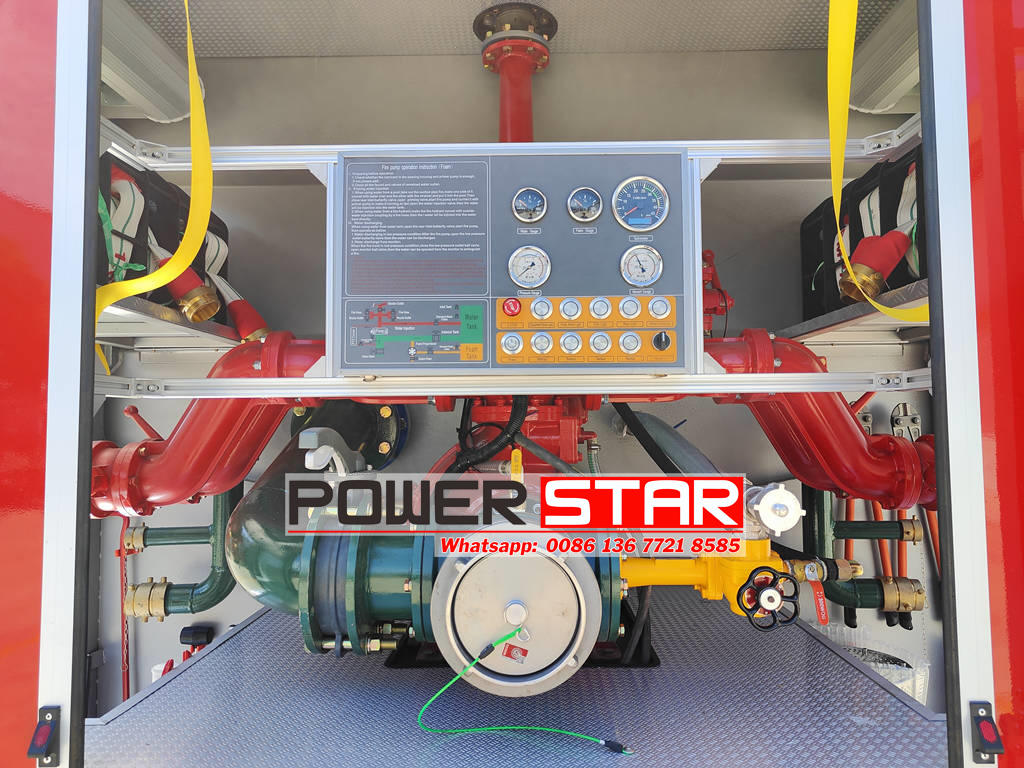
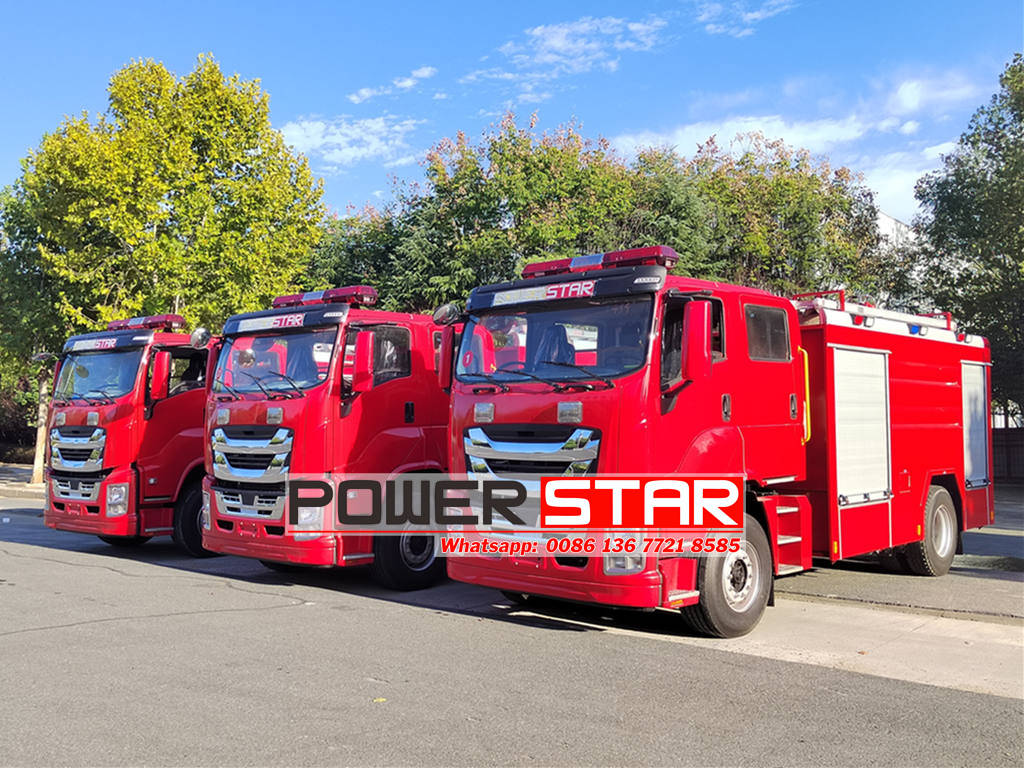
ISUZU fire trucks are widely used in the fire-fighting field due to their solid chassis, powerful engines, and strong maneuverability. They can be seen in factory yards, airports, and along railway lines. These fire trucks are not only richly equipped and practical but also stable and reliable in performance, making them essential fire-fighting equipment for public security and armed police fire brigades, professional fire departments, mines and enterprises, institutions, and forest ports. As a crucial component of fire trucks, the choice of fire pumps is vital, as it directly affects the fire-extinguishing efficiency and combat effectiveness of the fire trucks.
1. Common Fire Pump Models Used in ISUZU Fire Trucks
1.1 CB10/20 Fire Pump
The CB10/20 fire pump is a commonly used model in ISUZU fire trucks. This pump is compact, lightweight, and easy to operate, making it suitable for various fire-fighting scenarios. With a rated flow of 20L/s and a rated pressure of 1.0MPa, it can meet the fire-extinguishing needs of general fires. In ISUZU mini water tank fire trucks, the CB10/20 fire pump is often used to deliver clean water and liquids with physical and chemical properties similar to water, ensuring that fire-fighting water can reach the fire site quickly and effectively.
1.2 CB10/30 Fire Pump
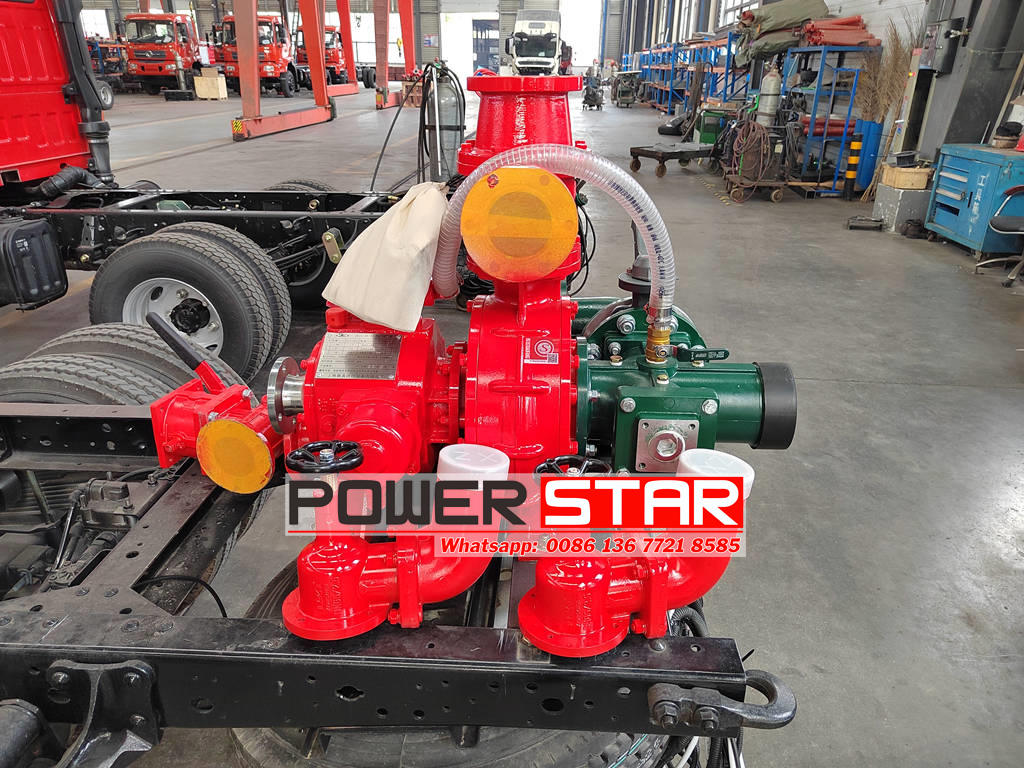
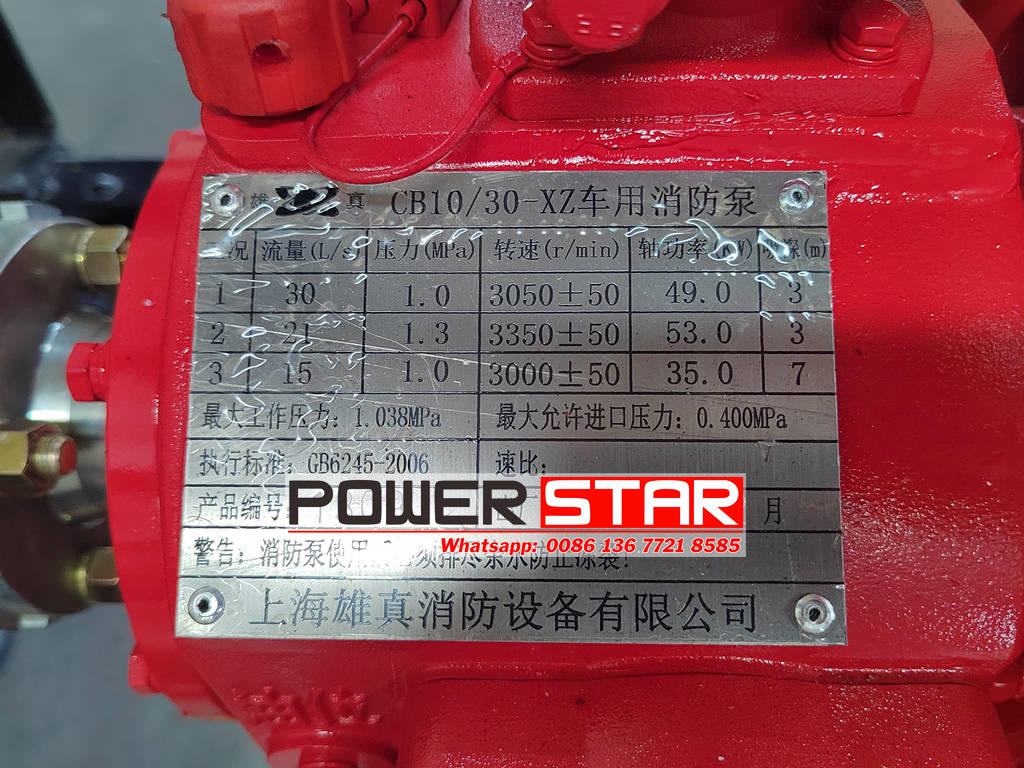
The CB10/30 fire pump is an even more common model in ISUZU firefighting trucks. This pump not only has all the advantages of the CB10/20 fire pump but also has a larger flow rate, longer range, and higher fire-extinguishing efficiency. With a rated flow of 30L/s and a rated pressure of 1.0MPa, it is widely used in 3.5-ton ISUZU water tank fire trucks to extinguish general fires. The pump adopts a fully automatic vacuum water priming device, which has a fast water suction speed, large flow rate, and long ejection distance, enabling rapid control of the fire in a short period.
1.3 CB10/40 Fire Pump
Although the CB10/40 fire pump is more commonly used in medium-sized ISUZU fire trucks, it is a fire pump model with excellent performance. With a rated flow of 40L/s and a rated pressure of 1.0MPa, it is suitable for fire-fighting scenarios requiring larger flow rates and longer ranges. Due to its high flow rate, the CB10/40 fire pump has significant advantages in extinguishing large fires or situations requiring rapid cooling.
1.4 CB10/60 Fire Pump
The CB10/60 fire pump is a model with an even larger flow rate in ISUZU fire engines. With a rated flow of up to 60L/s and a rated pressure of 1.0MPa, this fire pump is usually used in fire-fighting scenarios requiring extremely high flow rates and long ranges, such as high-rise building fires and large warehouse fires. The powerful performance of the CB10/60 fire pump ensures that fire-fighting water can quickly cover the fire site, effectively controlling the spread of the fire.
1.5 CB10/80 Fire Pump
The CB10/80 fire pump is a model used in ISUZU heavy-duty fire trucks. With a rated flow of 80L/s and a rated pressure of 1.0MPa, this fire pump is suitable for the most severe fire-fighting scenarios, such as large chemical plant fires and oil depot fires. The powerful flow rate and long range of the CB10/80 fire pump can quickly extinguish large fires, protecting people's lives and property.
1.6 CB10/100 Fire Pump
The CB10/100 fire pump is one of the models with the largest flow rate in ISUZU fire trucks. With a rated flow of up to 100L/s and a rated pressure of 1.0MPa, this fire pump has extremely excellent performance and can quickly extinguish large fires in a very short time. However, due to its excessively large flow rate, the CB10/100 fire pump may be limited by factors such as water supply and pipeline pressure in practical applications.
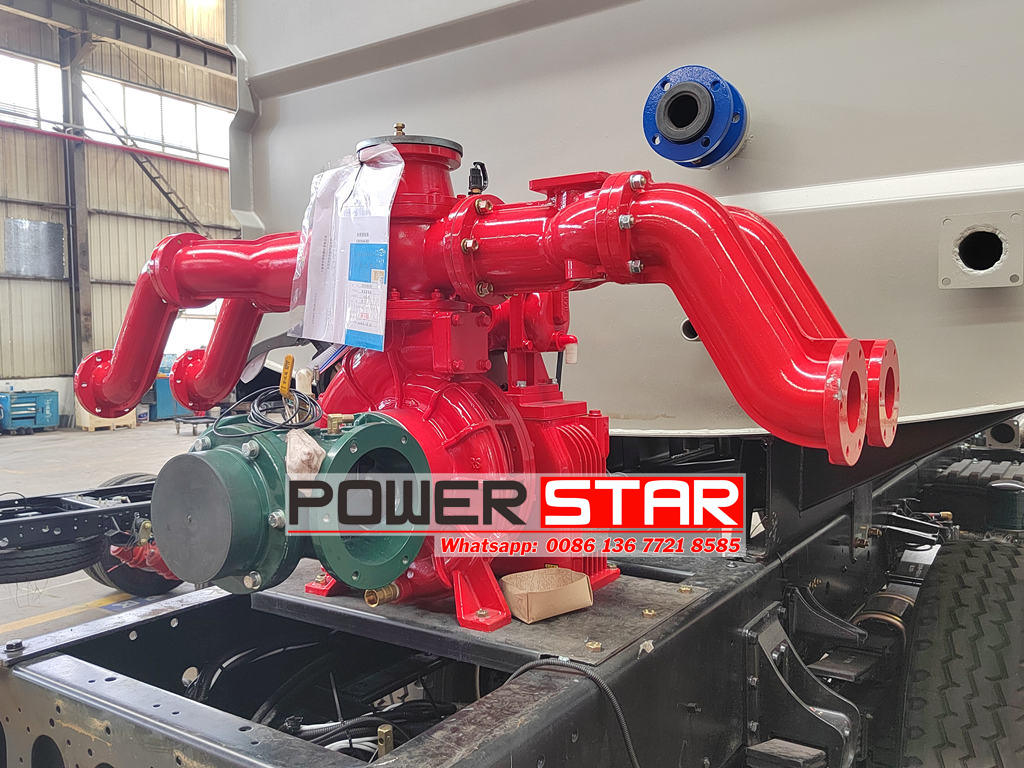
2. Working Principle of Fire Pumps in ISUZU Fire Trucks
The fire pumps commonly used in ISUZU fire tender trucks mainly adopt the working principle of centrifugal water pumps. Before starting the centrifugal water pump, the pump casing and suction pipeline should be filled with the liquid to be delivered. When the prime mover drives the pump shaft to rotate, it drives the impeller and the water to rotate at high speed. At this point, the water is accelerated and thrown out of the impeller under the action of centrifugal force, flowing into the pump's discharge pipeline through the spiral pump casing. During this process, part of the kinetic energy of the water is converted into pressure energy. At the same time, a low-pressure area is formed at the center of the pump impeller due to the water being thrown out. Under the action of the liquid surface pressure and the pressure difference inside the pump, the liquid enters the impeller through the suction pipeline to fill the position of the discharged liquid. As long as the impeller keeps rotating, the liquid is continuously sucked in and discharged.
3. Maintenance and Care of Fire Pumps in ISUZU Fire Trucks
To ensure the normal operation and extend the service life of fire pumps in ISUZU fire pumper trucks, regular maintenance and care are required. The following are some common maintenance and care measures:
3.1 Regularly Check the Pump's Operating Status
Regularly checking the pump's operating status is one of the important measures to ensure its normal operation. By checking parameters such as the pump's flow rate, pressure, vibration, and noise, faults and abnormalities can be identified and addressed in a timely manner.
3.2 Regularly Replace Wearable Parts
Fire pumps experience certain wear and corrosion during operation, so wearable parts need to be replaced regularly to ensure the normal operation of the pump. Common wearable parts include impellers, seals, and bearings.
3.3 Regularly Clean the Pump Body and Pipelines
Regularly cleaning the pump body and pipelines is one of the important measures to ensure the normal operation of the pump. Cleaning the pump body and pipelines can remove dirt and impurities inside the pump, reducing the pump's energy consumption and operating costs.
3.4 Regularly Check the Electrical System
The electrical system of the fire pump is one of the important guarantees for its normal operation. Therefore, it is necessary to regularly check whether the wiring, switches, fuses, and other components of the electrical system are working properly, and identify and address electrical faults in a timely manner.
ISUZU fire trucks are equipped with a variety of fire pump models with excellent performance, capable of meeting the needs of different fire-fighting scenarios. By understanding the models, working principles, characteristics, and application scenarios of these fire pumps, we can better select and use them, improving the fire-extinguishing efficiency and combat effectiveness of fire trucks. At the same time, regular maintenance and care of fire pumps are also important measures to ensure their normal operation and extend their service life.