When buying an Isuzu fire-fighting truck, make sure to check for proper certification and compliance with safety standards. Look for trucks that meet industry regulations and have undergone testing to ensure they can effectively respond to fire emergencies. Powerstar isuzu fire fighting truck ensures that the truck is reliable and safe to use in firefighting operation
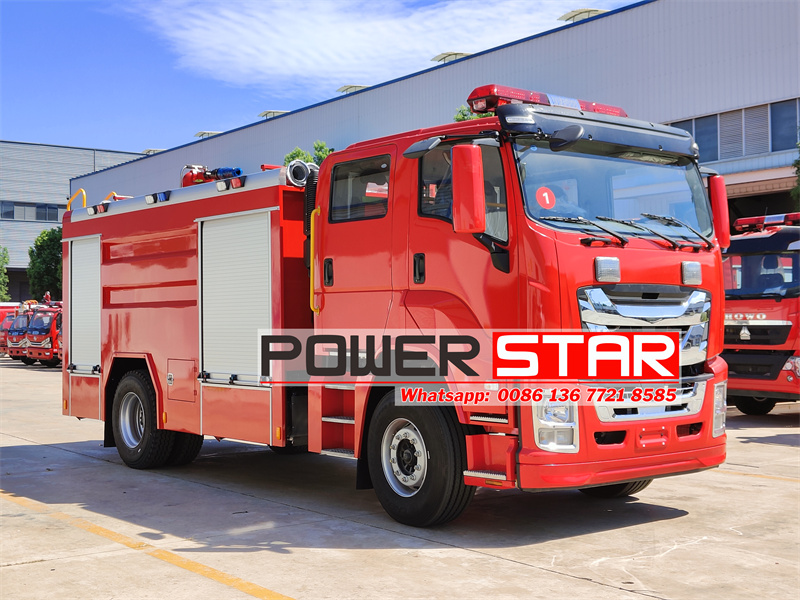
Main Structure:
1. Cab room
2. Tank
3. Hose box
4. Pump room
5. Pump and pipeline
6. Fire monitor
7. Additional drive system
8. Additional Control system
9. Additional cooling system
10. Additional electrical system
11. Additional gauge system
12. Equipment
13. Control board system
.Product Parameter of the I SUZU GIGA Fire Tank Truck:
| TECHNICAL SPECIFICATION | ||||
| Main specification | Chassis brand | I SUZU | ||
| Overall dimension(L*W*H) | 6950x2500x2800mm | |||
| Water tank volume | 3,000 LITRES | |||
| Foam tank volume | 500 litres | |||
| Cabin | double cabin,with Air conditioner, electronic windows, USB, | |||
| Chassis | Drive modle | 4x2 left hand drive | ||
| Front axle loading | 2,500 kg | |||
| Rear axle loading | 4,800kg loading capacity | |||
| Wheel Base | 3360mm | |||
| Front/rear suspension | 1015/2040mm | |||
| Approach/departure angle | 24/12 (°) | |||
| Tyre size & number | 7.00-16 Nylon tire, with one spare tyre | |||
| Transmission | manual, 5 gears with reverse | |||
| Voltage | Have 2 batteries , each 12 volts | |||
| Color | Red and white including tanker , standard . | |||
| Brake | OIL brake, With ABS | |||
| Max speed | 95km/h | |||
| Engine | Model | 4KH1-TCG4 | ||
| Engine Type | six-cylinder, in-line, water cooling, direct injection(DI) type, turbocharged, intercooling | |||
| Horse power | 120hp | |||
| Displacement | 2999ml | |||
| Emission | Euro 3 | |||
| TANK SPECIFICATION | ||||
| Tank capacity | 3,000 LITRES WATER TANK WITH 500 LITRES FOAM TANK | |||
| Tank material | All Tank made of carbon steel . Thickness:4mm, The foam tank inside is painted with Anticorrosion material |
|||
Fire pump |
Model | / | CB10/30 model ,Normal pressure pump | |
| Pressure | Mpa | ≥1.0 | ||
| Max suction height | m | 7 | ||
| Flux | L/M | 1800 | ||
| Rated speed | r/min | 3000 | ||
| Time of drawing water (s) | s | ≤45 | ||
| Input | / | one nozzle , diameter : 100mm | ||
| Outlet | / | 2 nozzles, diameter: 65mm | ||
| Water-foam shooter | Model | / | PL24,mounted on the tank as photo,standard | |
| nozzle range | Water (m) | ≥45 | ||
| Foam (m) | ≥40 | |||
| Flux | L/min | 1440 | ||
| Rated Working pressure | Mpa | 0.7-1.2 | ||
| Rotation angle | (°) | 360 | ||
| Standard configuration | Have alarm rotating light and which is mounted on top of the cabin , have ladder , have manhole | |||
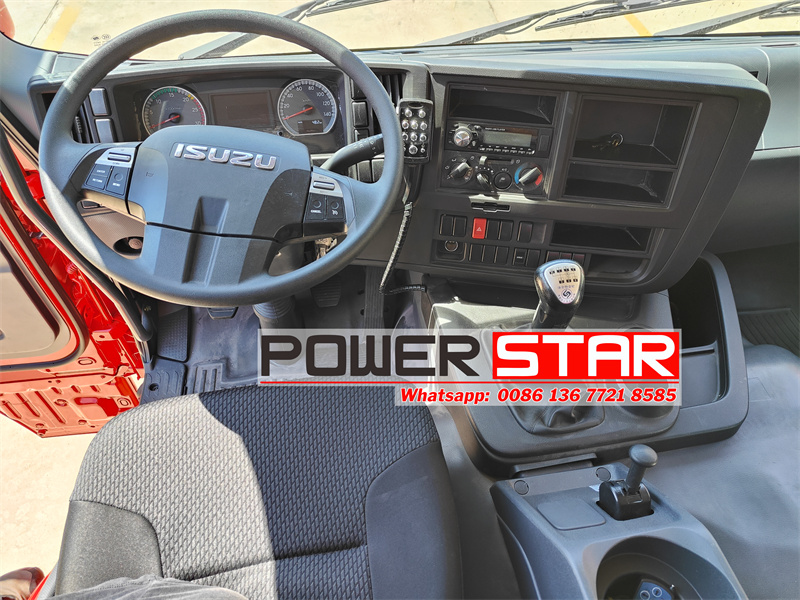
1. Cab room
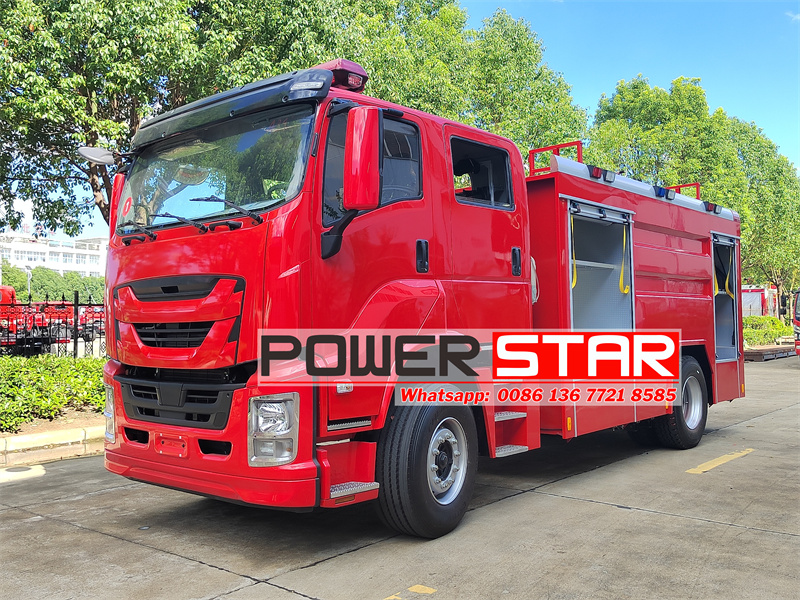
Cab room allows 2+4 crews most. It is double rows 4 doors all-metal structure. Inside it, there are PTO’s and other additional control switch; also there is multifunctional electronic siren below the instrument desk. There is one pillow style alarm lamp on the top of the crew room.
|
Double rows with 2+4 seats |
|
Pillow style alarm lamp |
2. Tank
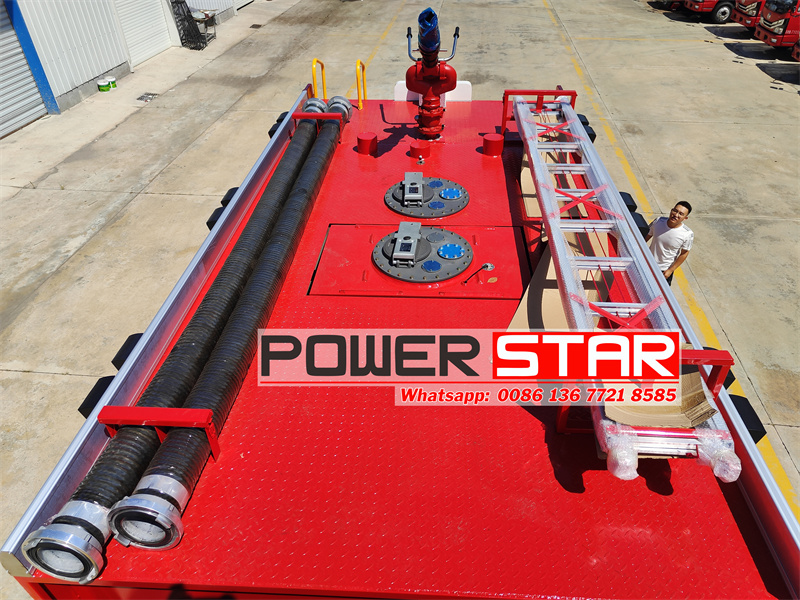
All the tanks are parallelepiped. They are all standard Stainless Steel material and connected with the vehicle frame in secondary beam type:
1.
|
PS40 Water Fire Monitor |
On the top of the tank, there are one customized Euro manholes, overflow hole, safety guard, climbing ladder, suction pipeline and fire monitor.
|
Rear climb ladder |
|
Ladder position |
|
Safety guard |
|
Customized Euro Manhole |
|
Two units 4m Pipelines |
2. At the bottom of the tank, there is one unit deposit drain outlet for water tank.
|
Water Tanker Drain outlet |
3. On the rear of the truck, there is water inlet and outlet.
4. Inside the tank there is breakwater board.
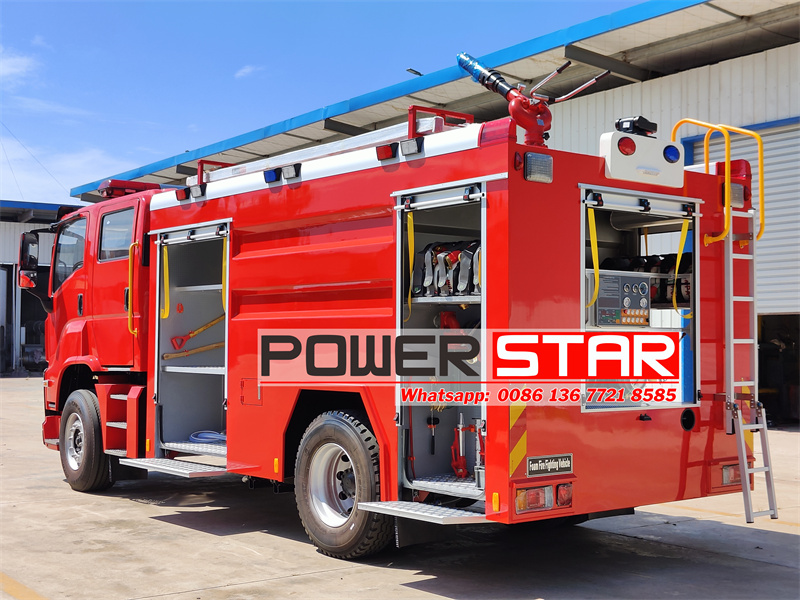
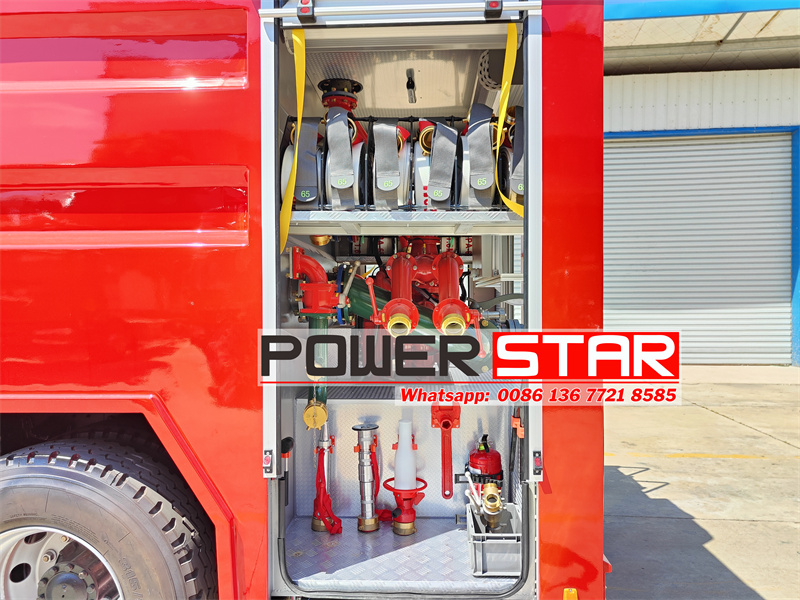
3. Tool room
The tool room is half enveloping structure, easy for equipment to put or get.
The sliding door there is made up with qualified aluminum alloy materials; there are special lightings for each tool room. Equipment shown as follow:
(Detailed Parts List will be attached at end of this manual)
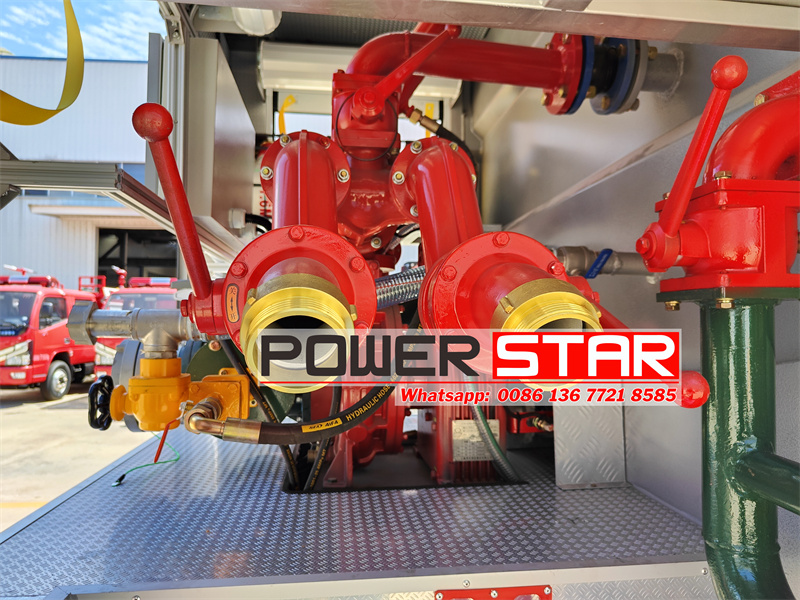
4. Pump room
The pump room is located at the rear part of the vehicle and it is all-mental structure.
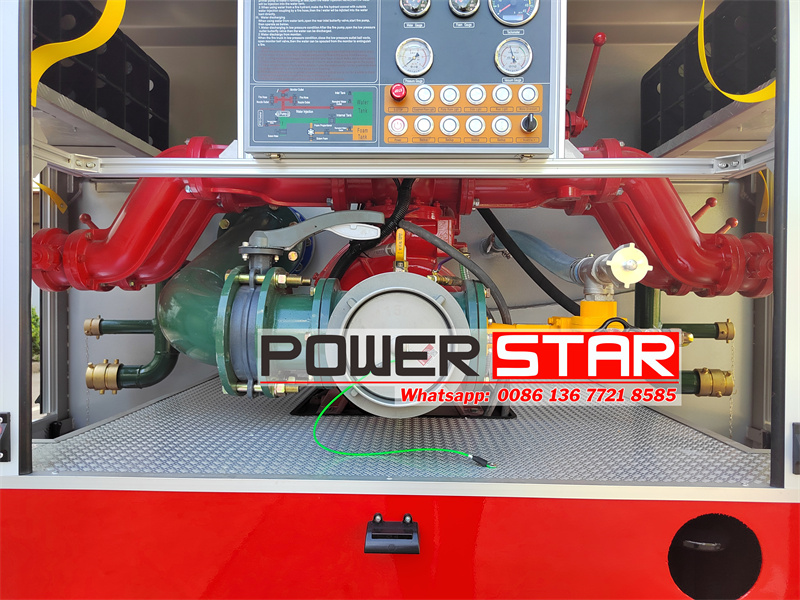
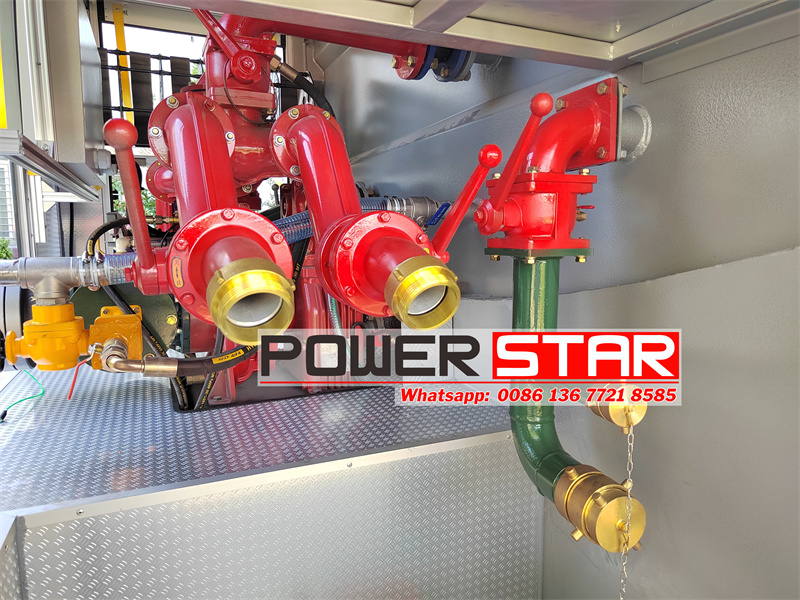
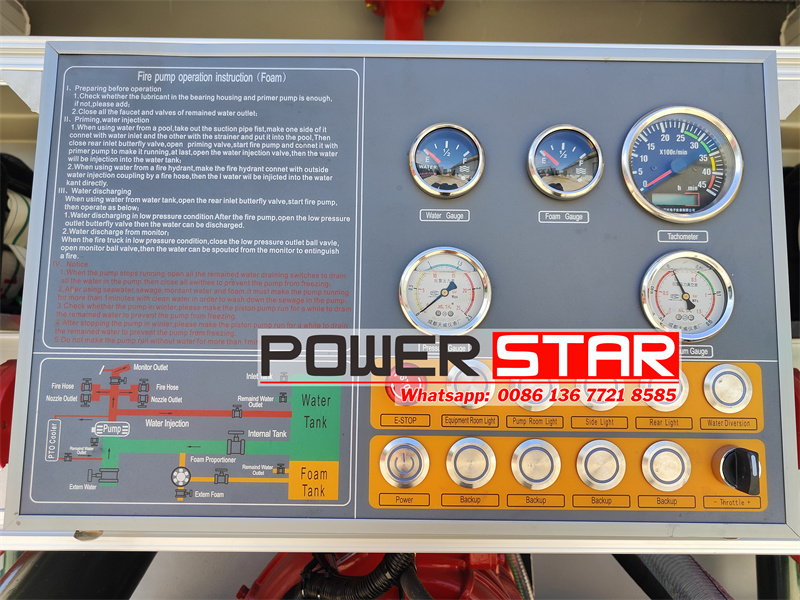
In the pump room, there is the fire pump system, the operation system & control board, help checking the working condition monitoring and fire pump operation.
At the front part of the water tank in the pump room, there is one large injection hole for water injection from the external water source.
There are special lightings in the pump room for the night work. And the rear Headlight controller also is in the pump room.
|
Accelerator Handle |
5. Pump and pipeline
The RONGSHEN CB10/60 fire pump of this vehicle is rear-positioned. It is made of aluminum alloy materials, corrosion-resistant and easy for maintenance.
|
Pipelines |
The vacuum gauge, pressure gauge and the additional cooling system have been equipped with the fire pump pipeline system, for monitoring the fire pump working situation and cooling the PTO.
|
Joint |
|
Valves |
6. Fire monitor
Model: PS40
Location: Top of tank
Angle of rotation: 360°
Angle of elevation: ≤80°
Angle of depression: ≥ -10°
Throw: Water throw ≥ 60m
|
Gun Fire Barrel |
Foam throw ≥ 55m
|
Valve |
|
Handle |
7. Additional drive system
Additional drive system is composed of PTO, pump transmission shaft and brackets.
The PTO is sandwich and full-power output type, gear driving, water cooling, Manual (pneumatic) control. It is fitted between the clutch and transmission, getting power from engine and passing it to the fire pump through its pump transmission shaft.
|
Sandwich PTO |
8. Additional Control system
Additional Control system is composed of PTO control rod, fire pump valve control rod, electrical control, button, hand throttle control rod, etc.
|
Sandwich PTO control rod |
9. Additional cooling system
The main purpose of additional cooling system is use to cool PTO and Fire Pump imperatively.
It can control the temperature of that equipment when the fire truck is in a continuously running condition, prolonging the equipment life.
10. Additional electrical system
Additional electrical system is composed of several parts as below:
(1) Alarm lamp, siren
|
Pillow lamps with alarm |
(2) Priming pump pneumatic electrical valve switch, fire pump rotation meter, electronic liquid level meter
(3) Fire scene lighting, pump room lighting and tool box lighting, etc.
|
Fire Scene Lighting |
11. Additional gauge system
Additional gauge system is composed of several parts as below:
(1) Vacuum gauge: to show the vacuum degree in the pump. (-0.1~0.15Mpa).
(2) Pressure gauge: To show the water outlet pressure of the pump.(2.5 degree).
(3) Adometer: To show the rpm of the rotation axis of the pump.(0~4500RPM).
(4) Water Tank Liquid Level: To show the water level of the tank by a set of Pointer.
12. Equipment
The equipment is mainly for three purposes: extinguishing fire, saving life and eliminating danger. For detailed items, please refer to equipment list.
1. Suction hose: for connecting the pump inlet with the water source, equipped on the top of the truck; the number is 2, each length is 4 meters.
2. Water filter: for preventing the pipe system from being blocked by the odds. When the fire pump stops running, the water in suction pipe will not spill out for the check valve or say one-way valve in the filter, so water will get in quickly while restarting the pump.
3. Manifold for separating: connecting equipment for dividing the main hose into three smaller caliber hoses. Each outlet has been controlled by the ball valve, so they could work at the same time, or separately.
4. Manifold for converging: while connecting the external water source by water hose, the manifold for converging could be fitted in the inlet of fire pump, with another two 65mm connector to connect with the water hose, and the other end to the water source.
It is always used to supply & get water between several fire truck, or connect the fire hydrant(100mm).
5. Reducing caliber connector: for connecting the outlet valve and the water hose with caliber between 80mm and 65mm.
6. Hose coating: for wrapping the leaking place of the water hose tightly while there is leaking in firefighting, preventing the leaking place expanding and reducing the water loss.
7. Hose link: for hanging the water hose on climbing ladder, helping the fire fighter control the hose.
 s.
s.
When looking to purchase a high-quality Isuzu fire fighting truck, there are a few key factors to consider in order to ensure that you are getting the best vehicle for your needs. Here are four important points to keep in mind:
1. Research Isuzu Fire Fighting Trucks:
Start by researching the various Isuzu fire fighting truck models available in the market. Look at their specifications, features, and capabilities to determine which model best suits your requirements. Consider factors such as engine power, water tank capacity, pump capacity, and firefighting equipment compatibility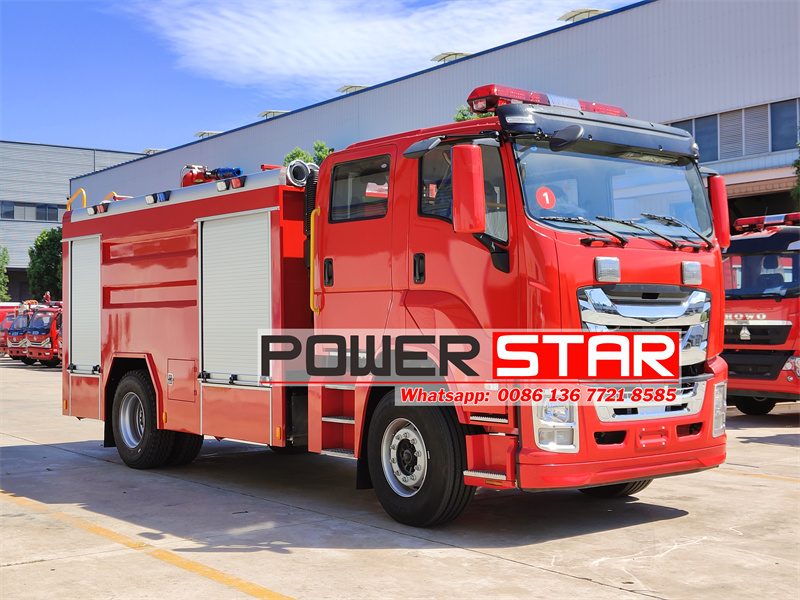
2. Verify Seller Reputation:
Before making a purchase, it is essential to verify the reputation of the seller. Look for reviews, testimonials, and feedback from previous customers to ensure that the seller is reputable and trustworthy. Buying from a reliable seller will help you avoid potential scams or frauds and ensure that you are getting a genuine Isuzu fire fighting truck.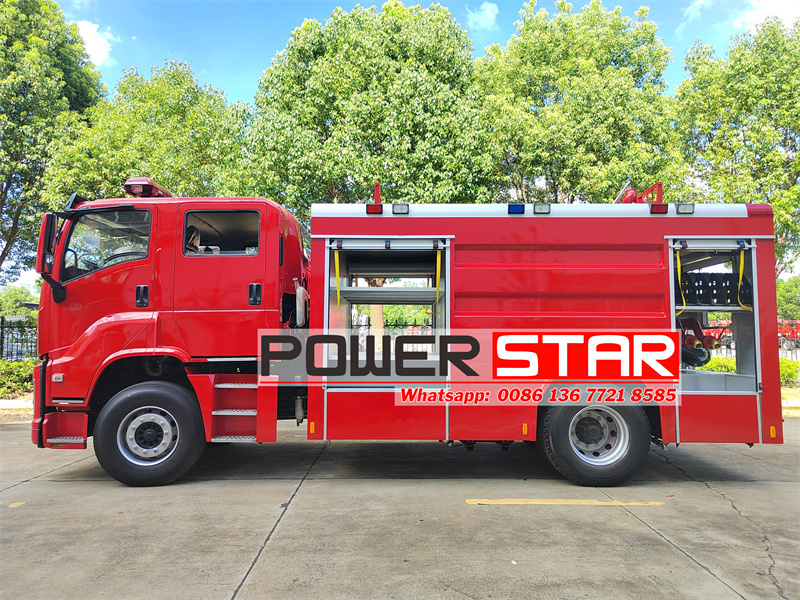
3. Inspect the Vehicle:
Before finalizing the purchase, it is important to inspect the Isuzu fire fighting truck in person. Check for any signs of damage, wear and tear, or mechanical issues. Inspect the vehicle's exterior, interior, engine, and firefighting equipment to ensure that everything is in good condition. If possible, take the vehicle for a test drive to assess its performance and functionality.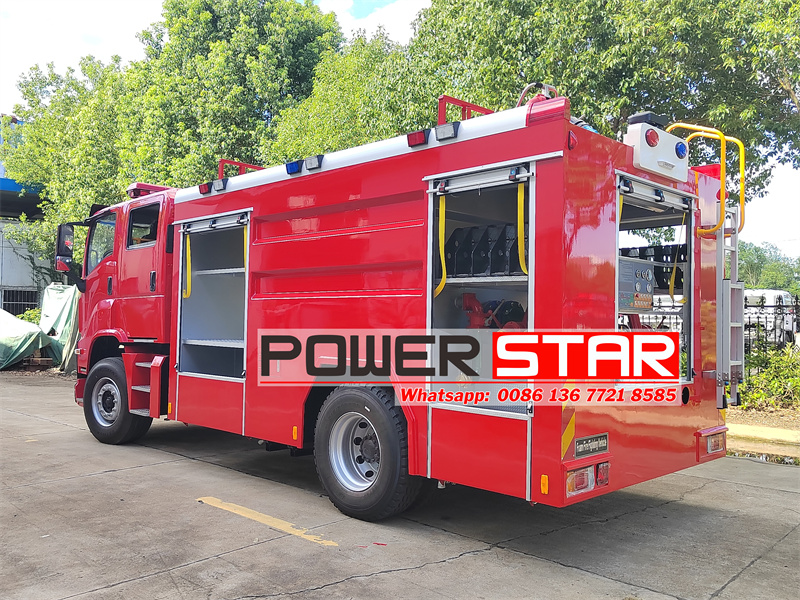
4. Seek Professional Advice:
If you are unsure about the technical aspects of the Isuzu fire fighting truck, consider seeking advice from a professional firefighter or mechanic. They can help you assess the vehicle's condition, identify any potential issues, and provide recommendations on the best model for your specific firefighting needs. Consulting with experts will help you make an informed decision and ensure that you are investing in a reliable and effective fire fighting truck.