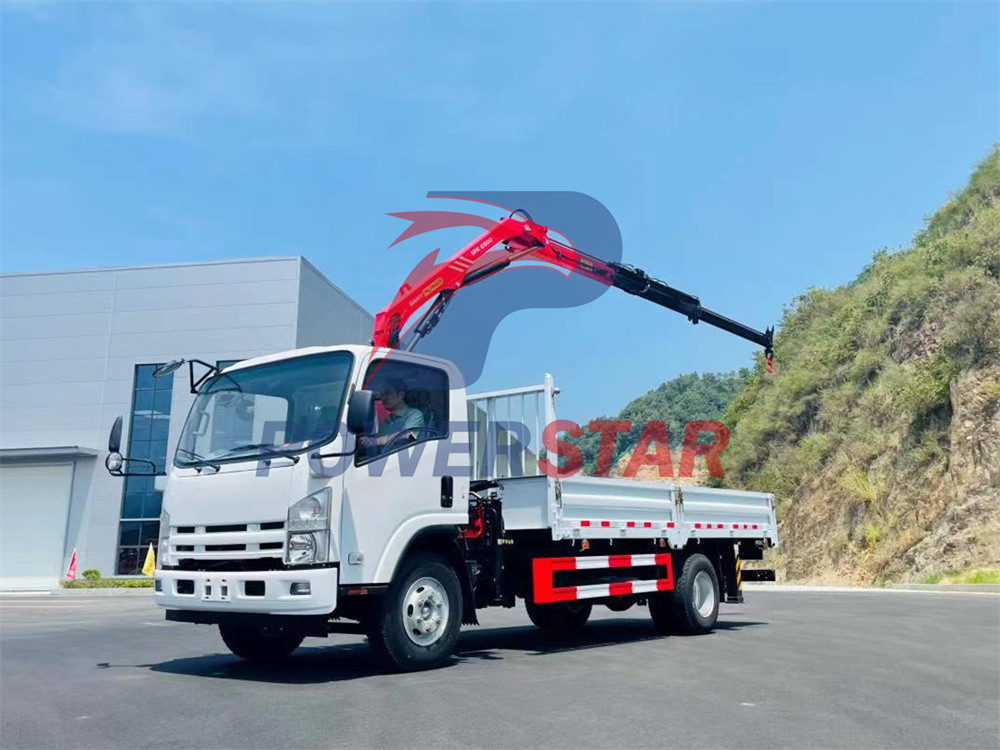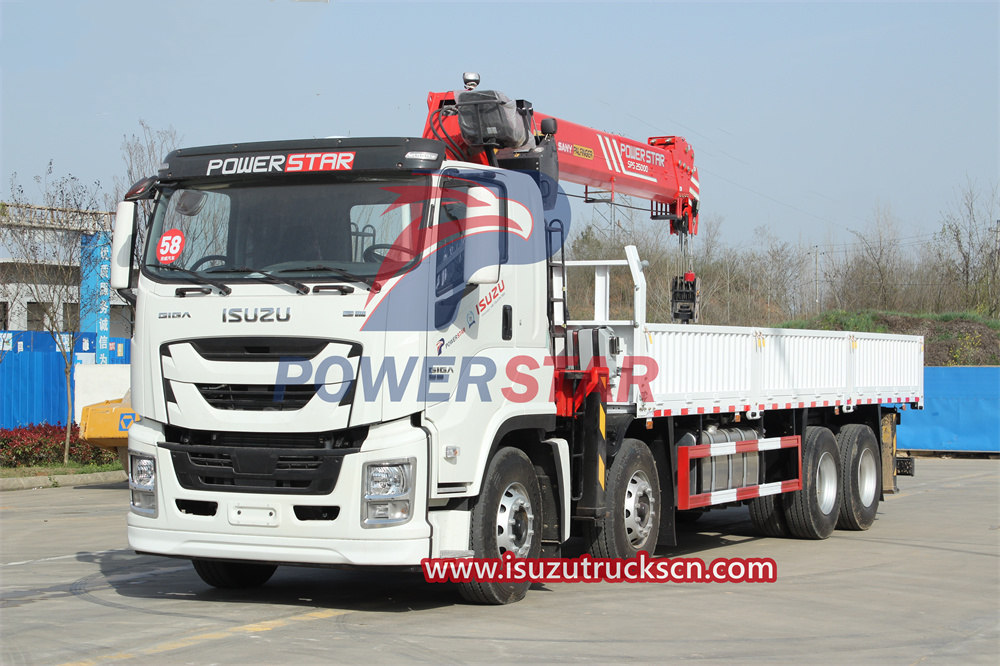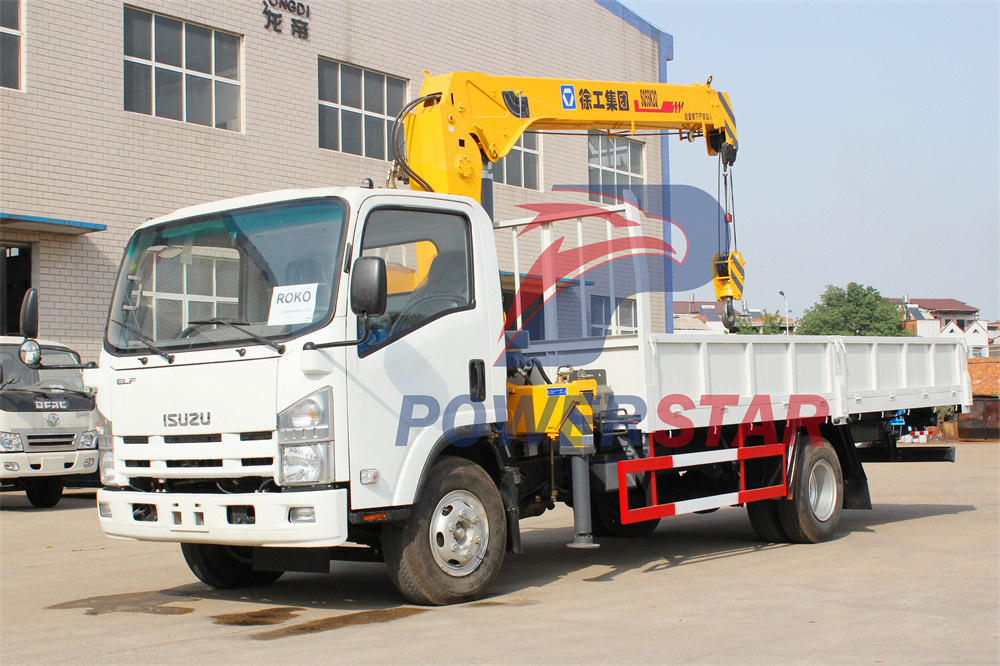
Correct operation of the Isuzu Cargo Crane Truck is crucial because it is directly related to the safety and performance of the vehicle, greatly improving the service life of the truck-mounted crane and reducing the failure rate and maintenance costs. Operators should be familiar with the user manual and safe operating procedures to ensure that staff fully understand the functions and operating requirements of the equipment. It can also maximize the working efficiency and production capacity of the Isuzu Cargo Crane Truck. Operators should master appropriate operating skills and methods to ensure efficient and smooth loading and unloading processes. In addition, correct operation can reduce the risk of accidents and casualties and ensure workplace safety. Operators should remain vigilant at all times and comply with safety regulations and operating requirements. A. Inspection before lifting operations: 1. Check the oil level in the hydraulic tank. 2. Before starting the power take-off device, check whether each operating lever is in the neutral position. B. General precautions during lifting operations: 1. Carry out lifting operations within the rated lifting range. 2. Concentrate during operation and observe the surrounding situation to avoid accidents. 3. Pay attention to the temperature of the hydraulic oil. When the temperature exceeds 80°C, the lifting operation should be stopped. 4. When the wind speed exceeds 138m/s (level 6 wind), no lifting operations are allowed. 5. When lifting heavy objects, it is strictly prohibited to adjust the outriggers. When adjustment is needed, the heavy objects should be put down and the boom should be retracted. 6. When hoisting, it is strictly forbidden for the two mechanisms to operate at the same time. 7. It is not allowed to lift heavy objects buried underground or frozen on the ground, and it is not allowed to pull heavy objects diagonally. 8. Before starting the operation, use the hand brake to stop the truck. 9. It is strictly forbidden to stand under the boom before operation. 10. The tire pressure meets the regulations, 441kPa for the front wheel and 617kPa for the rear wheel. C. Determination of rated load: 1. According to the length of the boom and the pointer position of the amplitude indicator, first read the working amplitude. 2. Read the rated load from the lifting performance table based on the arm length and amplitude. 3. If the arm length or amplitude of the working position is not at the value given in the table, the lifting weight at this time should be based on the smaller of the adjacent values. 4. The parameters on the lifting performance table are only applicable to the lifting operation area. Lifting operations are strictly prohibited in the "prohibited operation area". D. Outrigger operation: 1. When telescopic and retracting the outriggers, first pull the positioning pin on the fixed outrigger box, manually pull out the movable outrigger to the appropriate position (middle posi...
View More