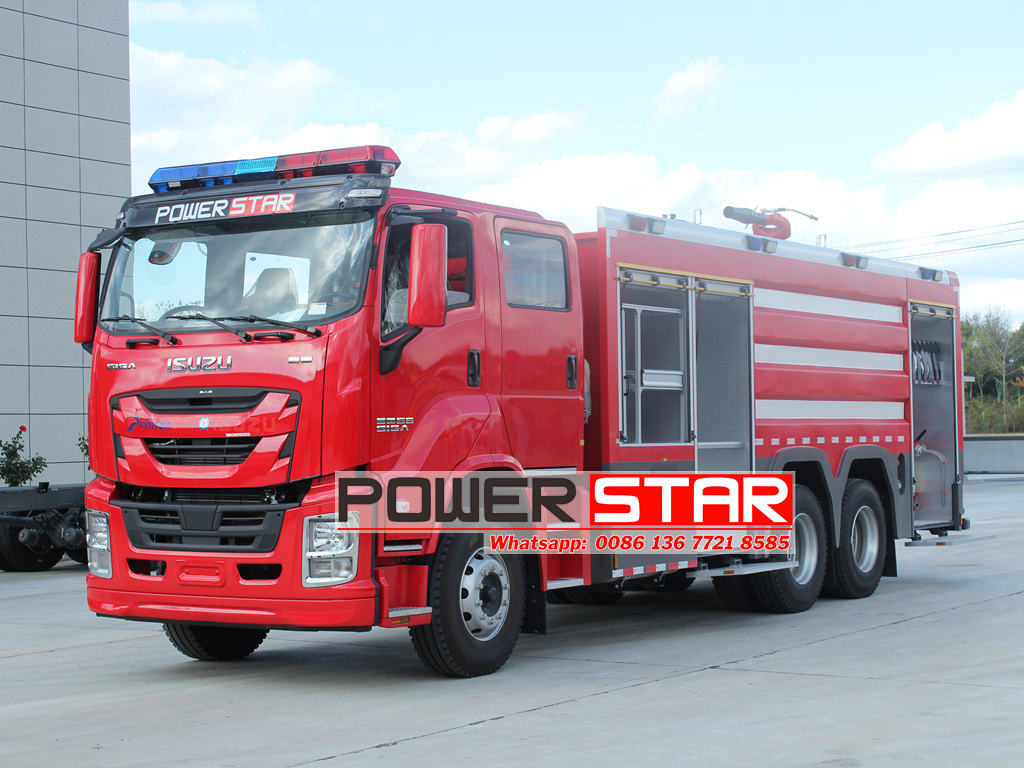
In the field of fire rescue, ISUZU fire trucks have gained wide recognition for their excellent performance and reliability. The fire pump, as the core component of a fire truck, is crucial for quickly and effectively extinguishing fires. However, during operation, the fire pump system may inevitably encounter some faults. This article provides a detailed introduction to the common faults and troubleshooting methods for the fire pump system of ISUZU firefighting trucks, aiming to help firefighters better maintain and care for the fire pumps to ensure they are always in optimal working condition.
I. Overview of the Fire Pump System of ISUZU Fire Trucks
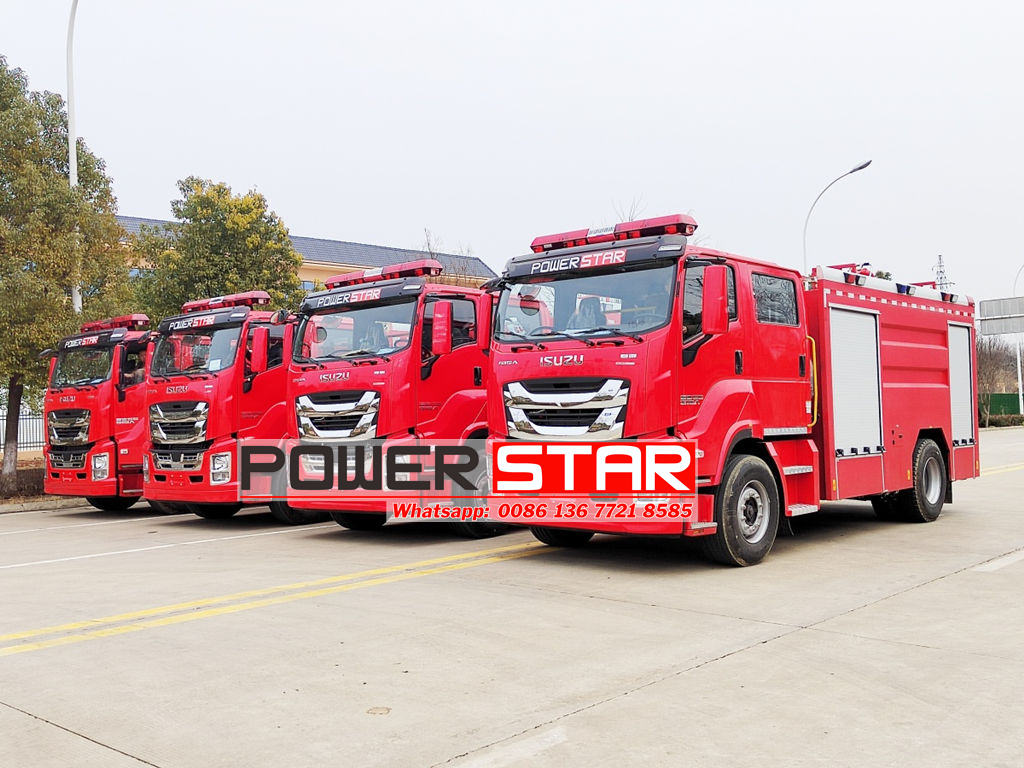
The fire pump system of ISUZU fire engine trucks is a complex and precise device responsible for drawing water from a source, pressurizing it, and delivering it to the fire scene through hoses. The fire pump system typically consists of a fire pump, power unit (such as an engine or motor), transmission mechanism, control system, and related valves and piping. As the core of the system, the performance of the fire pump directly affects fire extinguishing efficiency.
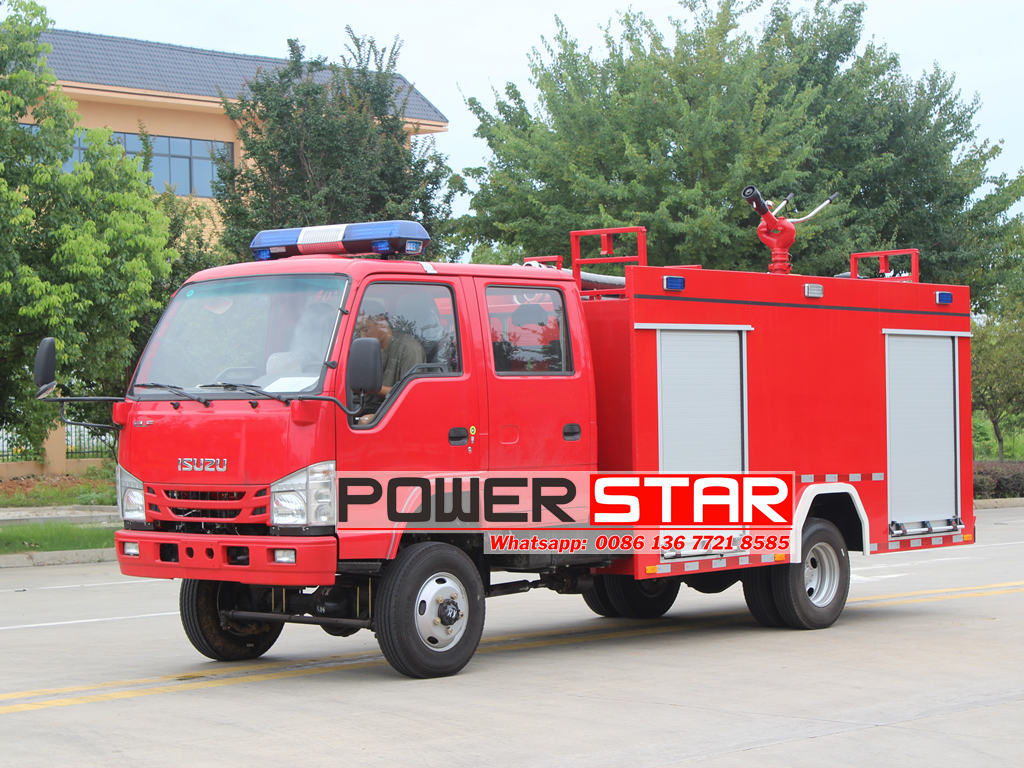
II. Common Faults and Troubleshooting Methods for the Fire Pump System of ISUZU Firefighting Trucks
The following table lists the common faults, possible causes, and corresponding troubleshooting methods for the fire pump system of ISUZU fire trucks:
|
Fault Phenomenon |
Possible Causes |
Troubleshooting Methods |
|
Fire pump fails to start |
1. Power supply fault 2. Starting system issue 3. Engine or motor fault |
1. Check if the power supply wiring is connected properly, repair any open circuits or shorts 2. Check if the start button, switches, and relays are functioning properly, repair or replace faulty components 3. Check if the engine or motor is operating normally, repair or replace faulty components |
|
Insufficient water pressure from fire pump |
1. Air in the pump 2. Worn or damaged impeller 3. Leaking seals 4. Blocked inlet piping |
1. Remove air from the pump and restart the fire pump 2. Disassemble the pump body to check for impeller wear or damage, replace the impeller 3. Check for seal leaks and replace any leaking seals 4. Clean any blockages in the inlet piping to ensure smooth flow |
|
Reduced flow from fire pump |
1. Impeller scaling or wear 2. Partial blockage in inlet piping 3. Outlet valve not fully open |
1. Disassemble the pump body to clean impeller scaling or replace the worn impeller 2. Clean any partial blockages in the inlet piping 3. Ensure the outlet valve is fully open |
|
Excessive vibration of fire pump |
1. Imbalanced impeller 2. Bent pump shaft 3. Damaged bearings 4. Loose foundation bolts |
1. Disassemble the pump body for impeller balance correction 2. Straighten or replace the bent pump shaft 3. Replace damaged bearings 4. Tighten the foundation bolts to ensure stable installation of the fire pump |
|
Overheating of fire pump |
1. Poor or damaged bearing lubrication 2. Friction between pump shaft and impeller 3. Cooling system fault |
1. Replace the bearings and add an appropriate amount of lubricant 2. Adjust the gap between the pump shaft and impeller to eliminate friction 3. Repair or replace faulty cooling system components |
|
Water leakage from fire pump |
1. Aged or damaged seals 2. Cracks or sand holes in the pump body 3. Loose or damaged connecting bolts |
1. Replace aged or damaged seals 2. Repair or replace the pump body with cracks or sand holes 3. Tighten the connecting bolts to ensure a tight seal |
|
Excessive noise from fire pump |
1. Imbalanced impeller 2. Damaged bearings 3. Vibration in inlet piping 4. Motor noise |
1. Perform impeller balance correction 2. Replace damaged bearings 3. Reinforce the inlet piping to reduce vibration 4. Check if the motor is operating normally, repair or replace faulty components |
|
Fire pump shuts down automatically after starting |
1. Overload protection triggered 2. Unstable power supply voltage 3. Engine or motor fault |
1. Check and adjust the load to ensure it is not overloaded 2. Stabilize the power supply voltage to ensure normal power supply 3. Check if the engine or motor is operating normally, repair or replace faulty components |
|
Fire pump pressure gauge pointer fluttering |
1. Excessive air in the piping 2. Faulty pressure gauge 3. Unstable flow inside the pump |
1. Remove air from the piping and restart the fire pump 2. Check and replace the faulty pressure gauge 3. Adjust the pump's operating parameters to stabilize the flow |
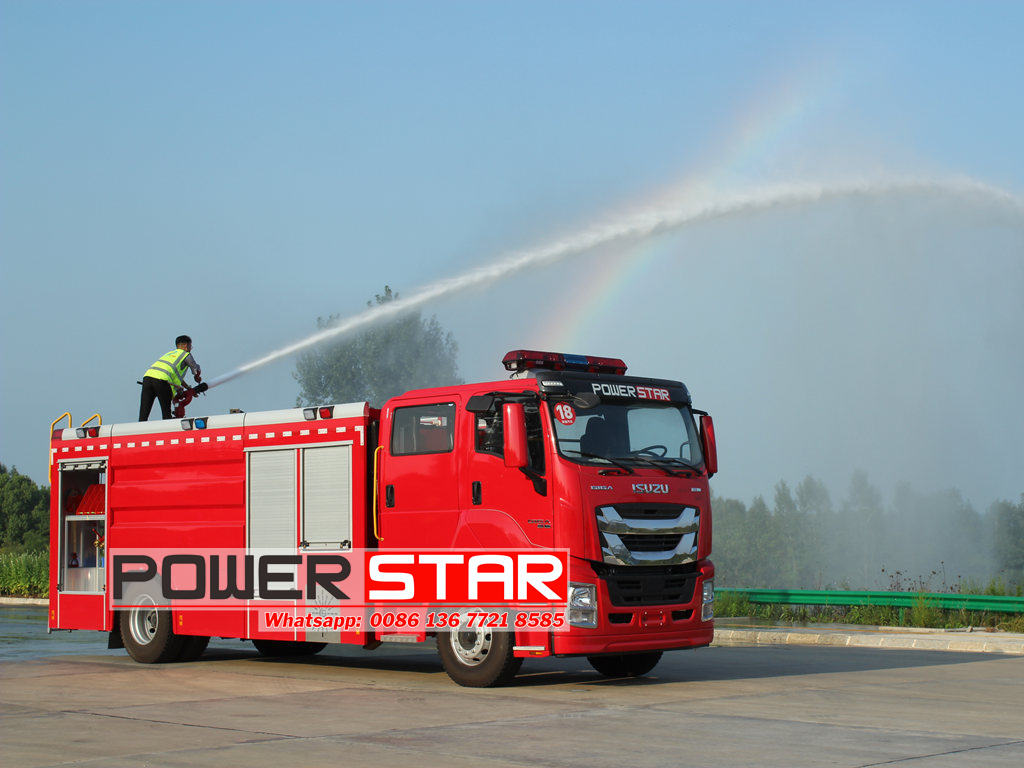
III. Maintenance and Care for the Fire Pump System of ISUZU Fire Trucks
To extend the service life of the fire pump of ISUZU fire pump trucks and ensure its normal operation, regular maintenance and care are necessary. Here are some suggestions:
1. Regularly inspect and replace lubricating oil
Regularly check the lubricating oil condition of the fire pump bearings and add or replace oil as needed if it is insufficient or degraded. Also, regularly clean the lubricating oil cavity and filters to keep them clean and unobstructed.
2. Regularly clean the interior and exterior of the fire pump
Regularly clean the dust, dirt, and debris from the interior and exterior of the fire pump to keep the pump body clean and well-ventilated. Especially for the impeller and the interior of the pump body, regularly clean away any scaling or blockages to improve pump efficiency and extend service life.
3. Regularly inspect and tighten bolts
Regularly check if the connecting bolts of the fire pump components are loose or damaged, and tighten or replace them as needed. Also, check the tightness of the foundation bolts to ensure stable and reliable installation of the fire pump.
4. Regularly inspect and test the performance of the fire pump
Regularly perform performance tests on the fire pump to check if its flow rate, pressure, and vibration indicators meet the requirements. If any performance decline or abnormalities are found, promptly investigate the causes and take measures to ensure the fire pump is always in optimal working condition.