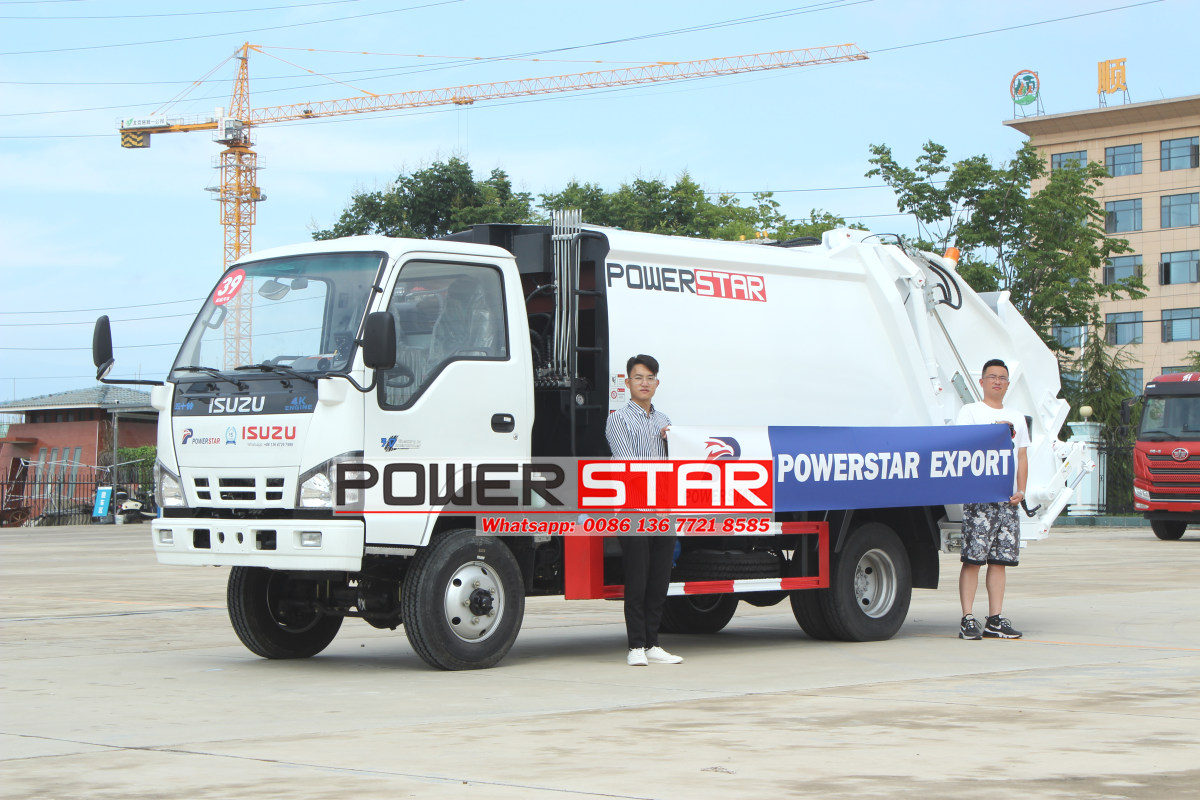
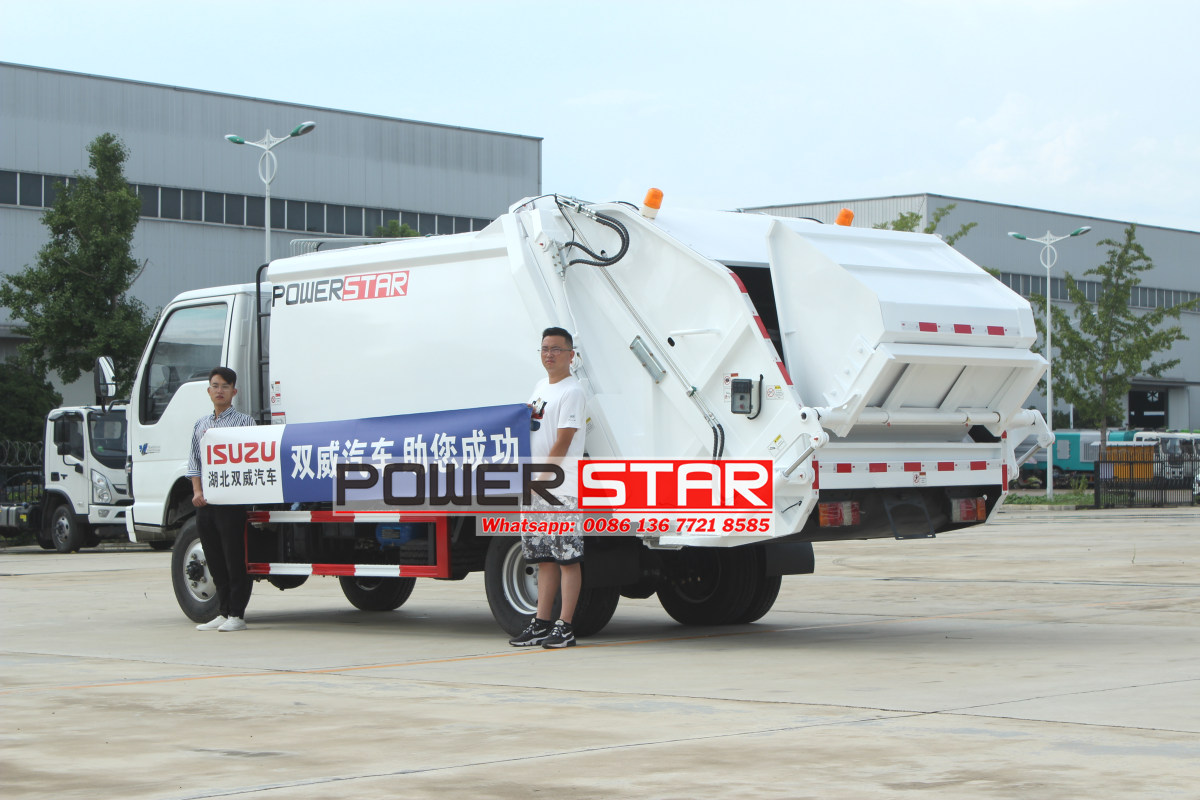
The operation modes of 2025 New waste compaction truck Isuzu,(Isuzu rear load garbage truck operation mode or Refuse compactor truck control method )are mainly divided into two types: loading mode and unloading mode. The following is a detailed explanation of these two modes:
1. Loading mode
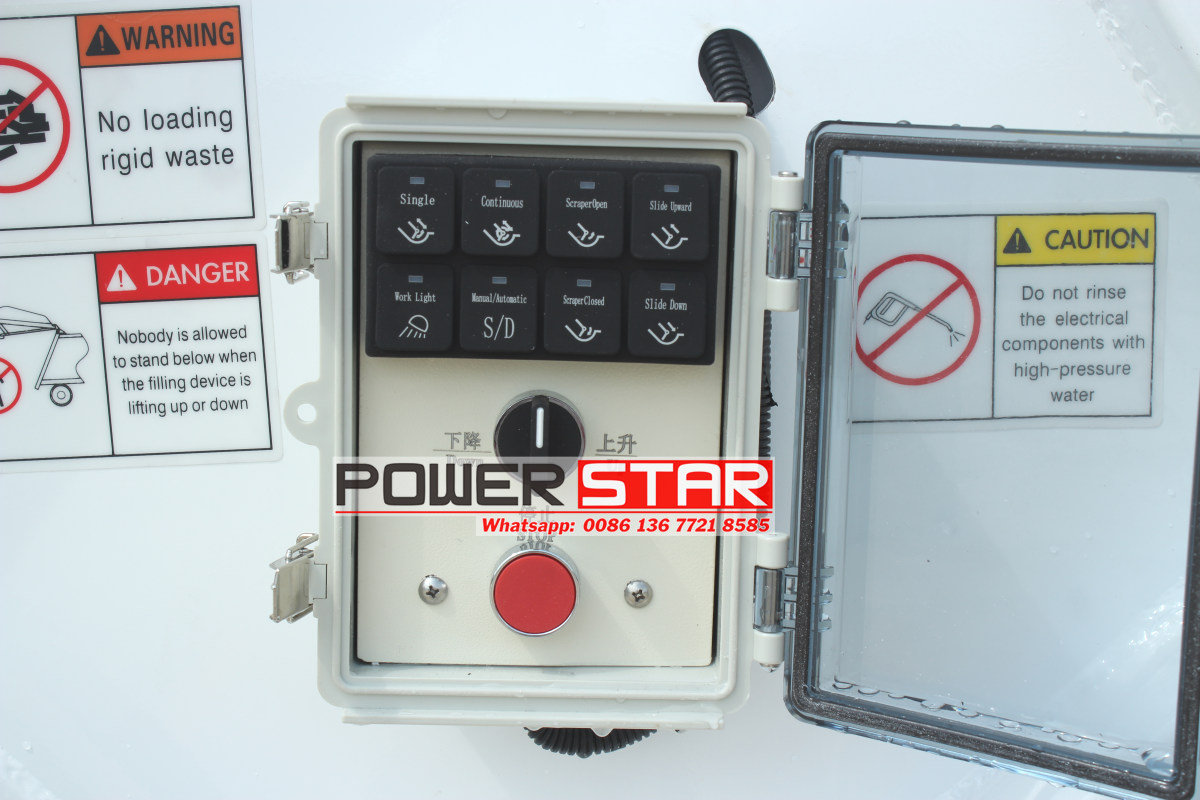
In loading mode, 2025 New waste compaction truck Isuzu is mainly used to collect and compress garbage. The action instructions in this mode usually include door opening, door closing, bucket lifting, bucket unloading, single compression, continuous compression, action reversal and stop, etc. The specific operation process may be as follows:
After the vehicle stops, tighten the handbrake and put the gearbox in neutral position to ensure that 2025 New waste compaction truck Isuzu is in a safe state.
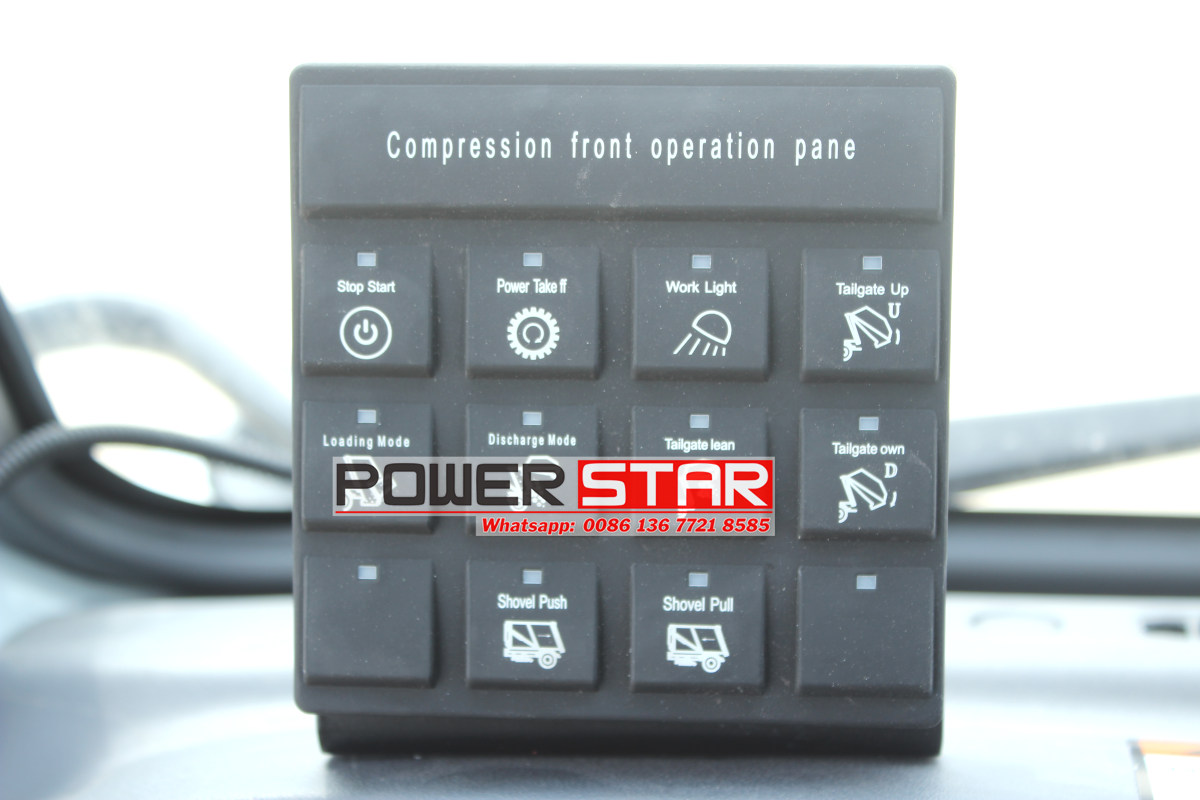
Select "loading" mode to activate the action instruction.
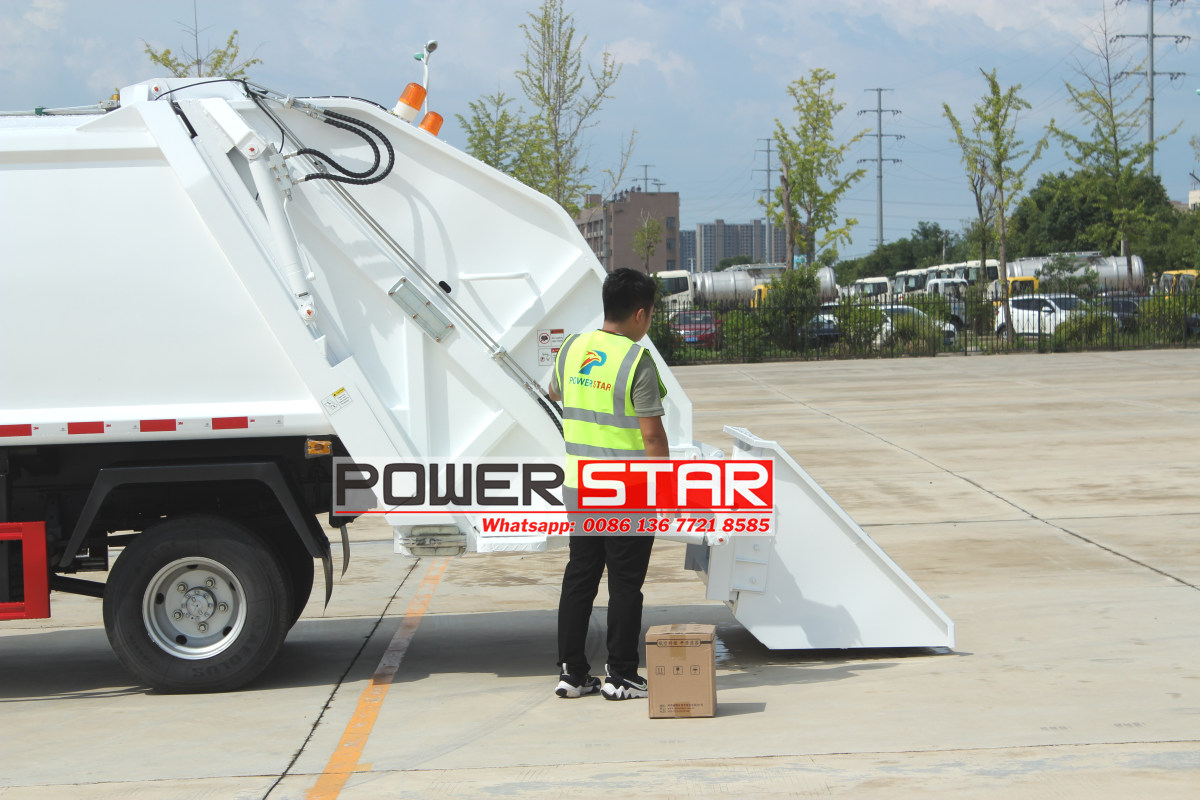
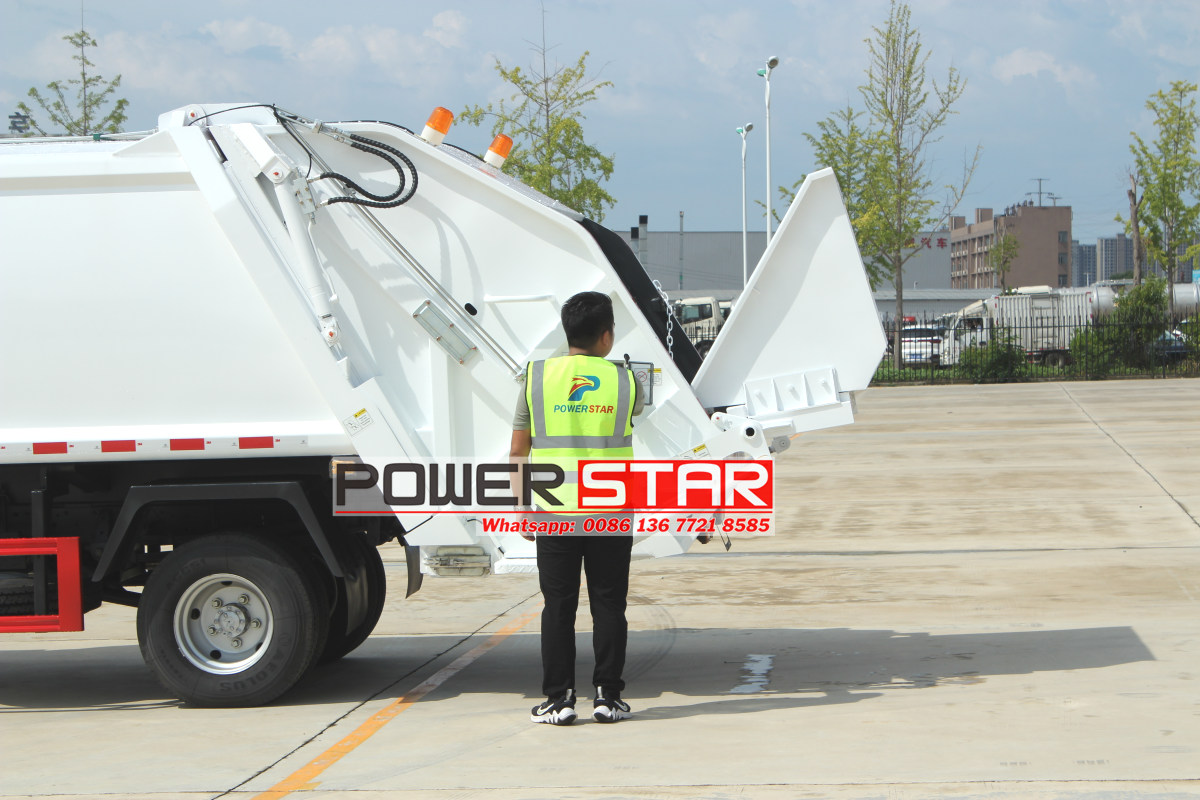
The operator walks to the side of the filler behind the vehicle, lifts the trash can, and loads the garbage into the filler bucket.
Press the compression and filling cycle work button to compress and load the garbage. In this process, the key components of 2025 New waste compaction truck Isuzu, such as the flip plate, scraper, and push plate, will work together to complete the crushing, compression and loading of the garbage.
2, UNLoading mode
the operation process of 2025 New waste compaction truck Isuzu in unloading mode usually includes the following steps:
Preparation:
Make sure the vehicle is stopped and in a safe state, pull up the handbrake, and put the transmission in neutral or parking gear. Turn on the control switch or button of the unloading mode and prepare to start the unloading operation.
Loader rise:
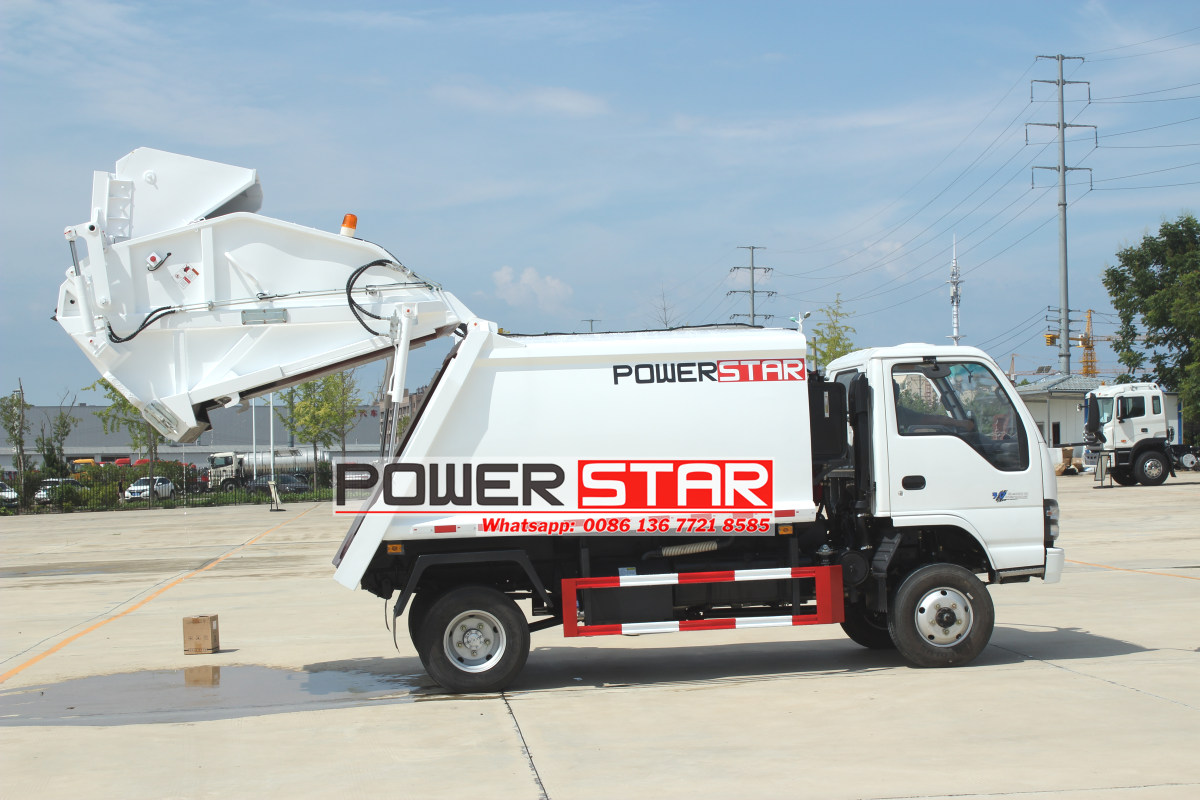
Operate the loader (also called the filler bucket or garbage bin) to rise to an appropriate height so that the garbage can be unloaded smoothly.
During the rising process, pay attention to the position of the loader to avoid collision with surrounding objects.
Bulldozer push out:
When the loader rises to the specified position, operate the bulldozer (also called the push plate or skateboard) to push forward.
The bulldozer pushes the compressed garbage out of the loader, usually unloading it to a designated garbage collection point or container.
Bulldozer retraction:
After the garbage is completely unloaded, operate the bulldozer to retract and return to the initial position.
Make sure that the bulldozer is fully retracted to avoid damage or safety hazards when moving the vehicle.
Lowering the loader:
Operate the loader to lower it and return it to its original position or the hook locking position.
During the lowering process, also pay attention to the position of the loader to ensure that it is at a safe distance from surrounding objects.
Turn off the power:
After the unloading operation is completed, turn off the control switch or button of the unloading mode.
Disconnect the power of the vehicle to ensure that the vehicle is in a safe state.
Follow-up work:
Check whether the various components of the 2025 New waste compaction truck Isuzu are intact and ensure that there is no damage or malfunction.
Clean up the garbage residues outside and inside the vehicle to keep the vehicle clean.
Perform necessary maintenance and care on the vehicle as needed.
It should be noted that during the unloading process, the operator needs to pay close attention to the movement of the loader and the dozer, as well as the safety of the surrounding environment. If an abnormal situation or malfunction is encountered, the operation should be stopped immediately and appropriate measures should be taken to deal with it. At the same time, the operator also needs to comply with relevant safety operating procedures and precautions to ensure the safety and reliability of the operation process.
In addition, different brands and models of 2025 New waste compaction truck Isuzu may have differences in operating procedures and details. Therefore, in actual operation, the operator needs to refer to the vehicle's instruction manual or operation manual and operate in accordance with relevant requirements.